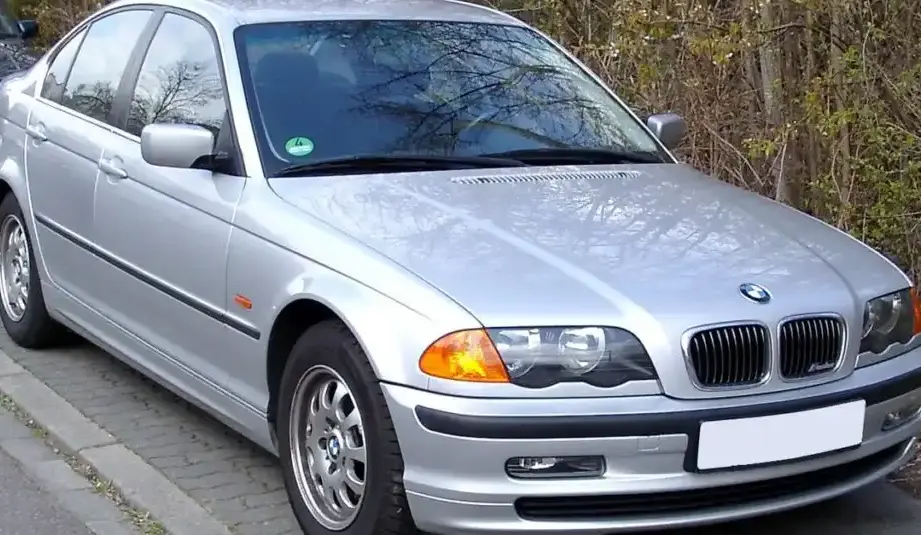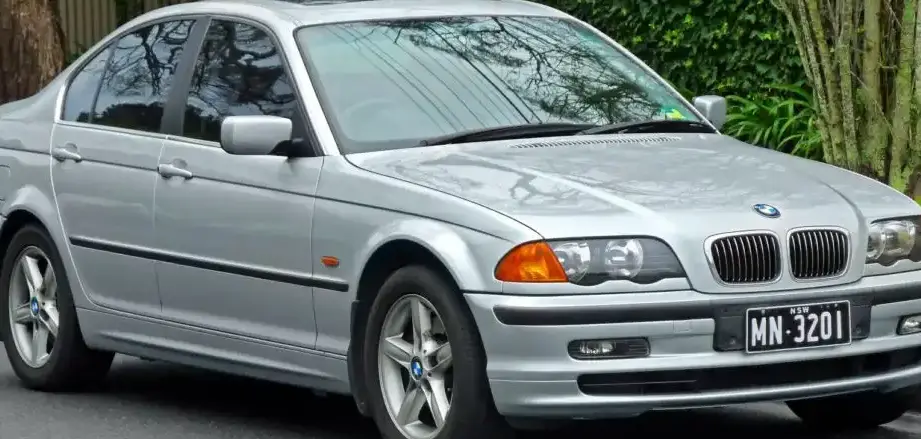
The BMW 3 Series Sedan (E46) 320i, produced from 1998 to 2001, represented the entry point into the highly successful E46 generation. Positioned as the base model, it offered a balance of BMW’s renowned driving dynamics and relative affordability. The 320i served as a crucial volume seller, appealing to buyers seeking a premium compact sedan without the higher price tag of the 323i or 328i models. It was a key component of BMW’s strategy to broaden the appeal of the 3 Series, competing directly with vehicles like the Mercedes-Benz C-Class and Audi A4.
Technical Specifications
| Brand | BMW |
| Model | 3 Series |
| Generation | 3 Series Sedan (E46) |
| Type (Engine) | 320i (150 Hp) |
| Start of production | 1998 |
| End of production | 2001 |
| Powertrain Architecture | Internal Combustion engine |
| Body type | Sedan |
| Seats | 5 |
| Doors | 4 |
| Fuel consumption (urban) | 12.5 l/100 km (18.8 US mpg) |
| Fuel consumption (extra urban) | 6.8 l/100 km (34.6 US mpg) |
| Fuel Type | Petrol (Gasoline) |
| Acceleration 0 – 100 km/h | 9.9 sec |
| Acceleration 0 – 62 mph | 9.9 sec |
| Acceleration 0 – 60 mph | 9.4 sec |
| Maximum speed | 219 km/h (136.08 mph) |
| Weight-to-power ratio | 9.1 kg/Hp |
| Weight-to-torque ratio | 7.2 kg/Nm |
| Power | 150 Hp @ 5900 rpm |
| Power per litre | 75.3 Hp/l |
| Torque | 190 Nm @ 4200 rpm (140.14 lb.-ft. @ 4200 rpm) |
| Engine layout | Front, Longitudinal |
| Engine Model/Code | M52B20TU |
| Engine displacement | 1991 cm3 (121.5 cu. in.) |
| Number of cylinders | 6 |
| Engine configuration | Inline |
| Cylinder Bore | 80 mm (3.15 in.) |
| Piston Stroke | 66 mm (2.6 in.) |
| Compression ratio | 11:1 |
| Number of valves per cylinder | 4 |
| Fuel injection system | Multi-port manifold injection |
| Engine aspiration | Naturally aspirated engine |
| Valvetrain | DOHC |
| Engine oil capacity | 6.5 l (6.87 US qt | 5.72 UK qt) |
| Coolant | 8.4 l (8.88 US qt | 7.39 UK qt) |
| Kerb Weight | 1365 kg (3009.31 lbs.) |
| Max. weight | 1865 kg (4111.62 lbs.) |
| Max load | 500 kg (1102.31 lbs.) |
| Trunk (boot) space – minimum | 440 l (15.54 cu. ft.) |
| Fuel tank capacity | 63 l (16.64 US gal | 13.86 UK gal) |
| Length | 4471 mm (176.02 in.) |
| Width | 1739 mm (68.46 in.) |
| Height | 1415 mm (55.71 in.) |
| Wheelbase | 2725 mm (107.28 in.) |
| Front track | 1481 mm (58.31 in.) |
| Rear (Back) track | 1488 mm (58.58 in.) |
| Drivetrain Architecture | Rear wheel drive |
| Number of gears | 5 |
| Gearbox type | Manual transmission |
| Front suspension | Spring Strut |
| Rear suspension | Coil spring |
| Front brakes | Ventilated discs |
| Rear brakes | Disc |
| Assisting systems | ABS (Anti-lock braking system) |
| Steering type | Steering rack and pinion |
| Power steering | Hydraulic Steering |
| Tires size | 195/65 R15 |
| Wheel rims size | 15 |
Powertrain & Engine Architecture
The heart of the 320i was the M52B20TU inline-six engine. This 2.0-liter engine, a descendant of BMW’s long-respected M52 series, was known for its smooth power delivery and inherent balance. The “TU” designation signified a technical upgrade (Technische Upgrade) over the earlier M52B20, incorporating features like individual throttle butterflies for improved throttle response and a revised engine management system. Fuel delivery was handled by a multi-port fuel injection system, and the engine featured a double overhead camshaft (DOHC) valvetrain with four valves per cylinder. The M52B20TU produced 150 horsepower at 5,900 rpm and 190 Nm (140 lb-ft) of torque at 4,200 rpm. The standard transmission was a Getrag 220 five-speed manual, providing precise shifts and a direct connection to the engine. A five-speed automatic transmission was also available, though it slightly impacted performance and fuel economy.
Driving Characteristics
The 320i, particularly with the manual transmission, offered a rewarding driving experience. While not as overtly powerful as the 323i or 328i, the 2.0-liter engine provided sufficient power for everyday driving and spirited backroad excursions. The relatively light weight of the E46 chassis contributed to nimble handling and a balanced feel. The manual gearbox’s ratios were well-matched to the engine’s powerband, allowing for brisk acceleration. The automatic transmission, while convenient, felt less engaging and resulted in slightly slower acceleration times. Compared to the higher-output models, the 320i prioritized fuel efficiency and a more relaxed driving style.
Equipment & Trim Levels
The 320i typically came standard with features such as power windows, power locks, air conditioning, and an AM/FM stereo. Interior upholstery was typically cloth, though leather was available as an option. Dashboard trim could be specified in wood or metallic finishes. Optional extras included a sunroof, heated front seats, automatic climate control, and a premium sound system. The 320i served as a blank canvas for buyers to customize their vehicle with a range of options, allowing them to tailor the car to their specific needs and preferences.
Chassis & Braking
The E46 320i utilized a MacPherson strut front suspension and a multi-link rear suspension, providing a comfortable ride and precise handling. The front brakes were ventilated discs, while the rear brakes were solid discs. Anti-lock braking system (ABS) was standard. The 320i’s suspension was tuned for a balance between comfort and handling, offering a compliant ride over uneven surfaces while still providing confident cornering ability. Stabilizer bars were fitted front and rear to reduce body roll.
Market Reception & Comparison
The 320i was generally well-received by automotive critics. It was praised for its balanced handling, comfortable ride, and fuel efficiency. However, some reviewers noted that the engine lacked the outright power of its larger siblings. Compared to the 323i and 328i, the 320i offered a more affordable entry point into the E46 range, but at the expense of performance. Fuel economy was a strong point, with the 320i achieving respectable figures for its class. Reliability was generally good, although like all BMWs of this era, preventative maintenance was crucial.
Legacy
The E46 320i has become a popular choice among enthusiasts and used car buyers. The M52B20TU engine is known for its durability and relatively simple maintenance requirements. While not as sought-after as the higher-performance models, the 320i offers a compelling combination of BMW driving dynamics, affordability, and reliability. Well-maintained examples continue to command reasonable prices in the used car market, making them an accessible entry point into BMW ownership. The 320i’s enduring appeal lies in its ability to deliver a genuine BMW experience without breaking the bank.