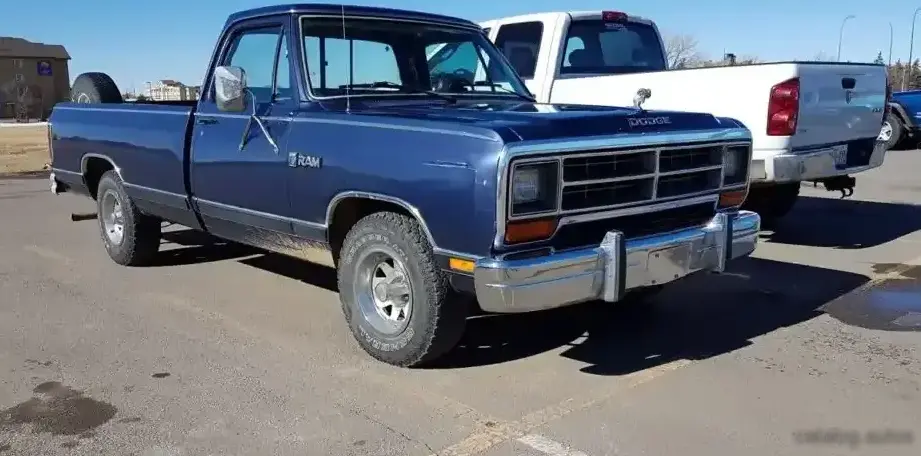
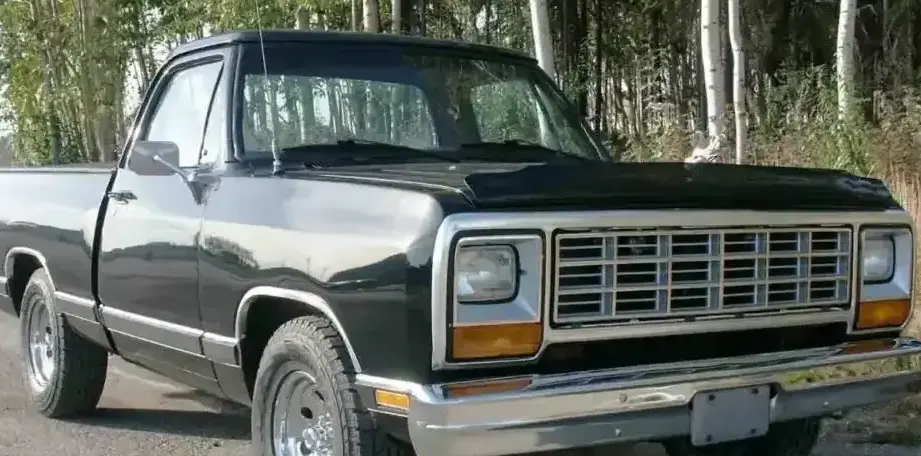
The Dodge Ram 250 Club Cab (D/W) D250, powered by the 5.9-liter V8 engine producing 175 horsepower, represents a significant entry in the American full-size pickup truck market of the early 1980s. Produced from 1981 to 1982, this variant occupied a middle ground within the Ram 250 lineup, offering a balance between capability and affordability. It was part of the second generation of Dodge Ram trucks (1981-1993), known for their more aerodynamic styling and improved interior comfort compared to previous generations. The “Club Cab” designation indicated an extended cab configuration, providing limited rear seating, while the “D/W” denoted a 2-wheel drive chassis.
Technical Specifications
| Brand | Dodge |
| Model | RAM |
| Generation | Ram 250 Club Cab (D/W) |
| Type (Engine) | D250 5.9 V8 (175 Hp) |
| Start of production | 1981 |
| End of production | 1982 |
| Powertrain Architecture | Internal Combustion engine |
| Body type | Pick-up |
| Seats | 3 |
| Doors | 2 |
| Fuel Type | Petrol (Gasoline) |
| Power | 175 Hp @ 4000 rpm |
| Power per litre | 29.7 Hp/l |
| Torque | 353 Nm @ 2000 rpm / 260.36 lb.-ft. @ 2000 rpm |
| Engine layout | Front, Longitudinal |
| Engine displacement | 5899 cm3 / 359.98 cu. in. |
| Number of cylinders | 8 |
| Engine configuration | V-engine |
| Cylinder Bore | 101.6 mm / 4 in. |
| Piston Stroke | 90.93 mm / 3.58 in. |
| Compression ratio | 8:1 |
| Fuel injection system | Carburettor |
| Engine aspiration | Naturally aspirated engine |
| Engine oil capacity | 5.6 l / 5.92 US qt | 4.93 UK qt |
| Coolant | 14.5 l / 15.32 US qt | 12.76 UK qt |
| Fuel tank capacity | 76 l / 20.08 US gal | 16.72 UK gal |
| Length | 5812 mm / 228.82 in. |
| Width including mirrors | 2019 mm / 79.49 in. |
| Wheelbase | 3785 mm / 149.02 in. |
| Drivetrain Architecture | The Internal combustion engine (ICE) drives the rear wheels of the vehicle. |
| Drive wheel | Rear wheel drive |
| Number of gears and type of gearbox | 4 gears, manual transmission |
| Front suspension | Independent coil spring |
| Rear suspension | Rigid axle suspension, Leaf spring |
| Front brakes | Disc, 325.63×30.23 mm |
| Rear brakes | Drum, 304.8×63.5 mm |
| Steering type | Cone worm with recirculation balls |
Powertrain & Engine Architecture
The heart of the D250 was the LA-series 358 cubic inch (5.9-liter) V8 engine. This engine, a cornerstone of Dodge’s truck lineup for decades, was known for its durability and relatively simple design. The 1981-1982 version utilized a two-barrel carburetor for fuel delivery, a common practice for the time. The engine featured a cast iron block and cylinder heads, contributing to its robust nature. The valvetrain employed a hydraulic lifter camshaft, reducing the need for frequent valve adjustments. The 4-speed manual transmission was a standard offering, providing direct control over the engine’s power. While an automatic transmission was available as an option, the manual was favored by those prioritizing fuel economy and direct engagement with the vehicle.
Driving Characteristics
The 175 horsepower and 260 lb-ft of torque provided by the 5.9L V8 were adequate for typical pickup truck duties of the era, such as hauling moderate loads and towing smaller trailers. However, it wasn’t a performance-oriented configuration. Acceleration was modest, and the truck felt most comfortable cruising at highway speeds. The manual transmission’s gear ratios were geared towards maximizing fuel efficiency and providing sufficient torque for work-related tasks. Compared to the larger 360 cubic inch V8 offered in other Ram 250 trims, the 358 felt noticeably less powerful, especially when fully loaded. The rear-wheel drive configuration meant that traction could be a concern in slippery conditions, particularly with an empty bed.
Equipment & Trim Levels
The Ram 250 Club Cab D/W D250 was positioned as a work-oriented truck with some added convenience features. Standard equipment typically included a basic vinyl interior, a simple dashboard layout with essential gauges, and a manually adjustable steering column. The Club Cab configuration offered a small rear bench seat, suitable for occasional passengers or storage. Optional extras included upgraded interior trim, a radio, and various towing packages. The D/W trim level indicated a lack of four-wheel drive, keeping the price point accessible to a wider range of buyers. The exterior typically featured minimal chrome trim, reflecting its utilitarian focus.
Chassis & Braking
The Ram 250 chassis was a traditional body-on-frame design, providing a robust and durable platform. The front suspension utilized independent coil springs, offering a relatively comfortable ride for a truck of its size. The rear suspension employed a leaf spring setup, designed to handle heavier loads. The braking system consisted of disc brakes on the front wheels and drum brakes on the rear. While adequate for the truck’s weight and performance capabilities, the braking system wasn’t particularly sophisticated by modern standards. Steering was accomplished via a cone worm and recirculating ball system, providing a direct but somewhat heavy feel.
Market Reception & Comparison
The Dodge Ram 250 Club Cab D/W D250 was generally well-received as a capable and affordable work truck. Critics noted its durable powertrain and comfortable ride, especially compared to older truck designs. However, the 175 horsepower engine was often seen as underpowered for heavier tasks, and the lack of four-wheel drive limited its versatility. Compared to the higher-trim Ram 250 models with the larger V8 engines, the D250 offered a more economical option, appealing to buyers who prioritized practicality over performance. Fuel economy, while not exceptional, was reasonable for a full-size pickup of the era. Reliability was generally good, thanks to the proven design of the LA-series engine.
Legacy
The Dodge Ram 250 Club Cab D/W D250, while not the most powerful or luxurious variant of its generation, holds a significant place in the history of American pickup trucks. The LA-series 358 V8 engine proved to be remarkably durable, and many examples are still on the road today. In the used car market, these trucks are often sought after by enthusiasts and collectors who appreciate their simplicity and ruggedness. While maintenance costs can be higher due to the age of the vehicles, the availability of parts and the relatively straightforward mechanical design make them relatively easy to repair. The D250 represents a bygone era of American truck design, characterized by durability, practicality, and a focus on getting the job done.