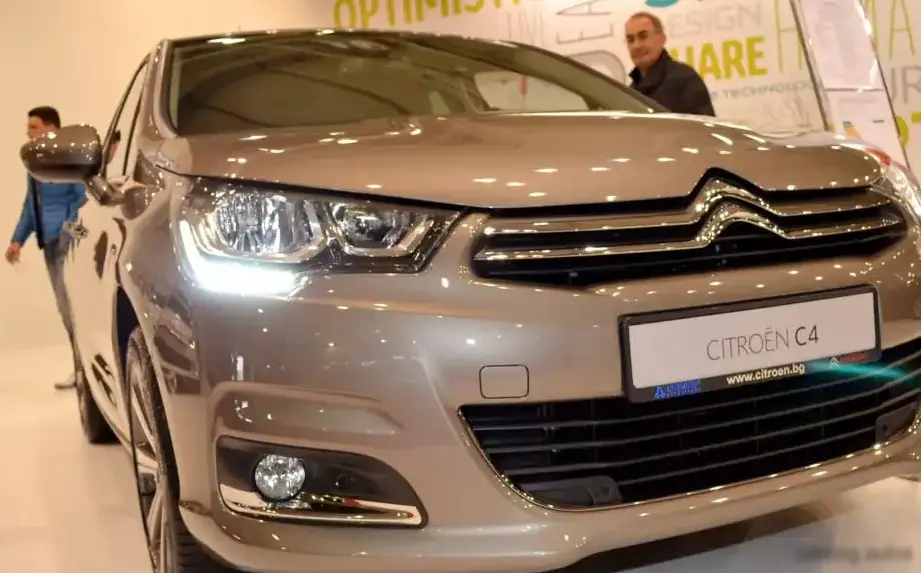
The Citroen C4 II Hatchback, specifically the Phase II model produced between 2015 and 2018, represented a significant evolution of Citroen’s compact family car. Within the C4 II range, the 1.2 PureTech 110 horsepower variant occupied a crucial mid-range position, offering a balance between fuel efficiency, performance, and affordability. This engine and transmission combination aimed to appeal to buyers seeking a practical and economical daily driver, without sacrificing a reasonable level of comfort and refinement. The C4 II itself was built upon the EMP2 platform, shared with other PSA Group vehicles like the Peugeot 308, and represented a move towards lighter construction and improved dynamics compared to its predecessor.
Technical Specifications
| Brand | Citroen |
| Model | C4 |
| Generation | C4 II Hatchback (Phase II, 2015) |
| Type (Engine) | 1.2 PureTech (110 Hp) |
| Start of production | 2015 |
| End of production | 2018 |
| Powertrain Architecture | Internal Combustion engine |
| Body type | Hatchback |
| Seats | 5 |
| Doors | 5 |
| Fuel consumption (urban) | 6.1-6.3 l/100 km (38.6 – 37.3 US mpg, 46.3 – 44.8 UK mpg, 16.4 – 15.9 km/l) |
| Fuel consumption (extra urban) | 4.0-4.1 l/100 km (58.8 – 57.4 US mpg, 70.6 – 68.9 UK mpg, 25 – 24.4 km/l) |
| Fuel consumption (combined) | 4.8-5.0 l/100 km (49 – 47 US mpg, 58.9 – 56.5 UK mpg, 20.8 – 20 km/l) |
| CO2 emissions | 112-115 g/km |
| Fuel Type | Petrol (Gasoline) |
| Acceleration 0 – 100 km/h | 10.9-11.2 sec |
| Acceleration 0 – 62 mph | 10.9-11.2 sec |
| Acceleration 0 – 60 mph | 10.4 sec |
| Maximum speed | 184 km/h (114.33 mph) |
| Emission standard | Euro 6 |
| Weight-to-power ratio | 10.9 kg/Hp, 91.7 Hp/tonne |
| Weight-to-torque ratio | 5.9 kg/Nm, 170.8 Nm/tonne |
| Power | 110 Hp @ 5500 rpm |
| Power per litre | 91.7 Hp/l |
| Torque | 205 Nm @ 1750 rpm (151.2 lb.-ft. @ 1750 rpm) |
| Engine layout | Front, Transverse |
| Engine Model/Code | HNZ EB2DT |
| Engine displacement | 1199 cm3 (73.17 cu. in.) |
| Number of cylinders | 3 |
| Engine configuration | Inline |
| Cylinder Bore | 75 mm (2.95 in.) |
| Piston Stroke | 90.5 mm (3.56 in.) |
| Compression ratio | 11:1 |
| Number of valves per cylinder | 4 |
| Fuel injection system | Direct injection |
| Engine aspiration | Turbocharger, Intercooler |
| Engine oil capacity | 3.5 l (3.7 US qt | 3.08 UK qt) |
| Kerb Weight | 1200 kg (2645.55 lbs.) |
| Max. weight | 1770 kg (3902.18 lbs.) |
| Max load | 570 kg (1256.63 lbs.) |
| Trunk (boot) space – minimum | 408 l (14.41 cu. ft.) |
| Trunk (boot) space – maximum | 1183 l (41.78 cu. ft.) |
| Fuel tank capacity | 60 l (15.85 US gal | 13.2 UK gal) |
| Permitted trailer load with brakes (12%) | 1450 kg (3196.7 lbs.) |
| Permitted trailer load without brakes | 635 kg (1399.94 lbs.) |
| Permitted towbar download | 75 kg (165.35 lbs.) |
| Length | 4329 mm (170.43 in.) |
| Width | 1789 mm (70.43 in.) |
| Width including mirrors | 2050 mm (80.71 in.) |
| Height | 1489-1502 mm (58.62 – 59.13 in.) |
| Wheelbase | 2608 mm (102.68 in.) |
| Front track | 1522-1536 mm (59.92 – 60.47 in.) |
| Rear (Back) track | 1515-1529 mm (59.65 – 60.2 in.) |
| Front overhang | 935 mm (36.81 in.) |
| Rear overhang | 786 mm (30.94 in.) |
| Drag coefficient (Cd) | 0.30 |
| Minimum turning circle (turning diameter) | 10.7 m (35.1 ft.) |
| Drivetrain Architecture | The Internal combustion engine (ICE) drives the front wheels of the vehicle. |
| Drive wheel | Front wheel drive |
| Number of gears and type of gearbox | 5 gears, manual transmission |
| Front suspension | Independent, type McPherson with coil spring and anti-roll bar |
| Rear suspension | Semi-independent, coil spring |
| Front brakes | Ventilated discs |
| Rear brakes | Disc |
| Assisting systems | ABS (Anti-lock braking system) |
| Steering type | Steering rack and pinion |
| Tires size | 205/55 R16; 225/45 R17 |
| Wheel rims size | 16; 17 |
Powertrain & Engine Architecture
The heart of this C4 variant is the PSA Group’s 1.2 PureTech engine, specifically the HNZ (EB2DT) code. This is a three-cylinder, turbocharged gasoline engine featuring direct fuel injection and variable valve timing. The engine’s compact size and lightweight construction contribute to the C4’s overall efficiency. The turbocharger, coupled with an intercooler, helps to deliver a relatively high power output for its displacement. The 110 horsepower is achieved at 5500 rpm, while peak torque of 205 Nm (151.2 lb-ft) is available from just 1750 rpm, providing good low-end responsiveness. The engine utilizes a timing chain, intended to reduce maintenance compared to timing belts. The engine is paired with a five-speed manual transmission, chosen for its simplicity and cost-effectiveness. While an automatic transmission was offered on other C4 II models, it wasn’t available with this specific 1.2 PureTech 110 hp engine.
Driving Characteristics
The 1.2 PureTech 110 hp engine provides adequate performance for everyday driving. Acceleration from 0-60 mph takes around 10.4 seconds, and the top speed is 114.33 mph. However, it’s not a particularly sporty engine. The focus is on fuel economy and usability. The turbocharger does provide a noticeable boost in power when accelerating, but the engine can feel strained at higher speeds or when fully loaded. The five-speed manual transmission is well-matched to the engine’s characteristics, with gear ratios designed to maximize fuel efficiency and provide reasonable acceleration. Compared to the more powerful 1.6 THP engines available in the C4 II range, this 1.2 PureTech offers a more relaxed driving experience, prioritizing comfort over outright performance. Compared to the diesel options, the 1.2 PureTech provides a quieter and smoother driving experience, but with slightly lower fuel economy.
Equipment & Trim Levels
The 1.2 PureTech 110 hp variant typically came in mid-range trim levels, such as ‘Feel’ or ‘Touch’ depending on the specific market. Standard equipment generally included air conditioning, electric front windows, a basic audio system with USB connectivity, and stability control. Higher trim levels added features like alloy wheels, rear parking sensors, a touchscreen infotainment system, and cruise control. Interior upholstery was typically cloth, with a focus on durability and practicality. Optional extras included a panoramic sunroof, leather upholstery, and a more advanced navigation system.
Chassis & Braking
The C4 II utilizes a McPherson strut front suspension and a semi-independent torsion beam rear suspension. This setup provides a good balance between ride comfort and handling. The front brakes are ventilated discs, while the rear brakes are solid discs. ABS (Anti-lock Braking System) is standard. The suspension is tuned for comfort, resulting in a relatively soft ride quality. Stabilizer bars are fitted to both the front and rear axles to reduce body roll during cornering.
Market Reception & Comparison
The Citroen C4 II 1.2 PureTech 110 hp received generally positive reviews for its fuel efficiency and refined engine. Critics praised the engine’s responsiveness and its ability to deliver a comfortable driving experience. However, some reviewers noted that the engine could feel underpowered when fully loaded or on steep inclines. Compared to the diesel variants, the 1.2 PureTech offered lower CO2 emissions and a quieter engine, but slightly higher running costs. Compared to competitors like the Volkswagen Golf or Ford Focus, the C4 II offered a distinctive design and a focus on comfort, but lacked the same level of brand prestige.
Legacy
The 1.2 PureTech engine has become a mainstay in the PSA Group’s lineup, and continues to be used in various models today. While early versions of the engine experienced some reliability issues with the timing chain, these were largely addressed in later iterations. The C4 II 1.2 PureTech 110 hp remains a popular choice in the used car market, offering a good balance of affordability, fuel efficiency, and practicality. Its relatively simple mechanical design and readily available parts contribute to its ongoing appeal as a reliable and economical family car.