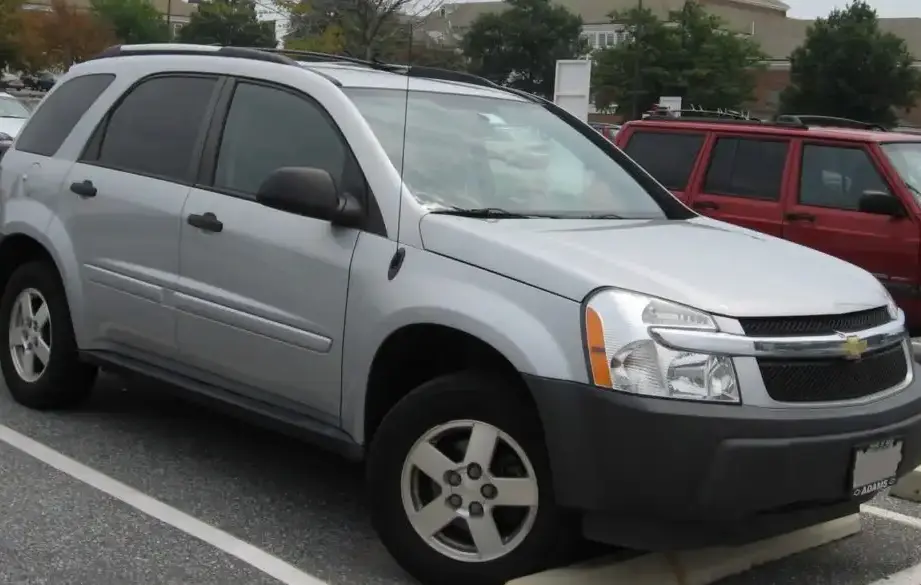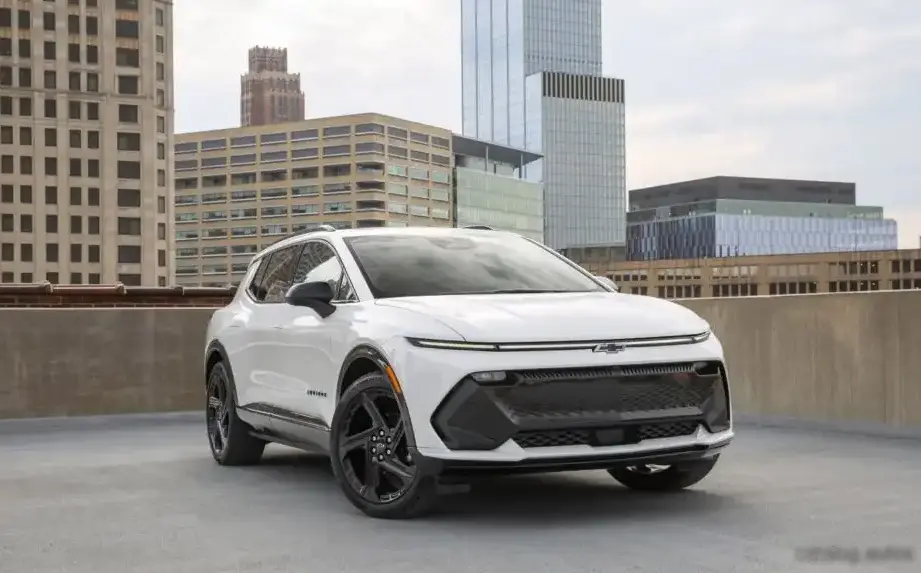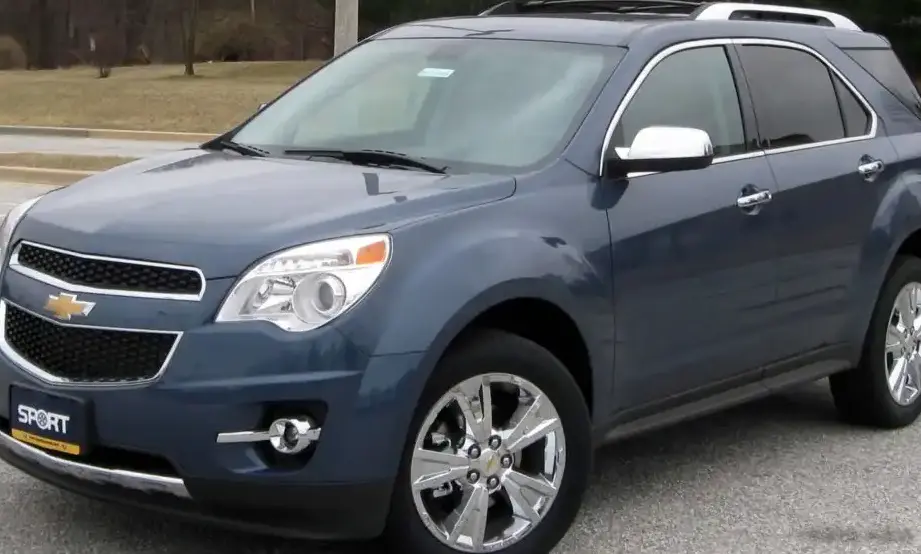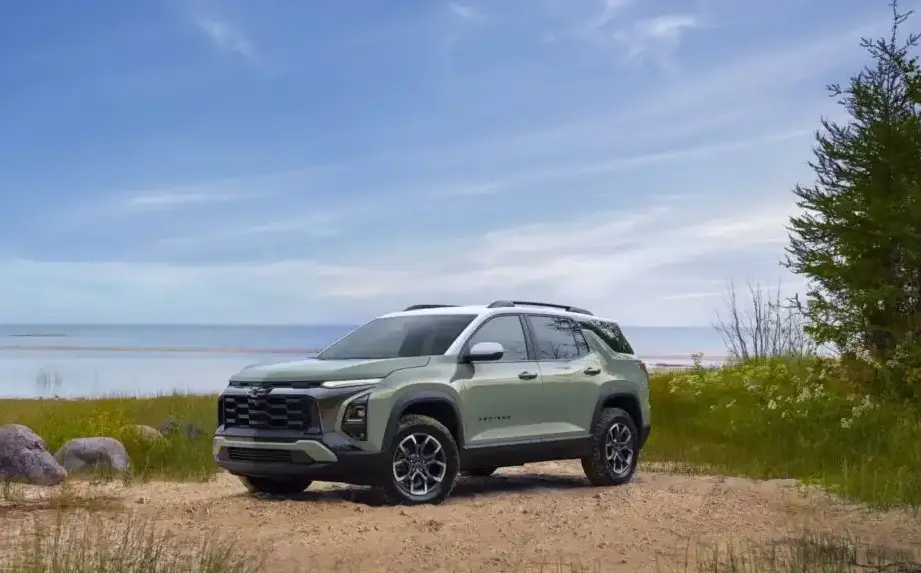
The Chevrolet Equinox IV 1.5 Turbo, producing 175 horsepower, represents a key offering in the fourth generation of Chevrolet’s popular compact SUV. Introduced in January 2024, this variant is positioned as a mainstream choice within the Equinox lineup, balancing fuel efficiency with adequate performance for everyday driving. It builds upon the foundation of the redesigned Equinox, which shares its platform with other GM vehicles, aiming to provide a competitive option in the crowded compact SUV segment. This particular configuration, pairing the 1.5-liter turbocharged engine with a continuously variable transmission (CVT), is intended to appeal to buyers prioritizing a smooth driving experience and reasonable fuel economy.
Technical Specifications
| Brand | Chevrolet |
| Model | Equinox |
| Generation | Equinox IV |
| Type (Engine) | 1.5 Turbo (175 Hp) CVT |
| Start of production | January, 2024 |
| Powertrain Architecture | Internal Combustion engine |
| Body type | SUV |
| Seats | 5 |
| Doors | 5 |
| Fuel Type | Petrol (Gasoline) |
| Weight-to-power ratio | 8.9 kg/Hp, 112.5 Hp/tonne |
| Weight-to-torque ratio | 6.2 kg/Nm, 160.8 Nm/tonne |
| Power | 175 Hp @ 5600 rpm |
| Power per litre | 117.4 Hp/l |
| Torque | 250 Nm @ 2000-4800 rpm, 184.39 lb.-ft. @ 2000-4800 rpm |
| Engine layout | Front, Transverse |
| Engine displacement | 1490 cm3, 90.93 cu. in. |
| Number of cylinders | 4 |
| Engine configuration | Inline |
| Cylinder Bore | 74 mm, 2.91 in. |
| Piston Stroke | 86.6 mm, 3.41 in. |
| Number of valves per cylinder | 4 |
| Fuel injection system | Direct injection |
| Engine aspiration | Turbocharger, Intercooler |
| Valvetrain | DOHC, VVT |
| Engine systems | Start & Stop System |
| Kerb Weight | 1555 kg, 3428.19 lbs |
| Trunk (boot) space – minimum | 845 l, 29.84 cu. ft. |
| Trunk (boot) space – maximum | 1799 l, 63.53 cu. ft. |
| Fuel tank capacity | 56 l, 14.79 US gal | 12.32 UK gal |
| Permitted trailer load with brakes (12%) | 363 kg, 800.28 lbs |
| Length | 4653 mm, 183.19 in. |
| Width | 1902 mm, 74.88 in. |
| Height | 1667 mm, 65.63 in. |
| Wheelbase | 2730 mm, 107.48 in. |
| Front track | 1620 mm, 63.78 in. |
| Rear (Back) track | 1622 mm, 63.86 in. |
| Minimum turning circle (turning diameter) | 11.3 m, 37.07 ft. |
| Drivetrain Architecture | The Internal combustion engine (ICE) drives the front wheels of the vehicle. |
| Drive wheel | Front wheel drive |
| Number of gears and type of gearbox | automatic transmission CVT |
| Front suspension | Independent, type McPherson with coil spring and anti-roll bar |
| Rear suspension | Independent multi-link suspension |
| Front brakes | Ventilated discs |
| Rear brakes | Disc |
| Assisting systems | ABS (Anti-lock braking system) |
| Steering type | Steering rack and pinion |
| Power steering | Electric Steering |
| Tires size | 235/65 R17; 235/55 R19; 235/50 R20 |
| Wheel rims size | 17; 19; 20 |
Powertrain & Engine Architecture
At the heart of the Equinox IV 1.5 Turbo is the GM LY7 engine, a 1.5-liter inline-four cylinder gasoline engine. This engine utilizes direct injection and a single turbocharger with an integrated intercooler to boost power and efficiency. The engine employs a Double Overhead Camshaft (DOHC) valvetrain with Variable Valve Timing (VVT) to optimize performance across the rev range. The engine’s output of 175 horsepower and 250 Nm (184 lb-ft) of torque is a significant improvement over the base engine offered in previous Equinox generations. The engine is paired with a continuously variable transmission (CVT), which is designed to provide smooth, seamless acceleration and maximize fuel economy. The CVT lacks traditional gear changes, instead utilizing a belt and pulley system to provide an infinite number of gear ratios within its operating range.
Driving Characteristics
The 1.5-liter turbo with the CVT delivers a comfortable and predictable driving experience. Acceleration is adequate for merging onto highways and navigating city streets, though it doesn’t offer the briskness of some competitors with more powerful engines. The CVT is programmed to mimic traditional gear shifts under hard acceleration, providing a more engaging feel. However, under lighter loads, the CVT operates smoothly and quietly. The CVT’s programming prioritizes fuel efficiency, which can sometimes result in the engine holding a lower RPM for longer periods, potentially feeling slightly sluggish in certain situations. Compared to a potential turbocharged 2.0-liter variant (if offered), this 1.5L setup prioritizes fuel economy and affordability over outright performance.
Equipment & Trim Levels
The Equinox IV 1.5 Turbo typically comes standard with a respectable array of features. These generally include an 8-inch touchscreen infotainment system with Apple CarPlay and Android Auto compatibility, keyless entry, automatic climate control, and a suite of safety features such as automatic emergency braking, lane keeping assist, and forward collision alert. Higher trim levels add features like a larger touchscreen, heated seats, a power liftgate, and upgraded interior materials. Interior upholstery is typically cloth on the base trims, with leatherette or genuine leather available on higher trims. Available options include a panoramic sunroof, adaptive cruise control, and a premium audio system.
Chassis & Braking
The Equinox IV utilizes a front-wheel-drive platform with independent suspension at all four corners. The front suspension employs a McPherson strut design, while the rear features a multi-link setup. This configuration aims to provide a balance of ride comfort and handling. The steering is electric power-assisted, offering light and precise control. Braking duties are handled by ventilated discs at the front and solid discs at the rear. Anti-lock brakes (ABS) are standard, along with electronic stability control and traction control. The suspension tuning is geared towards comfort, prioritizing a smooth ride over sporty handling.
Market Reception & Comparison
The Chevrolet Equinox IV 1.5 Turbo has been generally well-received by automotive critics as a practical and well-rounded compact SUV. Reviewers have praised its comfortable ride, spacious interior, and user-friendly technology. However, some have noted that the 1.5-liter engine can feel underpowered when fully loaded or when climbing steep hills. Compared to competitors like the Honda CR-V and Toyota RAV4, the Equinox offers a competitive price point and a generous amount of standard features. Fuel economy is generally in line with other compact SUVs in its class, achieving around 26 mpg city and 31 mpg highway. Reliability is still being assessed as the fourth generation is relatively new, but GM has a generally good track record for reliability.
Legacy
The long-term reliability of the LY7 1.5-liter turbo engine and the CVT transmission remains to be fully established, as the fourth-generation Equinox is a recent introduction. However, GM has made improvements to both the engine and transmission based on feedback from previous generations. The CVT, in particular, has been refined to address concerns about durability and smoothness. In the used car market, the Equinox IV 1.5 Turbo is expected to hold its value reasonably well, particularly if it has been well-maintained. Its combination of practicality, fuel efficiency, and affordability should make it a popular choice among used car buyers.