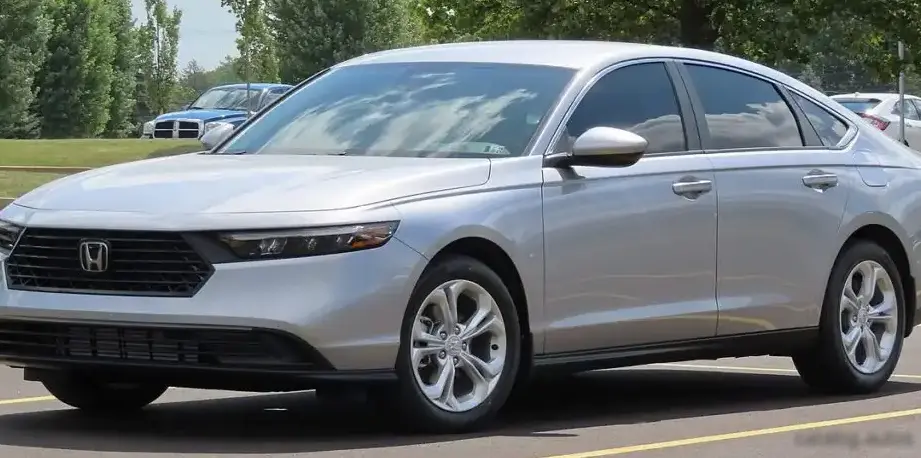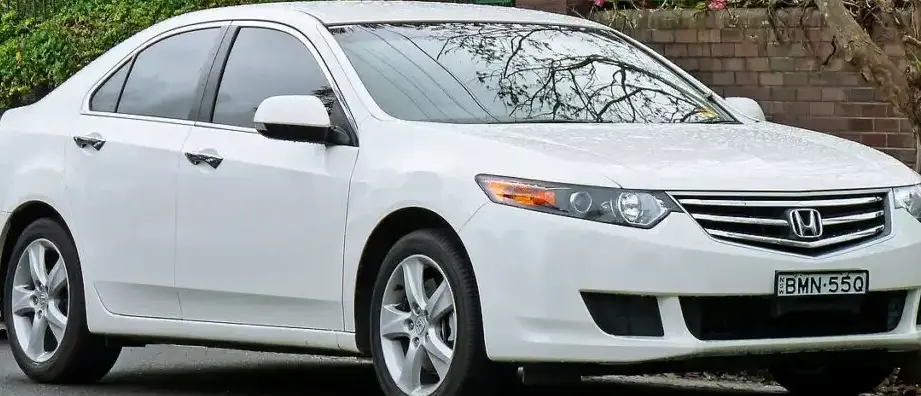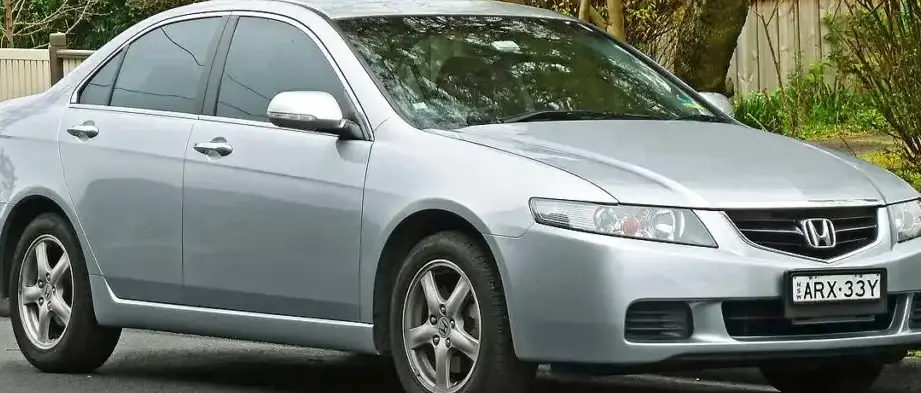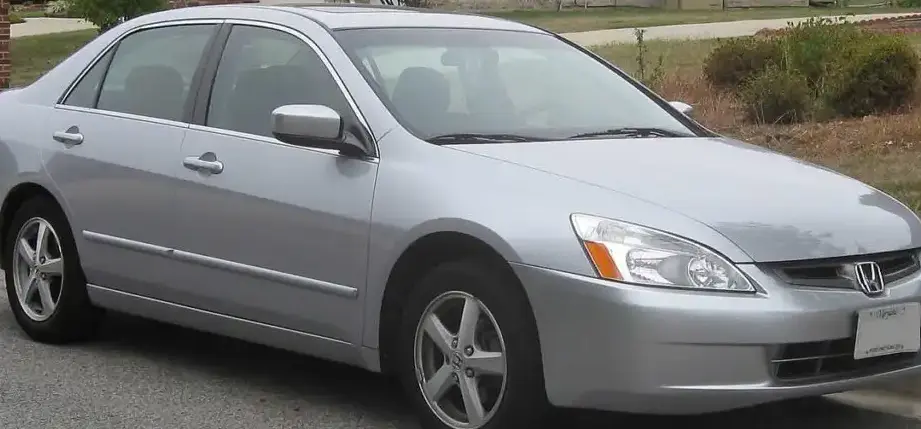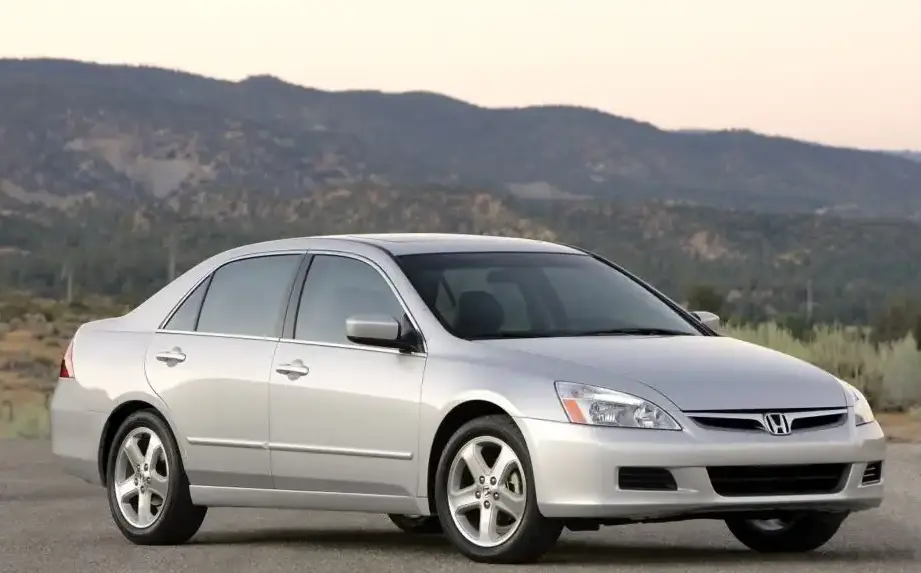
The Honda Accord VII, specifically the 2.4 i-VTEC variant produced from 2005 to 2007 for the North American market, represents a significant refresh of the seventh-generation Accord (2003-2007). This facelift brought updated styling, improved safety features, and refinements to the already popular Accord formula. The 2.4 i-VTEC engine, producing 166 horsepower, was positioned as a mid-range offering, bridging the gap between the base 2.0-liter engine and the more performance-oriented V6 models. It aimed to provide a balance of fuel efficiency and adequate power for everyday driving needs.
Technical Specifications
| Brand | Honda |
| Model | Accord |
| Generation | Accord VII (North America, facelift 2005) |
| Type (Engine) | 2.4 i-VTEC (166 Hp) |
| Start of production | September, 2005 |
| End of production | August, 2007 |
| Powertrain Architecture | Internal Combustion engine |
| Body type | Sedan |
| Seats | 5 |
| Doors | 4 |
| Fuel consumption (economy) – urban (EPA) | 9 l/100 km (26.1 US mpg) |
| Fuel consumption (economy) – extra urban (EPA) | 6.9 l/100 km (34.1 US mpg) |
| Fuel Type | Petrol (Gasoline) |
| Emission standard | LEV-2 |
| Weight-to-power ratio | 8.6 kg/Hp |
| Weight-to-torque ratio | 6.5 kg/Nm |
| Power | 166 Hp @ 5800 rpm |
| Power per litre | 70.5 Hp/l |
| Torque | 217 Nm @ 4000 rpm (160.05 lb.-ft. @ 4000 rpm) |
| Maximum engine speed | 6500 rpm |
| Engine layout | Front, Transverse |
| Engine Model/Code | K24A8 |
| Engine displacement | 2354 cm3 (143.65 cu. in.) |
| Number of cylinders | 4 |
| Engine configuration | Inline |
| Cylinder Bore | 87 mm (3.43 in.) |
| Piston Stroke | 99 mm (3.9 in.) |
| Compression ratio | 9.7:1 |
| Number of valves per cylinder | 4 |
| Fuel injection system | Multi-port manifold injection |
| Engine aspiration | Naturally aspirated engine |
| Valvetrain | DOHC, i-VTEC |
| Engine oil capacity | 4.2 l (4.44 US qt | 3.7 UK qt) |
| Coolant | 7.2 l (7.61 US qt | 6.34 UK qt) |
| Kerb Weight | 1420-1440 kg (3130.56 – 3174.66 lbs.) |
| Max. weight | 1850-1880 kg (4078.55 – 4144.69 lbs.) |
| Max load | 430-440 kg (947.99 – 970.03 lbs.) |
| Trunk (boot) space – minimum | 396 l (13.98 cu. ft.) |
| Fuel tank capacity | 64.7 l (17.09 US gal | 14.23 UK gal) |
| Length | 4854 mm (191.1 in.) |
| Width | 1820 mm (71.65 in.) |
| Height | 1453 mm (57.2 in.) |
| Wheelbase | 2740 mm (107.87 in.) |
| Front track | 1553 mm (61.14 in.) |
| Rear (Back) track | 1554 mm (61.18 in.) |
| Minimum turning circle (turning diameter) | 11 m (36.09 ft.) |
| Drivetrain Architecture | The Internal combustion engine (ICE) drives the front wheels of the vehicle. |
| Drive wheel | Front wheel drive |
| Number of gears and type of gearbox | 5 gears, manual transmission |
| Front suspension | Coil spring, Double wishbone, Transverse stabilizer |
| Rear suspension | Independent multi-link suspension, Coil spring |
| Front brakes | Ventilated discs, 282 mm |
| Rear brakes | Drum |
| Assisting systems | ABS (Anti-lock braking system) |
| Steering type | Steering rack and pinion |
| Power steering | Hydraulic Steering |
| Tires size | 195/65 R15; 205/65 R15; 205/60 R16 |
| Wheel rims size | 6.5J x 15; 6.5J x 16 |
INTRODUCTION
The 2005-2007 North American Honda Accord VII 2.4 i-VTEC represented a key iteration of Honda’s mid-size sedan. Built on the 1HX0/A3 platform, this version benefited from a mid-cycle refresh that included revised front and rear styling, interior upgrades, and enhanced safety features. The 2.4-liter engine was a cornerstone of the lineup, offering a compelling blend of performance and efficiency for a broad range of drivers. It was positioned as a step up from the base 2.0-liter engine, providing more power for highway merging and passing maneuvers, while remaining more affordable and fuel-efficient than the 3.0-liter V6 option.
Powertrain & Engine Architecture
At the heart of the Accord 2.4 i-VTEC lies the K24A8 engine, a 2.4-liter inline-four cylinder powerplant. This engine is a member of Honda’s renowned K-series family, known for its robust construction and advanced technology. The K24A8 utilizes a multi-port fuel injection system, delivering fuel directly into the intake ports for efficient combustion. A key feature is Honda’s i-VTEC (Intelligent Variable Timing and Lift Electronic Control) system. This technology allows the engine to seamlessly switch between two different camshaft profiles – one optimized for low-speed torque and fuel economy, and another for high-speed power. This is achieved by hydraulically disengaging rocker arms on certain valves at higher RPMs, effectively changing valve lift and duration. The engine’s valvetrain consists of a double overhead camshaft (DOHC) design with four valves per cylinder. The 2.4 i-VTEC was typically paired with a five-speed manual transmission, but a five-speed automatic transmission was also available, and is the focus of this article. This automatic transmission featured Honda’s Grade Logic Control, which automatically selects the appropriate gear based on driving conditions and throttle input, optimizing both performance and fuel efficiency.
Driving Characteristics
The 2.4 i-VTEC with the five-speed automatic transmission delivered a comfortable and predictable driving experience. While not overtly sporty, the engine provided sufficient power for everyday driving situations. Acceleration from a standstill was adequate, and the automatic transmission shifted smoothly, though sometimes with a slight hesitation. The gear ratios were tuned for fuel economy, meaning the engine could feel somewhat strained when accelerating hard or climbing hills. Compared to the manual transmission version, the automatic offered less driver engagement but greater convenience. The V6 models offered significantly more power and quicker acceleration, but at the expense of fuel economy. The 2.4 i-VTEC provided a more balanced experience, appealing to drivers who prioritized comfort and efficiency over outright performance. The automatic transmission’s programming favored smooth transitions over aggressive downshifts, making it well-suited for commuting and long-distance highway driving.
Equipment & Trim Levels
The 2.4 i-VTEC trim level typically included standard features such as air conditioning, power windows and locks, a CD player with an auxiliary input jack, and keyless entry. Higher trim levels, such as the EX, added features like a sunroof, alloy wheels, and an upgraded audio system. Interior upholstery was typically cloth, with leather options available on higher trims. The dashboard layout was functional and straightforward, with easy-to-read gauges and intuitive controls. Optional extras included a navigation system, premium sound system, and heated front seats.
Chassis & Braking
The Accord VII featured a front-engine, front-wheel-drive layout. The front suspension utilized a coil spring, double wishbone configuration with a transverse stabilizer bar, providing a comfortable ride and predictable handling. The rear suspension employed an independent multi-link setup, also with coil springs, further enhancing ride quality and stability. Braking duties were handled by ventilated discs on the front wheels and drum brakes on the rear. Anti-lock braking system (ABS) was standard, providing enhanced stopping power and control in emergency situations. The suspension tuning was geared towards comfort, resulting in a relatively soft ride, but the Accord still offered decent handling characteristics for a mid-size sedan.
Market Reception & Comparison
The 2005-2007 Honda Accord 2.4 i-VTEC was generally well-received by automotive critics. It was praised for its reliability, fuel efficiency, and comfortable ride. However, some reviewers noted that the engine lacked the punch of the V6 models and that the automatic transmission could feel somewhat sluggish at times. Compared to competitors like the Toyota Camry and Nissan Altima, the Accord offered a more refined driving experience and a reputation for long-term reliability. Fuel economy figures were competitive, averaging around 26 mpg in the city and 34 mpg on the highway. The 2.4 i-VTEC offered a compelling value proposition, providing a good balance of features, performance, and efficiency.
Legacy
The K24A8 engine, in general, has proven to be remarkably durable and reliable. The 2.4 i-VTEC automatic transmission, while not without its occasional issues (such as torque converter wear over very high mileage), has also demonstrated good longevity. Today, these Accords are readily available on the used car market at affordable prices. They remain a popular choice for budget-conscious buyers seeking a dependable and fuel-efficient mid-size sedan. Proper maintenance, including regular oil changes and transmission fluid services, is crucial for ensuring the continued reliability of these vehicles. The Accord VII 2.4 i-VTEC continues to be regarded as a solid and practical choice in the used car market, embodying Honda’s reputation for quality and dependability.