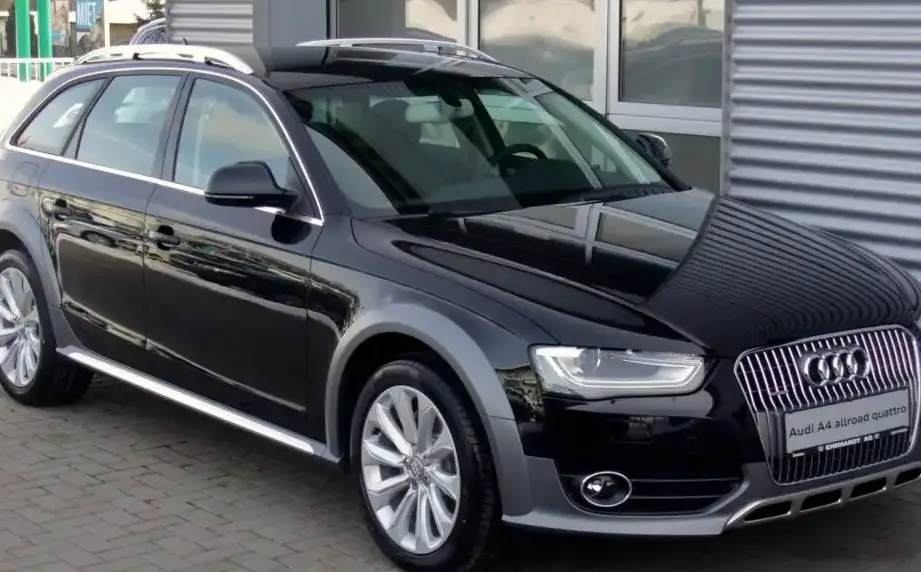
The Audi A4 allroad 2.0 TDI quattro, produced from 2011 to 2013, represents a specific iteration of the B8 8K generation A4 allroad. Positioned as a crossover-estate vehicle, it aimed to bridge the gap between a traditional station wagon and a more rugged all-terrain vehicle. This variant, equipped with a 2.0-liter turbocharged diesel engine producing 143 horsepower and paired with a six-speed manual transmission, was a popular choice in European markets, offering a blend of practicality, efficiency, and all-weather capability. It sat in the mid-range of the allroad lineup, offering a more accessible entry point than the higher-powered petrol variants.
Technical Specifications
| Brand | Audi |
| Model | A4 |
| Generation | A4 allroad (B8 8K, facelift 2011) |
| Type (Engine) | 2.0 TDI (143 Hp) quattro |
| Start of production | 2011 |
| End of production | 2013 |
| Powertrain Architecture | Internal Combustion engine |
| Body type | Station wagon (estate), Crossover |
| Seats | 5 |
| Doors | 5 |
| Fuel consumption (urban) | 7.5 l/100 km (31.4 US mpg, 37.7 UK mpg, 13.3 km/l) |
| Fuel consumption (extra urban) | 5.5 l/100 km (42.8 US mpg, 51.4 UK mpg, 18.2 km/l) |
| Fuel consumption (combined) | 6.2 l/100 km (37.9 US mpg, 45.6 UK mpg, 16.1 km/l) |
| CO2 emissions | 164 g/km |
| Fuel Type | Diesel |
| Acceleration 0 – 100 km/h | 10.3 sec |
| Acceleration 0 – 62 mph | 10.3 sec |
| Acceleration 0 – 60 mph | 9.8 sec |
| Maximum speed | 200 km/h (124.27 mph) |
| Emission standard | Euro 5 |
| Weight-to-power ratio | 11.4 kg/Hp, 87.7 Hp/tonne |
| Weight-to-torque ratio | 5.1 kg/Nm, 196.3 Nm/tonne |
| Power | 143 Hp @ 4200 rpm |
| Power per litre | 72.7 Hp/l |
| Torque | 320 Nm @ 1750-2500 rpm (236.02 lb.-ft. @ 1750-2500 rpm) |
| Engine layout | Front, Longitudinal |
| Engine Model/Code | CJCA |
| Engine displacement | 1968 cm3 (120.09 cu. in.) |
| Number of cylinders | 4 |
| Engine configuration | Inline |
| Cylinder Bore | 81 mm (3.19 in.) |
| Piston Stroke | 95.5 mm (3.76 in.) |
| Compression ratio | 16.5:1 |
| Number of valves per cylinder | 4 |
| Fuel injection system | Diesel Commonrail |
| Engine aspiration | Turbocharger, Intercooler |
| Valvetrain | DOHC |
| Engine oil capacity | 5 l (5.28 US qt | 4.4 UK qt) |
| Kerb Weight | 1630 kg (3593.53 lbs.) |
| Max. weight | 2200 kg (4850.17 lbs.) |
| Max load | 570 kg (1256.63 lbs.) |
| Trunk (boot) space – minimum | 490 l (17.3 cu. ft.) |
| Trunk (boot) space – maximum | 1430 l (50.5 cu. ft.) |
| Fuel tank capacity | 64 l (16.91 US gal | 14.08 UK gal) |
| Max. roof load | 90 kg (198.42 lbs.) |
| Permitted trailer load with brakes (8%) | 1900 kg (4188.78 lbs.) |
| Permitted trailer load with brakes (12%) | 1700 kg (3747.86 lbs.) |
| Permitted trailer load without brakes | 750 kg (1653.47 lbs.) |
| Permitted towbar download | 80 kg (176.37 lbs.) |
| Length | 4721 mm (185.87 in.) |
| Width | 1841 mm (72.48 in.) |
| Width including mirrors | 2006 mm (78.98 in.) |
| Height | 1495 mm (58.86 in.) |
| Wheelbase | 2805 mm (110.43 in.) |
| Front track | 1583 mm (62.32 in.) |
| Rear (Back) track | 1574 mm (61.97 in.) |
| Front overhang | 883 mm (34.76 in.) |
| Rear overhang | 1033 mm (40.67 in.) |
| Drag coefficient (Cd) | 0.34 |
| Minimum turning circle (turning diameter) | 11.5 m (37.73 ft.) |
| Drive wheel | All wheel drive (4×4) |
| Number of gears and type of gearbox | 6 gears, manual transmission |
| Front suspension | Independent multi-link suspension |
| Rear suspension | Independent on trapezoidal lever |
| Front brakes | Ventilated discs |
| Rear brakes | Disc |
| Assisting systems | ABS (Anti-lock braking system) |
| Steering type | Steering rack and pinion |
| Power steering | Electric Steering |
| Tires size | 225/55 R17 |
| Wheel rims size | 8J x 17 |
Powertrain & Engine Architecture
The heart of this A4 allroad variant is the CJCA engine, a 2.0-liter inline-four cylinder diesel engine. This engine belongs to the Volkswagen Group’s modular engine family and utilizes common rail direct injection, delivering fuel at extremely high pressure for optimized combustion. The engine features a turbocharger with an intercooler, enhancing power output and efficiency. The DOHC (Double Overhead Camshaft) valvetrain, with four valves per cylinder, further contributes to the engine’s performance. The six-speed manual transmission was the standard offering, providing drivers with full control over gear selection. The quattro all-wheel-drive system, a hallmark of Audi, distributes power between the front and rear axles as needed, enhancing traction and stability in various driving conditions.
Driving Characteristics
The 143 horsepower and 320 Nm (236 lb-ft) of torque offered a respectable, though not exhilarating, driving experience. Acceleration from 0 to 60 mph took approximately 9.8 seconds, and top speed was limited to 200 km/h (124 mph). Compared to the more powerful 2.0 TFSI petrol variants or the higher-output TDI models, this version prioritized fuel economy and relaxed cruising. The manual transmission allowed for precise gear changes, but the relatively low horsepower meant frequent downshifts were necessary when overtaking or climbing hills. The quattro system provided excellent grip and stability, particularly on slippery surfaces, making it a capable all-weather vehicle. The gear ratios were tuned for efficiency, resulting in a comfortable highway ride but potentially feeling slightly sluggish in city driving.
Equipment & Trim Levels
The A4 allroad 2.0 TDI quattro typically came well-equipped, even as a mid-range offering. Standard features included alloy wheels, roof rails, a multi-function steering wheel, automatic climate control, and an infotainment system with a color display. The interior upholstery was typically cloth, with options for leather upgrades. Common optional extras included a sunroof, parking sensors, upgraded audio systems, and navigation. The allroad-specific trim elements, such as unique exterior styling cues and protective cladding, distinguished it from the standard A4 Avant (wagon).
Chassis & Braking
The A4 allroad featured a robust chassis designed to handle both on-road and light off-road conditions. The front suspension utilized an independent multi-link setup, providing a comfortable and controlled ride. The rear suspension employed an independent trapezoidal link design. Braking duties were handled by ventilated discs at the front and solid discs at the rear, equipped with ABS (Anti-lock Braking System) for enhanced safety. The suspension was slightly raised compared to the standard A4 Avant, providing increased ground clearance for navigating rougher terrain. Stabilizer bars were fitted front and rear to reduce body roll during cornering.
Market Reception & Comparison
The A4 allroad 2.0 TDI quattro was generally well-received by automotive critics. It was praised for its practicality, all-weather capability, and fuel efficiency. However, some reviewers noted that the 143 horsepower engine felt somewhat underpowered, especially when fully loaded. Compared to the higher-output TDI variants, this version offered a more affordable entry point into the allroad lineup, but at the expense of performance. Fuel economy was a strong point, averaging around 6.2 l/100 km (37.9 US mpg), making it an attractive option for drivers covering long distances. Reliability was generally good, typical of Audi’s build quality, although diesel particulate filter issues could arise with infrequent long-distance driving.
Legacy
The A4 allroad 2.0 TDI quattro has proven to be a relatively reliable vehicle in the used car market. The CJCA engine, while not without its potential issues (such as DPF clogging), is generally considered durable when properly maintained. The quattro all-wheel-drive system remains a significant selling point, particularly in regions with harsh winters. Today, these vehicles can be found at reasonable prices, offering a practical and capable option for those seeking a versatile estate car with all-weather capability. Its blend of practicality, efficiency, and Audi’s renowned build quality has ensured its continued appeal among used car buyers.