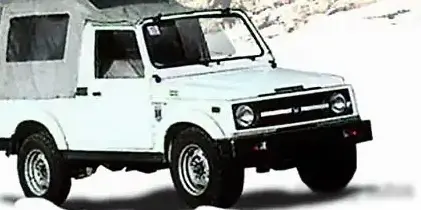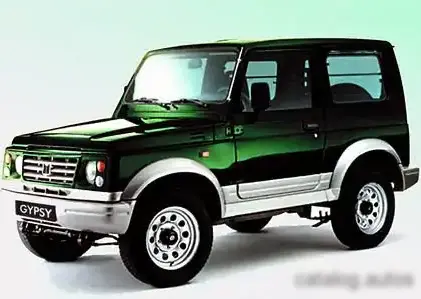
The Maruti Gypsy 1.0, producing 45 horsepower, was a foundational model in the Indian automotive landscape, manufactured from 1987 to 1998. Derived from the Suzuki SJ410, the Gypsy was specifically designed and built by Maruti Suzuki to cater to the unique demands of the Indian market, particularly its challenging terrain. It quickly became synonymous with off-road capability and affordability, serving as a workhorse for both civilian and military applications. This variant, with its modest 1.0-liter engine, represented the entry point into the Gypsy lineup, prioritizing practicality and ruggedness over outright performance. It was a key component of the initial wave of affordable, domestically produced vehicles in India following economic liberalization.
Technical Specifications
| Brand | Maruti |
| Model | Gypsy |
| Generation | Gypsy |
| Type (Engine) | 1.0 (45 Hp) |
| Start of production | 1987 |
| End of production | 1998 |
| Powertrain Architecture | Internal Combustion engine |
| Body type | Off-road vehicle |
| Seats | 5 |
| Doors | 3 |
| Fuel consumption (combined) | 6.7 l/100 km (35.1 US mpg, 42.2 UK mpg, 14.9 km/l) |
| Fuel Type | Petrol (Gasoline) |
| Maximum speed | 105 km/h (65.24 mph) |
| Weight-to-power ratio | 16.2 kg/Hp (61.6 Hp/tonne) |
| Weight-to-torque ratio | 10.1 kg/Nm (98.6 Nm/tonne) |
| Power | 45 Hp @ 5500 rpm |
| Power per litre | 46.4 Hp/l |
| Torque | 72 Nm @ 3000 rpm (53.1 lb.-ft. @ 3000 rpm) |
| Engine layout | Front, Longitudinal |
| Engine displacement | 970 cm3 (59.19 cu. in.) |
| Number of cylinders | 4 |
| Engine configuration | Inline |
| Cylinder Bore | 65.5 mm (2.58 in.) |
| Piston Stroke | 72 mm (2.83 in.) |
| Compression ratio | 8.8:1 |
| Number of valves per cylinder | 2 |
| Fuel injection system | Carburettor |
| Engine aspiration | Naturally aspirated engine |
| Valvetrain | OHC |
| Kerb Weight | 730 kg (1609.37 lbs.) |
| Fuel tank capacity | 35 l (9.25 US gal | 7.7 UK gal) |
| Length | 3495 mm (137.6 in.) |
| Width | 1495 mm (58.86 in.) |
| Height | 1405 mm (55.31 in.) |
| Wheelbase | 2335 mm (91.93 in.) |
| Front track | 1200 mm (47.24 in.) |
| Rear track | 1200 mm (47.24 in.) |
| Drive wheel | All wheel drive (4×4) |
| Number of gears and type of gearbox | 4 gears, manual transmission |
| Front suspension | Leaf spring |
| Rear suspension | Leaf spring |
| Front brakes | Disc |
| Rear brakes | Drum |
| Assisting systems | ABS (Anti-lock braking system) |
Powertrain & Engine Architecture
The heart of the Gypsy 1.0 was the F10A engine, a 970cc inline-four cylinder petrol engine. This engine, while relatively simple in design, was known for its durability and ease of maintenance. It utilized a single overhead camshaft (OHC) valvetrain with two valves per cylinder. Fuel delivery was managed by a carburetor, a common feature for vehicles of this era and market segment. The carburetor system, while less efficient than fuel injection, was robust and easily repairable in areas with limited access to specialized automotive technology. The engine’s longitudinal front-engine layout contributed to its off-road prowess, providing a favorable weight distribution. The 4-speed manual transmission was a standard feature, chosen for its simplicity and reliability. It was a non-synchronized gearbox, requiring a degree of skill from the driver during downshifts.
Driving Characteristics
The 45 horsepower output of the 1.0-liter engine translated to modest performance. Acceleration was slow, and top speed was limited to around 105 km/h (65 mph). However, the Gypsy 1.0 wasn’t designed for speed; it was engineered for tackling rough terrain. The low-end torque, while not substantial, was sufficient for navigating obstacles and climbing inclines. The 4-wheel drive system, coupled with the short wheelbase, provided excellent traction in off-road conditions. Compared to later Gypsy variants with larger engines (like the 1.3L), the 1.0L felt significantly underpowered, especially when fully loaded or traveling on paved roads. The gear ratios were optimized for low-speed crawling rather than highway cruising. The leaf spring suspension, while providing a comfortable ride on rough surfaces, resulted in a somewhat bouncy ride on smooth roads.
Equipment & Trim Levels
The Gypsy 1.0 was a spartan vehicle, reflecting its utilitarian purpose and affordability. Standard equipment was minimal, typically including basic steel wheels, vinyl upholstery, and a simple dashboard layout. Power steering and air conditioning were not typically offered on this base model. The interior focused on functionality rather than luxury. Optional extras were limited, often consisting of a basic radio or upgraded seat covers. The overall trim level was designed to keep the vehicle accessible to a wide range of buyers, including those in rural areas and those seeking a cost-effective work vehicle.
Chassis & Braking
The Gypsy’s chassis was a body-on-frame construction, providing exceptional durability and off-road capability. The front suspension utilized leaf springs, while the rear also employed a leaf spring setup. This suspension configuration was robust and capable of handling significant loads. The braking system consisted of disc brakes on the front wheels and drum brakes on the rear. While adequate for the vehicle’s weight and performance, the braking system lacked the sophistication of more modern vehicles. An Anti-lock Braking System (ABS) was not standard on the 1.0L variant, though it became available on later models.
Market Reception & Comparison
The Maruti Gypsy 1.0 was widely praised for its ruggedness, affordability, and off-road capability. It quickly became a popular choice among farmers, foresters, and the Indian military. Critics noted its lack of refinement and modest performance, but these shortcomings were largely overlooked given its price point and intended use. Compared to other vehicles in its class, such as the Mahindra CJ series, the Gypsy offered a more modern design and a more comfortable ride. The 1.3L Gypsy, introduced later, offered significantly improved performance but came at a higher price. The 1.0L remained a popular choice for those prioritizing affordability and simplicity.
Legacy
The Maruti Gypsy, particularly the 1.0L variant, holds a significant place in Indian automotive history. It established Maruti Suzuki as a major player in the Indian market and demonstrated the viability of domestically produced vehicles. While production ceased in 2019 due to stricter safety and emission regulations, the Gypsy remains a popular choice among enthusiasts and collectors. The F10A engine, while no longer in production, is known for its longevity and relative ease of repair. Today, well-maintained Gypsy 1.0s are sought after by off-road enthusiasts and those seeking a nostalgic reminder of a simpler era in Indian motoring. Its simple mechanicals and readily available parts continue to make it a viable and enjoyable vehicle for those willing to embrace its classic character.