
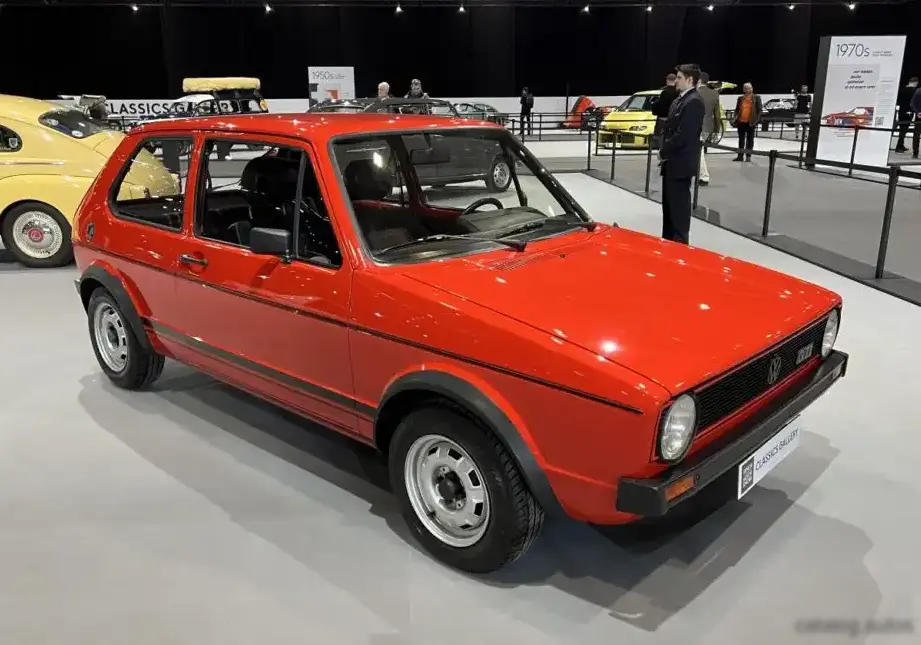
The Volkswagen Golf Mk1 1.6 GTI, produced from 1976 to 1982, represents a pivotal moment in the hot hatch segment. This 3-door hatchback, designated internally as the 1HX0, was a key variant within the first generation Golf lineup, establishing the GTI as a performance-oriented sub-brand for Volkswagen. It built upon the success of the base Golf, offering a significantly more engaging driving experience and a sportier aesthetic. The 1.6 GTI quickly became a benchmark for affordable performance, influencing a generation of similar vehicles.
Technical Specifications
| Brand | Volkswagen |
| Model | Golf |
| Generation | Golf I (3-door) |
| Type (Engine) | 1.6 GTI (110 Hp) |
| Start of production | 1976 |
| End of production | 1982 |
| Powertrain Architecture | Internal Combustion engine |
| Body type | Hatchback |
| Seats | 5 |
| Doors | 3 |
| Fuel consumption (economy) – urban | 12.1 l/100 km (19.4 US mpg) |
| Fuel consumption (economy) – extra urban | 7.4 l/100 km (31.8 US mpg) |
| Fuel Type | Petrol (Gasoline) |
| Acceleration 0 – 100 km/h | 9 sec |
| Acceleration 0 – 62 mph | 9 sec |
| Acceleration 0 – 60 mph | 8.8 sec |
| Maximum speed | 180 km/h (111.85 mph) |
| Weight-to-power ratio | 7.4 kg/Hp |
| Weight-to-torque ratio | 5.8 kg/Nm |
| Power | 110 Hp @ 6100 rpm |
| Power per litre | 69.3 Hp/l |
| Torque | 140 Nm @ 5000 rpm (103.26 lb.-ft. @ 5000 rpm) |
| Engine layout | Front, Transverse |
| Engine Model/Code | EG |
| Engine displacement | 1588 cm3 (96.91 cu. in.) |
| Number of cylinders | 4 |
| Engine configuration | Inline |
| Cylinder Bore | 79.5 mm (3.13 in.) |
| Piston Stroke | 80 mm (3.15 in.) |
| Compression ratio | 9.5:1 |
| Number of valves per cylinder | 2 |
| Fuel injection system | Multi-port manifold injection |
| Engine aspiration | Naturally aspirated engine |
| Valvetrain | SOHC |
| Engine oil capacity | 4 l (4.23 US qt | 3.52 UK qt) |
| Coolant | 4.5 l (4.76 US qt | 3.96 UK qt) |
| Kerb Weight | 810 kg (1785.74 lbs.) |
| Max. weight | 1230 kg (2711.69 lbs.) |
| Max load | 420 kg (925.94 lbs.) |
| Trunk (boot) space – minimum | 368 l (13 cu. ft.) |
| Trunk (boot) space – maximum | 1102 l (38.92 cu. ft.) |
| Fuel tank capacity | 40 l (10.57 US gal | 8.8 UK gal) |
| Permitted trailer load with brakes (12%) | 1200 kg (2645.55 lbs.) |
| Permitted trailer load without brakes | 400 kg (881.85 lbs.) |
| Length | 3723 mm (146.57 in.) |
| Width | 1610 mm (63.39 in.) |
| Height | 1410 mm (55.51 in.) |
| Wheelbase | 2400 mm (94.49 in.) |
| Front track | 1405 mm (55.31 in.) |
| Rear (Back) track | 1372 mm (54.02 in.) |
| Ride height (ground clearance) | 125 mm (4.92 in.) |
| Minimum turning circle (turning diameter) | 10.5 m (34.45 ft.) |
| Drivetrain Architecture | The Internal combustion engine (ICE) drives the front wheels of the vehicle. |
| Drive wheel | Front wheel drive |
| Number of gears and type of gearbox | 5 gears, manual transmission |
| Front suspension | Independent, type McPherson with coil spring and anti-roll bar |
| Rear suspension | Transverse stabilizer, Trailing arm, Coil spring, Torsion |
| Front brakes | Ventilated discs, 238.76 mm |
| Rear brakes | Disc, 180.34 mm |
| Steering type | Steering rack and pinion |
| Tires size | Front wheel tires: 175/70 R13Rear wheel tires: 175/70 R13 |
| Wheel rims size | Front wheel rims: 5.5J x 13Rear wheel rims: 5.5J x 13 |
INTRODUCTION
The Volkswagen Golf Mk1 1.6 GTI, launched in 1976, was a direct response to the growing demand for sporty, yet practical, compact cars. It wasn’t the first “hot hatch” – that distinction often goes to the Simca 1100 Ti – but it arguably perfected the formula. The GTI variant elevated the standard Golf with a more powerful engine, upgraded suspension, and distinctive styling cues. It quickly became a cultural icon, representing a new breed of accessible performance. The 1.6L engine was the initial offering, paving the way for the later, more potent 1.8L versions.
Powertrain & Engine Architecture
At the heart of the 1.6 GTI lies the EG engine code, a 1588cc inline-four cylinder engine. This engine featured a single overhead camshaft (SOHC) valvetrain operating two valves per cylinder. Crucially, it employed Bosch K-Jetronic mechanical fuel injection, a sophisticated system for its time that provided precise fuel delivery and contributed to the engine’s responsiveness. The 9.5:1 compression ratio further enhanced performance. The engine produced 110 horsepower at 6100 rpm and 140 Nm (103.26 lb-ft) of torque at 5000 rpm. Power was delivered to the front wheels through a smooth-shifting 5-speed manual transmission, which was standard equipment. The transverse engine layout, a hallmark of front-wheel-drive Volkswagens, contributed to the car’s compact dimensions and efficient packaging.
Driving Characteristics
The 1.6 GTI offered a noticeable step up in performance compared to the standard Golf. Acceleration from 0 to 60 mph took approximately 8.8 seconds, and it could reach a top speed of 180 km/h (111.85 mph). While not blistering by modern standards, these figures were impressive for a car of its size and price in the late 1970s. The 5-speed gearbox allowed for effective use of the engine’s powerband, and the front-wheel-drive configuration provided good traction. Compared to the later 1.8 GTI, the 1.6 felt slightly less eager to rev, with peak power arriving a bit higher in the rev range. However, its lighter weight contributed to a more nimble and balanced feel in corners. The steering, while not power-assisted, was direct and communicative.
Equipment & Trim Levels
The GTI trim level added several key features to the standard Golf. Exterior distinctions included a prominent front spoiler, red trim around the grille, and often, additional stripes. Inside, the GTI boasted sport seats with tartan upholstery, a leather-wrapped steering wheel, and a more comprehensive instrument cluster. Optional extras included a sunroof, upgraded audio system, and alloy wheels. The interior was functional and well-designed, prioritizing driver engagement over outright luxury. The GTI was positioned as the premium offering within the Mk1 Golf range, appealing to enthusiasts who desired a more sporting driving experience.
Chassis & Braking
The GTI featured a revised suspension setup compared to the standard Golf. The front suspension utilized McPherson struts with coil springs and an anti-roll bar, while the rear employed a torsion beam setup with coil springs. This configuration provided a good balance between ride comfort and handling precision. Brakes consisted of ventilated discs at the front and discs at the rear, providing adequate stopping power for the car’s performance capabilities. The 175/70 R13 tires offered a reasonable level of grip, although modern tires would provide significantly more.
Market Reception & Comparison
The Golf Mk1 1.6 GTI was widely praised by automotive journalists for its engaging driving dynamics, practicality, and affordability. It was often compared favorably to rivals such as the Ford Escort RS and the Vauxhall/Opel Astra SR. Critics noted the GTI’s responsive engine, precise handling, and well-equipped interior. Fuel economy was reasonable for a performance car of the era, averaging around 32 mpg on the highway. Compared to the later 1.8 GTI, the 1.6 was often seen as a more accessible entry point into the GTI world, offering a similar driving experience at a lower price point. The 1.8, however, offered more outright power and a slightly more refined driving experience.
Legacy
The Volkswagen Golf Mk1 1.6 GTI holds a significant place in automotive history. It established the GTI badge as a symbol of performance and driving enjoyment, a reputation that continues to this day. The EG engine, while relatively simple by modern standards, proved to be durable and reliable. Today, well-maintained examples of the Mk1 GTI are highly sought after by collectors and enthusiasts. The 1.6 GTI, while often overshadowed by the later 1.8 version, remains a desirable and rewarding classic car, offering a unique glimpse into the origins of the hot hatch phenomenon. Its enduring appeal is a testament to its timeless design and engaging driving characteristics.
