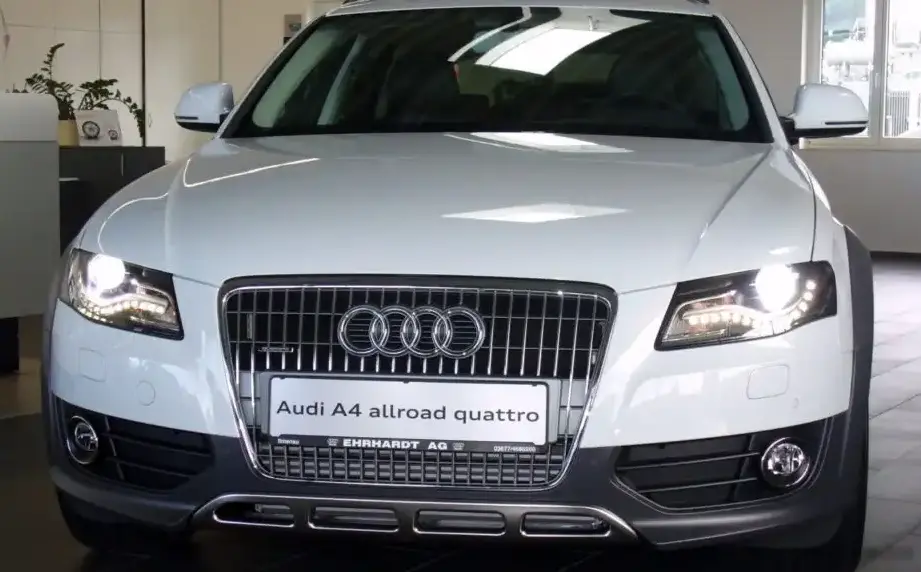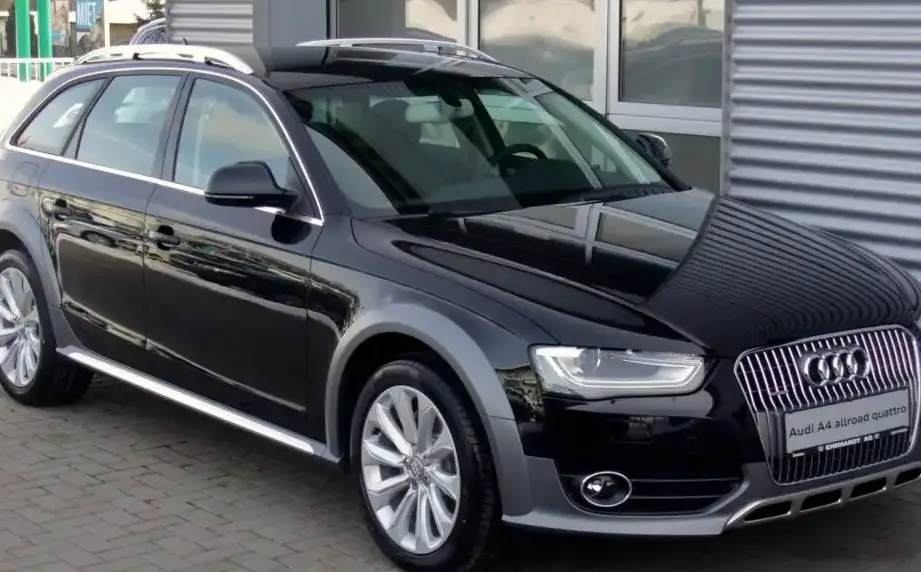
The Audi A4 allroad 2.0 TDI quattro S tronic, produced from 2011 to 2015, represents a specific configuration within the B8 8K generation of Audi’s allroad lineup. This variant, positioned as a mid-range offering, combined a 2.0-liter turbocharged diesel engine with Audi’s renowned quattro all-wheel-drive system and the seven-speed S tronic dual-clutch transmission. The allroad models, based on the A4 Avant (station wagon), were designed to bridge the gap between traditional touring cars and more rugged SUVs, offering increased ground clearance and a more adventurous aesthetic. This particular 177 horsepower diesel version was primarily aimed at European markets where diesel fuel was prevalent and offered significant fuel economy advantages.
Technical Specifications
| Brand | Audi |
| Model | A4 |
| Generation | A4 allroad (B8 8K, facelift 2011) |
| Type (Engine) | 2.0 TDI (177 Hp) quattro S tronic |
| Start of production | 2011 |
| End of production | 2015 |
| Powertrain Architecture | Internal Combustion engine |
| Body type | Station wagon (estate), Crossover |
| Seats | 5 |
| Doors | 5 |
| Fuel consumption (urban) | 7 l/100 km (33.6 US mpg, 40.4 UK mpg, 14.3 km/l) |
| Fuel consumption (extra urban) | 5.4 l/100 km (43.6 US mpg, 52.3 UK mpg, 18.5 km/l) |
| Fuel consumption (combined) | 6 l/100 km (39.2 US mpg, 47.1 UK mpg, 16.7 km/l) |
| CO2 emissions | 156 g/km |
| Fuel Type | Diesel |
| Acceleration 0 – 100 km/h | 8.1 sec |
| Acceleration 0 – 62 mph | 8.1 sec |
| Acceleration 0 – 60 mph | 7.7 sec |
| Maximum speed | 210 km/h (130.49 mph) |
| Emission standard | Euro 5 |
| Weight-to-power ratio | 9.4 kg/Hp, 106 Hp/tonne |
| Weight-to-torque ratio | 4.4 kg/Nm, 227.5 Nm/tonne |
| Power | 177 Hp @ 4200 rpm |
| Power per litre | 89.9 Hp/l |
| Torque | 380 Nm @ 1750-2500 rpm (280.27 lb.-ft. @ 1750-2500 rpm) |
| Engine layout | Front, Longitudinal |
| Engine Model/Code | CGLC |
| Engine displacement | 1968 cm3 (120.09 cu. in.) |
| Number of cylinders | 4 |
| Engine configuration | Inline |
| Cylinder Bore | 81 mm (3.19 in.) |
| Piston Stroke | 95.5 mm (3.76 in.) |
| Compression ratio | 16:1 |
| Number of valves per cylinder | 4 |
| Fuel injection system | Diesel Commonrail |
| Engine aspiration | Turbocharger, Intercooler |
| Valvetrain | DOHC |
| Engine oil capacity | 5 l (5.28 US qt | 4.4 UK qt) |
| Kerb Weight | 1670 kg (3681.72 lbs.) |
| Max. weight | 2240 kg (4938.35 lbs.) |
| Max load | 570 kg (1256.63 lbs.) |
| Trunk (boot) space – minimum | 490 l (17.3 cu. ft.) |
| Trunk (boot) space – maximum | 1430 l (50.5 cu. ft.) |
| Fuel tank capacity | 61 l (16.11 US gal | 13.42 UK gal) |
| Max. roof load | 90 kg (198.42 lbs.) |
| Permitted trailer load with brakes (8%) | 2100 kg (4629.71 lbs.) |
| Permitted trailer load with brakes (12%) | 1900 kg (4188.78 lbs.) |
| Permitted trailer load without brakes | 750 kg (1653.47 lbs.) |
| Permitted towbar download | 80 kg (176.37 lbs.) |
| Length | 4721 mm (185.87 in.) |
| Width | 1841 mm (72.48 in.) |
| Width including mirrors | 2003 mm (78.86 in.) |
| Height | 1495 mm (58.86 in.) |
| Wheelbase | 2805 mm (110.43 in.) |
| Front track | 1583 mm (62.32 in.) |
| Rear (Back) track | 1574 mm (61.97 in.) |
| Front overhang | 883 mm (34.76 in.) |
| Rear overhang | 1033 mm (40.67 in.) |
| Drag coefficient (Cd) | 0.34 |
| Minimum turning circle (turning diameter) | 11.5 m (37.73 ft.) |
| Drive wheel | All wheel drive (4×4) |
| Number of gears and type of gearbox | 7 gears, automatic transmission S tronic |
| Front suspension | Independent multi-link suspension |
| Rear suspension | Independent on trapezoidal lever |
| Front brakes | Ventilated discs |
| Rear brakes | Disc |
| Assisting systems | ABS (Anti-lock braking system) |
| Steering type | Steering rack and pinion |
| Power steering | Electric Steering |
| Tires size | 225/55 R17 |
| Wheel rims size | 8J x 17 |
Powertrain & Engine Architecture
The heart of this allroad variant is the CGLC engine, a 2.0-liter inline-four cylinder diesel engine. This engine belongs to the Volkswagen Group’s modular engine family and utilizes common rail direct injection, delivering fuel at extremely high pressure for optimized combustion. The engine features a turbocharger with an intercooler to increase air density and boost power output. The DOHC (Double Overhead Camshaft) valvetrain, with four valves per cylinder, further enhances breathing and efficiency. The S tronic seven-speed dual-clutch transmission provides rapid and smooth gear changes, contributing to both performance and fuel economy. Unlike traditional automatics, the S tronic essentially consists of two separate manual gearboxes within one housing, allowing for pre-selection of the next gear. This minimizes power interruption during shifts.
Driving Characteristics
The 177 hp output, coupled with the 380 Nm (280 lb-ft) of torque available from 1750-2500 rpm, provided a respectable, though not exhilarating, driving experience. Acceleration from 0-60 mph took around 7.7-8.1 seconds. The S tronic transmission’s quick shifts helped maximize the available power, but the engine lacked the outright punch of higher-output TDI variants or the gasoline-powered TFSI engines. The quattro all-wheel-drive system provided excellent traction in various conditions, making it a capable all-weather vehicle. The allroad’s raised suspension offered a more comfortable ride on uneven surfaces compared to a standard A4 Avant, but the increased ride height also resulted in slightly more body roll during cornering. The gear ratios in the S tronic were tuned for a balance between fuel efficiency and responsiveness, prioritizing smooth cruising over aggressive acceleration.
Equipment & Trim Levels
The 2.0 TDI quattro S tronic allroad typically came well-equipped, reflecting its mid-range positioning. Standard features often included automatic climate control, a multi-function steering wheel, power windows and mirrors, and an infotainment system with a color display. Upholstery was typically cloth or a combination of cloth and leatherette. Optional extras included leather seats, a sunroof, navigation system, parking sensors, and advanced driver-assistance systems like adaptive cruise control. The allroad-specific exterior trim, including flared wheel arches, roof rails, and underbody protection, distinguished it from the standard A4 Avant.
Chassis & Braking
The A4 allroad featured a specially tuned suspension system designed to provide a comfortable ride while maintaining good handling. The front suspension utilized independent multi-link setup, while the rear employed an independent trapezoidal link design. The allroad’s increased ground clearance necessitated longer suspension travel. Braking systems consisted of ventilated discs at the front and solid discs at the rear. ABS (Anti-lock Braking System) was standard, along with electronic stability control. The steering was a rack-and-pinion system with electric power assistance.
Market Reception & Comparison
The A4 allroad 2.0 TDI quattro S tronic was generally well-received by automotive critics. It was praised for its practicality, comfortable ride, and all-weather capability. However, some reviewers noted that the 177 hp engine felt somewhat underpowered for a vehicle of its size and weight, especially when fully loaded. Compared to the more powerful 3.0 TDI variants, this version offered significantly better fuel economy but lacked the same level of performance. Against competitors like the Volvo XC70 and Subaru Outback, the A4 allroad offered a more refined driving experience and a more premium interior, but often at a higher price point.
Legacy
The CGLC engine, while generally reliable, is known to require regular maintenance, particularly regarding the diesel particulate filter (DPF) and turbocharger. The S tronic transmission, while offering smooth and quick shifts, can be more expensive to repair than traditional automatic transmissions. Today, well-maintained examples of the A4 allroad 2.0 TDI quattro S tronic are still sought after in the used car market, particularly by those seeking a practical and capable all-weather vehicle with a premium feel. Its combination of fuel efficiency, all-wheel drive, and comfortable ride continues to appeal to buyers looking for a versatile and refined station wagon.