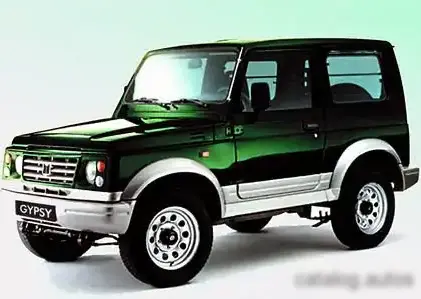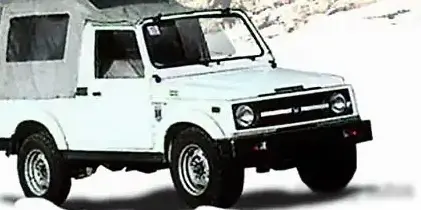
The Maruti Gypsy Cabrio 1.3 Gypsy King ST, produced between 1996 and 2000, represents a unique and relatively short-lived variant of the iconic Maruti Gypsy. This open-top, four-wheel-drive vehicle was primarily aimed at the Indian market, offering a blend of rugged utility and open-air motoring. It was based on the second-generation Gypsy (introduced in 1985), which itself was heavily derived from the Suzuki SJ30/40 series of lightweight 4x4s. The Cabriolet version, and specifically the 1.3 Gypsy King ST trim, occupied a niche position, appealing to enthusiasts and those requiring a versatile vehicle capable of both on- and off-road adventures. It was positioned as a more recreational and less utilitarian version compared to the standard hard-top Gypsy models.
Technical Specifications
| Brand | Maruti |
| Model | Gypsy |
| Generation | Gypsy Cabrio |
| Type (Engine) | 1.3 Gypsy King ST (60 Hp) |
| Start of production | 1996 |
| End of production | 2000 |
| Powertrain Architecture | Internal Combustion engine |
| Body type | Off-road vehicle, Cabriolet |
| Seats | 6 |
| Doors | 2 |
| Fuel Type | Petrol (Gasoline) |
| Maximum speed | 120 km/h (74.56 mph) |
| Weight-to-power ratio | 24.9 kg/Hp, 40.1 Hp/tonne |
| Weight-to-torque ratio | 15 kg/Nm, 66.9 Nm/tonne |
| Power | 60 Hp @ 5500 rpm |
| Power per litre | 46.2 Hp/l |
| Torque | 100 Nm @ 3500 rpm (73.76 lb.-ft. @ 3500 rpm) |
| Engine layout | Front, Longitudinal |
| Engine displacement | 1298 cm3 (79.21 cu. in.) |
| Number of cylinders | 4 |
| Engine configuration | Inline |
| Cylinder Bore | 74 mm (2.91 in.) |
| Piston Stroke | 75.5 mm (2.97 in.) |
| Compression ratio | 9:1 |
| Number of valves per cylinder | 2 |
| Fuel injection system | Carburettor |
| Engine aspiration | Naturally aspirated engine |
| Kerb Weight | 1495 kg (3295.91 lbs.) |
| Fuel tank capacity | 40 l (10.57 US gal | 8.8 UK gal) |
| Length | 4010 mm (157.87 in.) |
| Width | 1540 mm (60.63 in.) |
| Height | 1875 mm (73.82 in.) |
| Wheelbase | 2375 mm (93.5 in.) |
| Front track | 1300 mm (51.18 in.) |
| Rear track | 1310 mm (51.57 in.) |
| Drive wheel | All wheel drive (4×4) |
| Number of gears and type of gearbox | 5 gears, manual transmission |
| Front suspension | Leaf spring |
| Rear suspension | Leaf spring |
| Front brakes | Disc |
| Rear brakes | Drum |
| Assisting systems | ABS (Anti-lock braking system) |
| Tires size | 205/70 R15 |
| Wheel rims size | 15 |
Powertrain & Engine Architecture
The 1.3 Gypsy King ST was powered by the Maruti G13B engine, a 1298cc, inline-four cylinder petrol engine. This engine, a mainstay of many Maruti Suzuki vehicles of the era, produced 60 horsepower at 5500 rpm and 100 Nm of torque at 3500 rpm. Crucially, this variant utilized a carburettor fuel injection system, a relatively simple and cost-effective technology for the time, but less efficient and precise than modern fuel injection systems. The engine featured a single overhead camshaft (SOHC) valvetrain with two valves per cylinder. The engine was mounted longitudinally in the front of the vehicle. The five-speed manual transmission was the only gearbox option available for this model. The G13B engine was known for its relative simplicity and durability, making it relatively easy to maintain, but its performance was modest by contemporary standards.
Driving Characteristics
The 1.3 Gypsy King ST, with its 60 hp output and relatively lightweight body, offered adequate performance for everyday driving and off-road excursions. However, it was not a particularly fast vehicle. Acceleration was leisurely, and highway overtaking required careful planning. The five-speed manual transmission helped to keep the engine in its optimal power band, but the carbureted engine lacked the responsiveness of fuel-injected counterparts. The 4×4 system, engaged via a lever, provided excellent traction in off-road conditions. The leaf spring suspension, while robust, resulted in a somewhat bumpy ride on paved roads. Compared to potential higher-spec Gypsy variants (if offered), the 1.3L engine would have felt significantly underpowered, particularly when carrying a full load of passengers or tackling steep inclines.
Equipment & Trim Levels
The Gypsy King ST trim level offered a basic but functional level of equipment. Standard features typically included basic steel wheels, vinyl or cloth upholstery, a simple dashboard layout, and minimal creature comforts. The Cabriolet top was typically a manually operated soft top. Optional extras, depending on the year and market, could include features like a roll bar, upgraded seats, and a basic audio system. The interior was designed with practicality in mind, prioritizing durability and ease of cleaning over luxury. The focus was on providing a rugged and functional vehicle rather than a refined one.
Chassis & Braking
The Gypsy Cabrio utilized a body-on-frame construction, providing a robust and durable chassis. The suspension consisted of leaf springs at both the front and rear, a design choice that prioritized load-carrying capacity and off-road capability over ride comfort. The braking system featured disc brakes on the front wheels and drum brakes on the rear. An Anti-lock Braking System (ABS) was included, a relatively advanced feature for a vehicle in this class and price range during the late 1990s. The tires were typically 205/70 R15, providing a good balance of on- and off-road grip.
Market Reception & Comparison
The Maruti Gypsy Cabrio 1.3 Gypsy King ST was generally well-received in the Indian market, particularly among those seeking a versatile and affordable 4×4. Critics praised its off-road capability, ruggedness, and relatively low maintenance costs. However, the carbureted engine and basic interior were often criticized. Compared to other vehicles in its class, such as the Tata Sumo or Mahindra Armada, the Gypsy offered a more refined driving experience and better off-road performance, but at a slightly higher price point. Fuel economy was reasonable for a vehicle of its type, but not exceptional. Reliability was generally good, thanks to the simplicity of the engine and drivetrain.
Legacy
The Maruti Gypsy, in all its variants, has achieved a legendary status in India, becoming a symbol of ruggedness and adventure. The Cabriolet version, while produced in limited numbers, remains a sought-after vehicle among enthusiasts. The 1.3 Gypsy King ST powertrain, while not particularly powerful, proved to be durable and reliable. Today, well-maintained examples of the Gypsy Cabrio 1.3 Gypsy King ST are increasingly collectible, and parts availability, while diminishing, is still reasonable. The vehicle represents a unique chapter in the history of Indian automotive manufacturing and continues to evoke a sense of nostalgia among those who remember its heyday.