
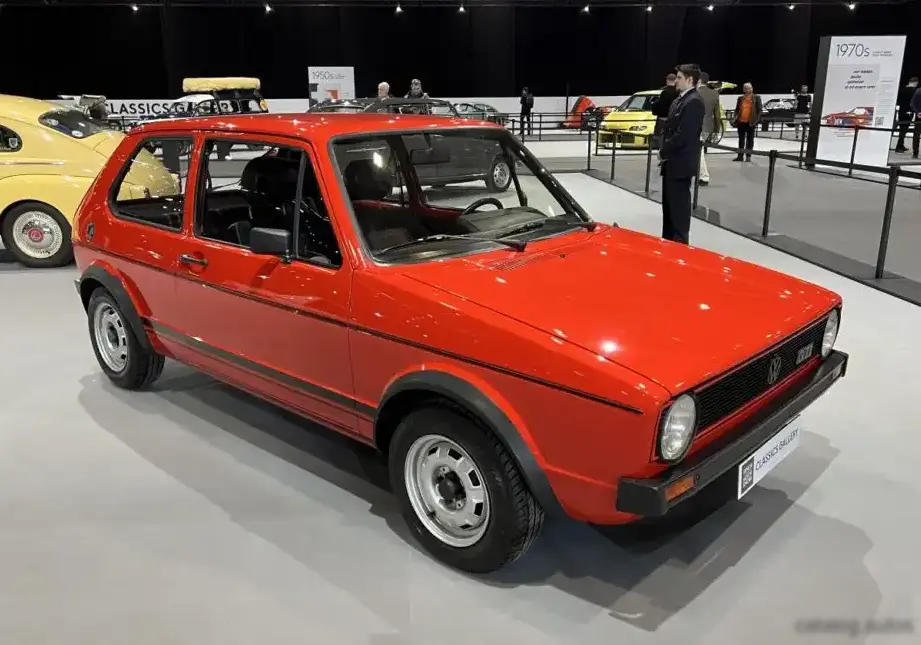
The Volkswagen Golf Mk1 1.8 GTI, produced between 1982 and 1983, represents a pivotal moment in the hot hatch lineage. Positioned as a performance-oriented variant within the first generation Golf (Typ 17), the 1.8 GTI offered a significant step up in power and handling compared to the standard Golf models. It was a key player in establishing the Golf’s reputation for accessible performance and driving enjoyment, particularly in Europe where it was a dominant force in the burgeoning hot hatch market. This 3-door hatchback aimed to deliver a sporty driving experience without sacrificing the Golf’s inherent practicality and everyday usability.
Technical Specifications
| Brand | Volkswagen |
| Model | Golf |
| Generation | Golf I (3-door) |
| Type (Engine) | 1.8 GTI (112 Hp) |
| Start of production | 1982 |
| End of production | 1983 |
| Powertrain Architecture | Internal Combustion engine |
| Body type | Hatchback |
| Seats | 5 |
| Doors | 3 |
| Fuel consumption (urban) | 10.9 l/100 km (21.6 US mpg, 25.9 UK mpg, 9.2 km/l) |
| Fuel consumption (extra urban) | 6.4 l/100 km (36.8 US mpg, 44.1 UK mpg, 15.6 km/l) |
| Fuel Type | Petrol (Gasoline) |
| Acceleration 0 – 100 km/h | 9.2 sec |
| Acceleration 0 – 62 mph | 9.2 sec |
| Acceleration 0 – 60 mph | 8.7 sec |
| Maximum speed | 183 km/h (113.71 mph) |
| Power | 112 Hp @ 5800 rpm |
| Power per litre | 62.9 Hp/l |
| Torque | 153 Nm @ 3500 rpm (112.85 lb.-ft. @ 3500 rpm) |
| Engine layout | Front, Transverse |
| Engine Model/Code | DX |
| Engine displacement | 1781 cm3 (108.68 cu. in.) |
| Number of cylinders | 4 |
| Engine configuration | Inline |
| Cylinder Bore | 81 mm (3.19 in.) |
| Piston Stroke | 86.4 mm (3.4 in.) |
| Compression ratio | 10:1 |
| Number of valves per cylinder | 2 |
| Fuel injection system | Multi-port manifold injection |
| Engine aspiration | Naturally aspirated engine |
| Valvetrain | SOHC |
| Engine oil capacity | 4 l (4.23 US qt | 3.52 UK qt) |
| Coolant capacity | 4.5 l (4.76 US qt | 3.96 UK qt) |
| Trunk (boot) space – minimum | 368 l (13 cu. ft.) |
| Trunk (boot) space – maximum | 1102 l (38.92 cu. ft.) |
| Fuel tank capacity | 40 l (10.57 US gal | 8.8 UK gal) |
| Length | 3723 mm (146.57 in.) |
| Width | 1610 mm (63.39 in.) |
| Height | 1410 mm (55.51 in.) |
| Wheelbase | 2400 mm (94.49 in.) |
| Drivetrain Architecture | The Internal combustion engine (ICE) drives the front wheels of the vehicle. |
| Drive wheel | Front wheel drive |
| Number of gears and type of gearbox | 5 gears, manual transmission |
| Front suspension | Independent, type McPherson with coil spring and anti-roll bar |
| Rear suspension | Transverse stabilizer, Coil spring, Torsion |
| Front brakes | Ventilated discs |
| Rear brakes | Drum |
| Steering type | Steering rack and pinion |
| Tires size | 185/60 R14 |
| Wheel rims size | 6J x 14 |
Powertrain & Engine Architecture
The heart of the 1.8 GTI is the Volkswagen DX engine, an inline four-cylinder unit displacing 1781cc. This engine utilized multi-port fuel injection, a significant advancement over the carbureted engines found in earlier Golf models. The DX engine featured a single overhead camshaft (SOHC) valvetrain operating two valves per cylinder. The engine’s 10:1 compression ratio contributed to its lively performance. The engine produced 112 horsepower at 5800 rpm and 153 Nm (113 lb-ft) of torque at 3500 rpm. This power was delivered through a smooth-shifting five-speed manual transmission, which was standard equipment. The engine’s transverse mounting and front-wheel drive configuration were typical for European hatchbacks of the era, optimizing space efficiency and handling characteristics.
Driving Characteristics
The 1.8 GTI offered a noticeable improvement in performance over the base Golf models. Acceleration from 0 to 60 mph took approximately 8.7 seconds, and it could achieve a top speed of 113.71 mph. While not blistering by modern standards, this was competitive for a front-wheel-drive hatchback in the early 1980s. The five-speed manual transmission allowed drivers to keep the engine in its optimal power band. The GTI’s suspension, featuring McPherson struts at the front and a torsion beam rear suspension, provided a good balance between ride comfort and handling. Compared to the later 16-valve GTI models, the 8-valve 1.8 GTI offered a more accessible power delivery, making it easier to drive in everyday situations. However, it lacked the ultimate top-end performance of the 16V variant.
Equipment & Trim Levels
The 1.8 GTI came reasonably well-equipped for its time. Standard features included a sporty three-spoke steering wheel, upgraded seats with patterned cloth upholstery, and a more comprehensive instrument cluster. Exterior features included distinctive GTI-specific badging, a small rear spoiler, and often, alloy wheels. Optional extras included a sunroof, upgraded audio systems, and metallic paint finishes. The interior was functional and driver-focused, reflecting the GTI’s performance aspirations. The trim level was generally consistent, with variations primarily stemming from optional equipment choices.
Chassis & Braking
The Golf Mk1 GTI utilized a McPherson strut front suspension with coil springs and an anti-roll bar, providing responsive steering and good cornering stability. The rear suspension employed a torsion beam setup, which was cost-effective and provided adequate handling characteristics for a front-wheel-drive vehicle. Braking duties were handled by ventilated discs at the front and drum brakes at the rear. While adequate for normal driving, the rear drum brakes were a point of criticism, particularly when compared to the all-disc brake setups found on some competitors. The steering was a rack-and-pinion system, offering precise and direct feel.
Market Reception & Comparison
The Golf 1.8 GTI was widely praised by automotive journalists for its blend of performance, practicality, and affordability. It was seen as a genuine hot hatch that could compete with rivals like the Ford Escort XR3 and the Peugeot 205 GTI. Critics noted its responsive engine, engaging handling, and comfortable ride. Compared to the later 16-valve GTI, the 8-valve version was considered more approachable and easier to drive, making it a popular choice for those seeking a sporty but practical hatchback. Fuel economy was reasonable for a performance car of the era, averaging around 21.6 US mpg in urban driving and 36.8 US mpg on the highway. Reliability was generally good, although regular maintenance was essential to ensure the longevity of the engine and drivetrain.
Legacy
The Volkswagen Golf Mk1 1.8 GTI holds a significant place in automotive history as one of the original hot hatches. It established the Golf as a performance icon and paved the way for subsequent GTI models. Today, well-maintained examples are highly sought after by collectors and enthusiasts. The DX engine, while not the most powerful version of the GTI, is known for its durability and relative simplicity, making it a relatively easy engine to maintain. The 1.8 GTI remains a popular choice for classic car rallies and events, and it continues to be appreciated for its timeless design and engaging driving experience. Finding original, unmolested examples is becoming increasingly difficult, driving up their value in the used car market.
