
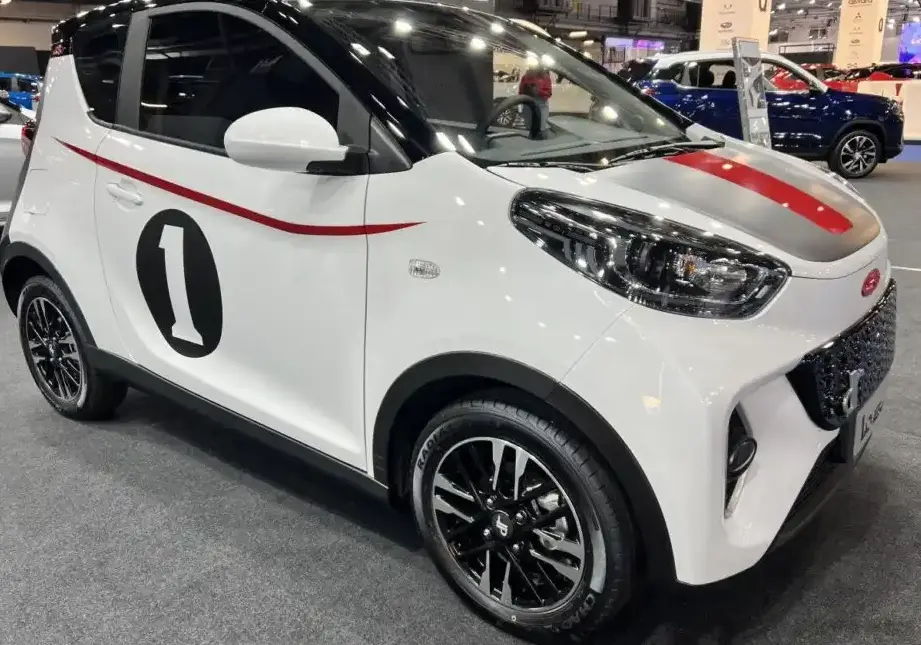
The DR 1.0 EV 31 kWh Automatic, launched in 2023, represents a foray into the burgeoning electric vehicle market by Italian manufacturer DR Automobiles. This compact, three-door hatchback is positioned as an entry-level EV, aimed at urban commuters and drivers seeking an affordable electric option. It’s built upon a relatively simple, rear-wheel drive BEV (Battery Electric Vehicle) architecture, prioritizing practicality and low running costs over outright performance. The 1.0 designation refers to the vehicle’s intended market segment, rather than engine displacement, as it is a fully electric vehicle. It’s a relatively new model, and its long-term impact remains to be seen, but it signifies DR’s commitment to diversifying its lineup with electric alternatives.
Technical Specifications
| Brand | DR |
| Model | 1.0 |
| Generation | 1.0 EV |
| Type (Engine) | 31 kWh (61 Hp) Automatic |
| Start of production | 2023 |
| Powertrain Architecture | BEV (Electric Vehicle) |
| Body type | Hatchback |
| Seats | 4 |
| Doors | 3 |
| Fuel Type | Electricity |
| Acceleration 0 – 100 km/h | 17 sec |
| Acceleration 0 – 62 mph | 17 sec |
| Acceleration 0 – 60 mph | 16.2 sec |
| Maximum speed | 120 km/h (74.56 mph) |
| Weight-to-power ratio | 17.2 kg/Hp, 58.1 Hp/tonne |
| Weight-to-torque ratio | 7 kg/Nm, 142.9 Nm/tonne |
| Gross battery capacity | 31 kWh |
| Battery technology | Lithium-ion (Li-Ion) |
| Battery location | In the central tunnel |
| All-electric range (WLTP) | 210 km (130.49 mi) |
| Electric motor power | 61 Hp |
| Electric motor Torque | 150 Nm (110.63 lb.-ft.) |
| Electric motor location | Rear axle, Transverse |
| Electric motor type | Synchronous |
| System power | 61 Hp |
| System torque | 150 Nm (110.63 lb.-ft.) |
| Kerb Weight | 1050 kg (2314.85 lbs.) |
| Max. weight | 1275 kg (2810.89 lbs.) |
| Max load | 225 kg (496.04 lbs.) |
| Trunk (boot) space – minimum | 110 l (3.88 cu. ft.) |
| Trunk (boot) space – maximum | 630 l (22.25 cu. ft.) |
| Length | 3200 mm (125.98 in.) |
| Width | 1670 mm (65.75 in.) |
| Height | 1590 mm (62.6 in.) |
| Wheelbase | 2150 mm (84.65 in.) |
| Drivetrain Architecture | One electric motor drives the rear wheels. |
| Drive wheel | Rear wheel drive |
| Number of gears and type of gearbox | 1 gears, automatic transmission |
| Front suspension | Independent type McPherson |
| Rear suspension | Independent coil spring |
| Front brakes | Ventilated discs |
| Rear brakes | Disc |
| Assisting systems | ABS (Anti-lock braking system) |
| Steering type | Steering rack and pinion |
| Tires size | 165/65 R15 |
Powertrain & Engine Architecture
The DR 1.0 EV utilizes a single, rear-mounted synchronous electric motor producing 61 horsepower and 150 Nm (110.63 lb.-ft.) of torque. The power is delivered through a single-speed automatic transmission, typical of most electric vehicles. The 31 kWh lithium-ion battery pack is located within the central tunnel of the vehicle, contributing to a relatively low center of gravity. The battery management system (BMS) is crucial for optimizing battery life, performance, and safety. While specific details regarding the BMS are not widely publicized, it likely incorporates features such as cell balancing, thermal management, and overcharge/discharge protection. The vehicle supports standard charging methods, though specific charging port types and charging times vary depending on the charging infrastructure available.
Driving Characteristics
The DR 1.0 EV’s driving experience is characterized by its smooth and quiet operation, inherent to electric vehicles. However, with only 61 horsepower, acceleration is modest. The 0-60 mph time of around 16.2 seconds reflects this. The single-speed transmission provides linear power delivery, but lacks the gear changes found in conventional automatic transmissions. The rear-wheel drive configuration offers a slightly different dynamic compared to front-wheel drive EVs, potentially providing better traction in certain conditions. The relatively low weight of the vehicle (1050 kg / 2314.85 lbs) helps to mitigate the effects of the limited power output, making it feel reasonably responsive in urban environments. The focus is clearly on efficiency and ease of driving rather than sporty performance.
Equipment & Trim Levels
As an entry-level EV, the DR 1.0 EV is equipped with a basic but functional set of features. Standard equipment typically includes air conditioning, power windows, central locking, and an infotainment system with basic connectivity options. Interior upholstery is likely to be cloth, and the dashboard design is straightforward. Optional extras may include upgraded infotainment systems with larger touchscreens, parking sensors, and a rearview camera. The trim levels are likely to be limited, with a focus on providing a cost-effective electric vehicle solution. The interior space is adequate for a vehicle of this size, with a trunk capacity ranging from 110 to 630 liters (3.88 to 22.25 cu. ft.) depending on the rear seats being up or folded down.
Chassis & Braking
The DR 1.0 EV features an independent McPherson strut suspension at the front and an independent coil spring suspension at the rear. This setup aims to provide a comfortable ride and reasonable handling characteristics. The braking system consists of ventilated discs at the front and solid discs at the rear, supplemented by an Anti-lock Braking System (ABS) for enhanced safety. The tires are 165/65 R15, chosen to balance rolling resistance (for efficiency) with grip. The steering system is a rack and pinion type, providing precise and responsive steering feel.
Market Reception & Comparison
The DR 1.0 EV competes in a rapidly expanding segment of affordable electric vehicles. Its primary appeal lies in its relatively low price point and its suitability for urban driving. Compared to other EVs in its class, it offers a shorter range (210 km / 130.49 mi) and lower power output. However, it may be more affordable than some of its competitors. Critics have noted its basic interior and modest performance, but have also praised its practicality and low running costs. Compared to gasoline-powered vehicles in the same size class, the DR 1.0 EV offers significantly lower fuel costs and reduced emissions.
Legacy
As a relatively new model, the long-term reliability of the DR 1.0 EV remains to be fully established. However, the simplicity of its electric powertrain suggests that it could prove to be a durable and reliable vehicle. The availability of spare parts and service support will be crucial factors in its long-term success. In the used car market, the DR 1.0 EV is likely to appeal to buyers seeking an affordable and environmentally friendly transportation option. Its value will depend on factors such as battery health, mileage, and overall condition. The DR 1.0 EV represents a step towards greater accessibility of electric vehicles, and its success could pave the way for further expansion of DR Automobiles’ EV lineup.
