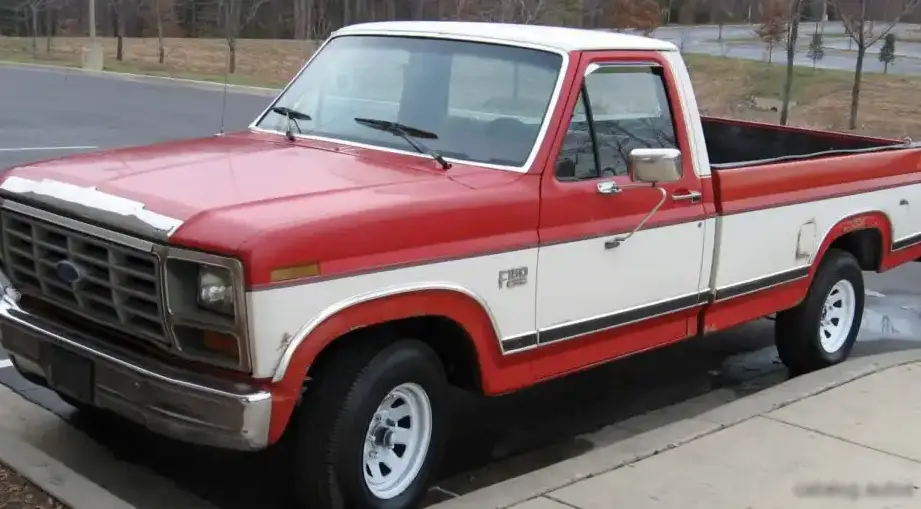
The Ford F-Series F-150 VII Regular Cab, equipped with the 4.9-liter inline-six engine producing 117 horsepower, represents a significant entry point into the full-size pickup truck market of the late 1970s and early 1980s. Produced from 1979 to 1981, this configuration occupied the base trim level within the seventh generation of the F-Series (1973-1979, with carryover to 1980-1981). It was designed for buyers prioritizing affordability and basic utility over outright performance, serving as a workhorse for farms, ranches, and light-duty commercial applications. This variant was a cornerstone of Ford’s sales volume, appealing to a broad customer base seeking a dependable and relatively economical truck.
Technical Specifications
| Brand | Ford |
| Model | F-Series F-100/F-150 |
| Generation | F-Series F-150 VII Regular Cab |
| Type (Engine) | 4.9 Six (117 Hp) |
| Start of production | September, 1979 |
| End of production | 1981 |
| Powertrain Architecture | Internal Combustion engine |
| Body type | Pick-up |
| Seats | 2-3 |
| Doors | 2 |
| Fuel Type | Petrol (Gasoline) |
| Power | 117 Hp |
| Power per litre | 23.8 Hp/l |
| Torque | 308 Nm / 227.17 lb.-ft. |
| Engine layout | Front, Longitudinal |
| Engine displacement | 4916 cm3 / 299.99 cu. in. |
| Number of cylinders | 6 |
| Engine configuration | Inline |
| Fuel injection system | Carburettor |
| Engine aspiration | Naturally aspirated engine |
| Max. weight | 2767 kg / 6100.19 lbs. |
| Fuel tank capacity | 62-72 l / 16.38 – 19.02 US gal | 13.64 – 15.84 UK gal |
| Length | 4770-5291 mm / 187.8 – 208.31 in. |
| Width | 1372-1778 mm / 54.02 – 70 in. |
| Height | 1775-1778 mm / 69.88 – 70 in. |
| Wheelbase | 2967-3378 mm / 116.81 – 132.99 in. |
| Wading depth | 726-732 mm / 28.58 – 28.82 in. |
| Drivetrain Architecture | The Internal combustion engine (ICE) drives the rear wheels of the vehicle. |
| Drive wheel | Rear wheel drive |
| Number of gears and type of gearbox | 3 gears, manual transmission |
| Front suspension | Independent coil spring |
| Front brakes | Disc |
| Rear brakes | Drum |
| Power steering | Electric Steering |
| Tires size | 215/75 R15; 235/75 R15 |
| Wheel rims size | 5.5J x 15 |
Powertrain & Engine Architecture
The heart of this F-150 variant is the 4.9-liter (299 cubic inch) inline-six cylinder engine. Commonly referred to as the “300 six” (though this designation is more commonly associated with the later, larger displacement version), this engine was a long-stroke design known for its durability and low-end torque. The 1979-1981 version produced 117 horsepower and 308 Nm (227.17 lb-ft) of torque. Fuel delivery was managed by a two-barrel carburetor, a common setup for the era. The engine featured a simple overhead valve (OHV) valvetrain with a single camshaft. The 3-speed manual transmission was standard, providing a straightforward and robust shifting experience. While not particularly sophisticated, the powertrain was designed for reliability and ease of maintenance.
Driving Characteristics
The 4.9-liter engine and 3-speed manual transmission combination delivered modest performance. Acceleration was leisurely, and the truck was not designed for rapid speeds. However, the engine’s torque characteristics made it well-suited for hauling and towing, especially when paired with the truck’s robust rear axle. The gear ratios were optimized for work, prioritizing pulling power over quick acceleration. Compared to the optional V8 engines available in the F-150 lineup, this six-cylinder version offered significantly less horsepower and torque, but it also provided better fuel economy. The manual transmission offered a more direct connection to the engine than the optional automatic, allowing for greater control in challenging conditions.
Equipment & Trim Levels
The base-level F-150 Regular Cab with the 4.9-liter engine was typically sparsely equipped. Standard features included a basic vinyl bench seat, a simple dashboard with essential gauges, and a functional but utilitarian interior. Options were available, such as upgraded upholstery, a radio, and a heater. However, the focus remained on providing a no-frills, affordable work truck. The trim level was positioned as the entry point to the F-150 range, appealing to buyers who prioritized function over luxury. The interior was largely constructed of durable materials designed to withstand heavy use.
Chassis & Braking
The F-150’s chassis was a traditional body-on-frame construction, providing a rugged and durable platform. The front suspension utilized independent coil springs, offering a reasonable ride quality for a truck of its size. The rear suspension employed leaf springs, which were well-suited for carrying heavy loads. Braking duties were handled by disc brakes at the front and drum brakes at the rear. Power steering was available as an option, making maneuvering the large truck easier, particularly at low speeds. Tire sizes typically ranged from 215/75 R15 to 235/75 R15, providing adequate traction for most applications.
Market Reception & Comparison
The 4.9-liter F-150 was generally well-received by buyers seeking an affordable and reliable work truck. Critics acknowledged its lack of performance compared to V8-powered models, but praised its fuel efficiency and durability. Compared to the larger V8 engines, the six-cylinder version offered significantly better gas mileage, a key consideration during the late 1970s energy crisis. The 300 six was known for its longevity, and many examples remained in service for decades. Compared to competing trucks from Chevrolet and Dodge, the Ford F-150 offered a competitive combination of price, features, and reliability.
Legacy
The 4.9-liter inline-six engine became a legendary powerplant in Ford trucks, renowned for its durability and longevity. Many examples of this engine are still running today, a testament to its robust design. While the 117-horsepower version represents an earlier iteration of the engine, it laid the foundation for the later, more powerful “300 six” that would become a staple of Ford’s truck lineup for decades. In the used car market, these F-150s are often sought after by enthusiasts and collectors who appreciate their simplicity, reliability, and classic American truck styling. Parts availability remains good, making these trucks relatively easy to maintain and restore. The 4.9L engine is still considered a very reliable engine, and is often sought after for its simplicity and ease of repair.