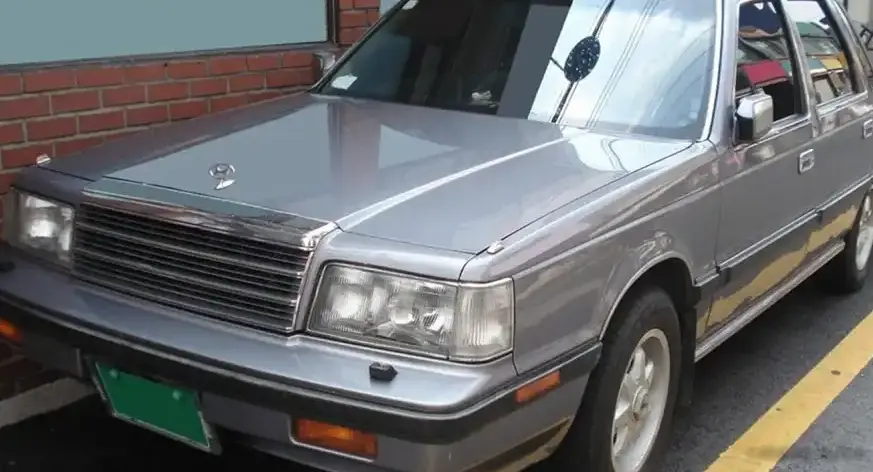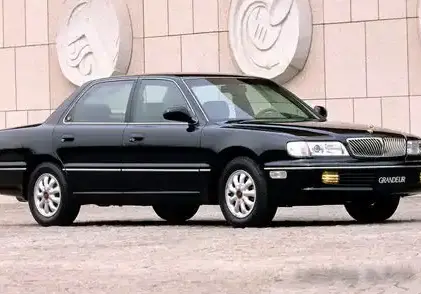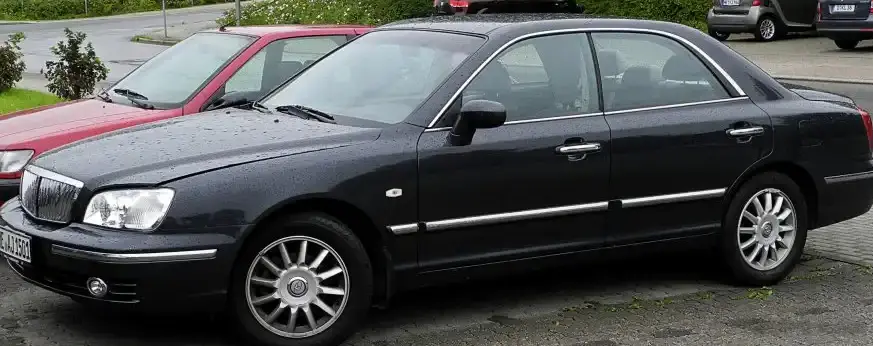
The Hyundai Grandeur III (XG), particularly the facelifted version introduced in 2003, represented a significant step forward for the South Korean automaker in terms of design, refinement, and overall market appeal. Positioned as a full-size sedan, the Grandeur aimed to compete with established Japanese and American models in both domestic and export markets. The 2.0i V6 variant, producing 137 horsepower, served as a mid-range offering within the XG lineup, balancing affordability with a respectable level of performance and features. Production of this specific configuration ran from 2003 to 2005, bridging the gap between the initial XG launch and the subsequent fourth-generation model.
Technical Specifications
| Brand | Hyundai |
| Model | Grandeur/Azera |
| Generation | Grandeur III (XG, facelift 2003) |
| Type (Engine) | 2.0i V6 (137 Hp) |
| Start of production | 2003 |
| End of production | 2005 |
| Powertrain Architecture | Internal Combustion engine |
| Body type | Sedan |
| Seats | 5 |
| Doors | 4 |
| Fuel Type | Petrol (Gasoline) |
| Maximum speed | 203 km/h (126.14 mph) |
| Weight-to-power ratio | 11.2 kg/Hp, 89.1 Hp/tonne |
| Weight-to-torque ratio | 8.7 kg/Nm, 115.2 Nm/tonne |
| Power | 137 Hp @ 6000 rpm |
| Power per litre | 68.6 Hp/l |
| Torque | 177 Nm @ 4000 rpm (130.55 lb.-ft. @ 4000 rpm) |
| Engine layout | Front, Transverse |
| Engine Model/Code | Delta / G6BP |
| Engine displacement | 1998 cm3 (121.93 cu. in.) |
| Number of cylinders | 6 |
| Engine configuration | V-engine |
| Compression ratio | 10:1 |
| Number of valves per cylinder | 4 |
| Fuel injection system | Multi-port manifold injection |
| Engine aspiration | Naturally aspirated engine |
| Valvetrain | DOHC |
| Engine oil capacity | 4.3 l (4.54 US qt | 3.78 UK qt) |
| Kerb Weight | 1537 kg (3388.5 lbs) |
| Trunk (boot) space – minimum | 410 l (14.48 cu. ft) |
| Fuel tank capacity | 70 l (18.49 US gal | 15.4 UK gal) |
| Length | 4875 mm (191.93 in) |
| Width | 1800 mm (70.87 in) |
| Height | 1420 mm (55.91 in) |
| Wheelbase | 2750 mm (108.27 in) |
| Front track | 1540 mm (60.63 in) |
| Rear (Back) track | 1520 mm (59.84 in) |
| Ride height (ground clearance) | 160 mm (6.3 in) |
| Minimum turning circle (turning diameter) | 12.6 m (41.34 ft) |
| Drivetrain Architecture | The Internal combustion engine (ICE) drives the front wheels of the vehicle. |
| Drive wheel | Front wheel drive |
| Number of gears and type of gearbox | 5 gears, manual transmission |
| Front brakes | Ventilated discs |
| Rear brakes | Disc |
| Assisting systems | ABS (Anti-lock braking system) |
| Steering type | Steering rack and pinion |
| Power steering | Hydraulic Steering |
| Tires size | 205/65 R15 H |
| Wheel rims size | 15 |
Powertrain & Engine Architecture
The heart of the 2.0i Grandeur was the Hyundai Delta engine, specifically the G6BP code. This 1.998-liter, naturally aspirated V6 engine featured a 60-degree V-angle and a cast iron block with an aluminum cylinder head. The engine utilized a multi-port fuel injection (MPI) system, delivering fuel directly into the intake ports just before the intake valves. The double overhead camshaft (DOHC) valvetrain, with four valves per cylinder, contributed to improved breathing and overall engine efficiency. The 5-speed manual transmission was the standard offering for this trim, providing a direct connection between the engine and the front wheels. The G6BP engine was known for its relatively smooth operation and decent power output for its displacement, though it wasn’t considered a performance powerhouse.
Driving Characteristics
The 137 hp and 177 Nm (130.55 lb-ft) of torque delivered by the 2.0i V6 provided adequate, but not exhilarating, performance. Acceleration was reasonable for everyday driving, but overtaking maneuvers required careful planning. The 5-speed manual transmission allowed drivers to keep the engine in its optimal power band, but the relatively tall gear ratios prioritized fuel economy over outright speed. Compared to the higher-output V6 options available in the Grandeur lineup, this variant felt noticeably less responsive. The manual transmission offered a more engaging driving experience than the optional automatic, providing greater control and a more direct feel.
Equipment & Trim Levels
The 2.0i V6 Grandeur typically came equipped with a respectable array of standard features. These generally included power windows, power locks, air conditioning, and an AM/FM radio with a cassette player. Higher trim levels, often denoted by additional badging, added features such as alloy wheels, a sunroof, upgraded upholstery (often cloth or a basic vinyl), and a more sophisticated audio system. Optional extras could include leather seats, a CD player, and automatic climate control. The interior design was generally conservative, focusing on practicality and comfort rather than outright luxury.
Chassis & Braking
The Grandeur III utilized a front-wheel-drive platform with an independent suspension setup at the front (typically MacPherson struts) and a multi-link suspension at the rear. This configuration aimed to provide a comfortable ride while maintaining reasonable handling characteristics. Braking duties were handled by ventilated discs at the front and solid discs at the rear, supplemented by an Anti-lock Braking System (ABS) to enhance safety. The suspension tuning was geared towards comfort, resulting in a relatively soft ride quality. Stabilizer bars were included to reduce body roll during cornering, but the Grandeur was not designed to be a sporty handling vehicle.
Market Reception & Comparison
The 2.0i V6 Grandeur was generally well-received as a practical and affordable full-size sedan. Critics praised its spacious interior, comfortable ride, and relatively good value for money. However, it was often criticized for its lack of outright performance compared to some of its competitors. Compared to the more powerful V6 models within the Grandeur lineup, the 2.0i offered better fuel economy but sacrificed acceleration and overall driving excitement. Against rivals like the Toyota Camry and Honda Accord, the Grandeur offered a more spacious interior and a lower price point, but often lacked the same level of refinement and brand recognition.
Legacy
The Hyundai Grandeur III, and specifically the 2.0i V6 variant, played a crucial role in establishing Hyundai as a credible competitor in the global automotive market. The G6BP engine proved to be reasonably reliable, although routine maintenance, such as timing belt replacements, was essential. Today, these vehicles are relatively affordable on the used car market, making them attractive options for budget-conscious buyers. While not known for exceptional performance or cutting-edge technology, the 2.0i Grandeur remains a comfortable and practical sedan that represents a significant milestone in Hyundai’s history. Parts availability can be a concern as the vehicle ages, but many components are still obtainable through aftermarket suppliers.