
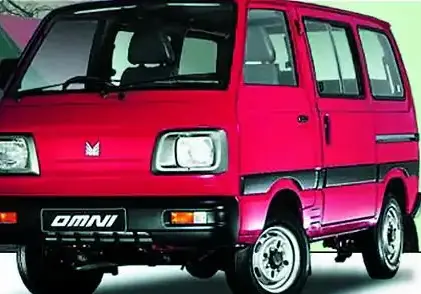
The Maruti Omni 0.8, producing 37 horsepower, was a mainstay of the Indian automotive market from 1988 to 1998. This variant represented the entry-level offering within the broader Omni range, a versatile and affordable people carrier designed to meet the transportation needs of families and small businesses. Based on a simple, robust design derived from the Suzuki Super Carry, the Omni quickly became ubiquitous on Indian roads, prized for its practicality and low running costs. The 0.8L engine and manual transmission combination was specifically targeted at buyers prioritizing affordability over outright performance.
Technical Specifications
| Brand | Maruti |
| Model | Omni |
| Generation | Omni |
| Type (Engine) | 0.8 (37 Hp) |
| Start of production | 1988 |
| End of production | 1998 |
| Powertrain Architecture | Internal Combustion engine |
| Body type | Minivan |
| Seats | 4 |
| Doors | 4 |
| Fuel consumption (combined) | 6 l/100 km (39.2 US mpg, 47.1 UK mpg, 16.7 km/l) |
| Maximum speed | 100 km/h (62.14 mph) |
| Weight-to-power ratio | 19.3 kg/Hp (51.7 Hp/tonne) |
| Weight-to-torque ratio | 11.5 kg/Nm (86.7 Nm/tonne) |
| Power | 37 Hp @ 5500 rpm |
| Power per litre | 46.5 Hp/l |
| Torque | 62 Nm @ 3000 rpm (45.73 lb.-ft. @ 3000 rpm) |
| Engine layout | Rear, Longitudinal |
| Engine displacement | 796 cm3 (48.57 cu. in.) |
| Number of cylinders | 4 |
| Engine configuration | Inline |
| Cylinder Bore | 62 mm (2.44 in.) |
| Piston Stroke | 66 mm (2.6 in.) |
| Number of valves per cylinder | 2 |
| Fuel injection system | Carburettor |
| Engine aspiration | Naturally aspirated |
| Valvetrain | OHC |
| Kerb Weight | 715 kg (1576.31 lbs.) |
| Max. weight | 1215 kg (2678.62 lbs.) |
| Max load | 500 kg (1102.31 lbs.) |
| Fuel tank capacity | 36 l (9.51 US gal | 7.92 UK gal) |
| Length | 3280 mm (129.13 in.) |
| Width | 1395 mm (54.92 in.) |
| Height | 1640 mm (64.57 in.) |
| Front track | 1205 mm (47.44 in.) |
| Rear track | 1190 mm (46.85 in.) |
| Drivetrain Architecture | Rear wheel drive |
| Number of gears and type of gearbox | 4 gears, manual transmission |
| Front suspension | Spring Strut |
| Rear suspension | Coil spring |
| Front brakes | Drum |
| Rear brakes | Drum |
Powertrain & Engine Architecture
The heart of the Maruti Omni 0.8 was the F8A engine, an 796cc, inline-four cylinder petrol engine. This engine, a derivative of Suzuki’s G series, was known for its simplicity and durability. It featured a single overhead camshaft (OHC) operating two valves per cylinder. Fuel delivery was managed by a carburetor, a common feature for vehicles of this era and price point, prioritizing cost-effectiveness over sophisticated fuel injection. The engine’s longitudinal rear-engine layout was a defining characteristic, contributing to the Omni’s unique driving dynamics. The four-speed manual transmission was a standard feature, providing basic but reliable gear changes. The engine’s relatively low compression ratio and simple design contributed to its ability to run reliably on the often-variable quality of fuel available in India during the 1990s.
Driving Characteristics
The 37 horsepower output of the Omni 0.8 dictated a modest driving experience. Acceleration was slow, particularly when fully loaded with passengers or cargo. The rear-engine, rear-wheel-drive configuration gave the Omni a distinctive handling feel, often described as lively and somewhat prone to oversteer, especially on slippery surfaces. The four-speed gearbox offered relatively widely spaced gear ratios, requiring frequent shifting to maintain optimal engine speed. Compared to later Omni variants with larger engines, the 0.8L model was significantly slower and less refined. However, its lighter weight and simpler mechanicals made it relatively easy to maintain and repair. The steering was unassisted, requiring some effort at low speeds, but providing a direct connection to the road.
Equipment & Trim Levels
The Maruti Omni 0.8 was deliberately spartan in its equipment levels, reflecting its position as an entry-level vehicle. Standard features typically included basic vinyl upholstery, a simple dashboard with minimal instrumentation (speedometer, fuel gauge), and fixed rear side windows. Air conditioning and power steering were not available on this base model. Optional extras were limited, often consisting of aftermarket accessories such as upgraded audio systems or seat covers. The interior was designed for practicality and ease of cleaning, prioritizing functionality over luxury. The lack of extensive trim options kept production costs down and contributed to the Omni’s affordability.
Chassis & Braking
The Omni’s chassis was a body-on-frame construction, providing a robust and durable platform. Suspension consisted of a spring strut setup at the front and coil springs at the rear. The rear suspension was particularly simple, designed to accommodate the vehicle’s load-carrying capacity. Braking was handled by drum brakes on all four wheels, which were adequate for the vehicle’s weight and performance but lacked the stopping power of disc brakes. The Omni lacked a stabilizer bar, contributing to its somewhat pronounced body roll during cornering. The relatively narrow track width further emphasized the vehicle’s basic handling characteristics.
Market Reception & Comparison
The Maruti Omni 0.8 was overwhelmingly well-received in the Indian market. Its affordability, practicality, and reliability made it a popular choice for families, taxi operators, and small businesses. Critics generally praised its robust construction and low running costs, but noted its lack of refinement and limited performance. Compared to other vehicles in its class, such as the Tata Sumo, the Omni offered a more compact size and easier maneuverability, making it well-suited for congested urban environments. Fuel economy was a key selling point, particularly in a market where petrol prices were relatively high. The Omni’s simple design also made it relatively easy and inexpensive to repair, a significant advantage in a country with limited access to specialized automotive repair facilities.
Legacy
The Maruti Omni, and specifically the 0.8L variant, holds a significant place in Indian automotive history. It democratized personal transportation for many families and played a crucial role in the growth of the Indian automotive industry. While production ceased in 1998, the Omni remained a common sight on Indian roads for many years afterward, testament to its durability and reliability. Today, the Omni 0.8 is considered a classic vehicle, appreciated by enthusiasts for its simplicity and nostalgic appeal. The F8A engine, while outdated by modern standards, is still regarded as a robust and dependable powerplant. The Omni’s legacy continues to influence the design and development of affordable people carriers in India.
