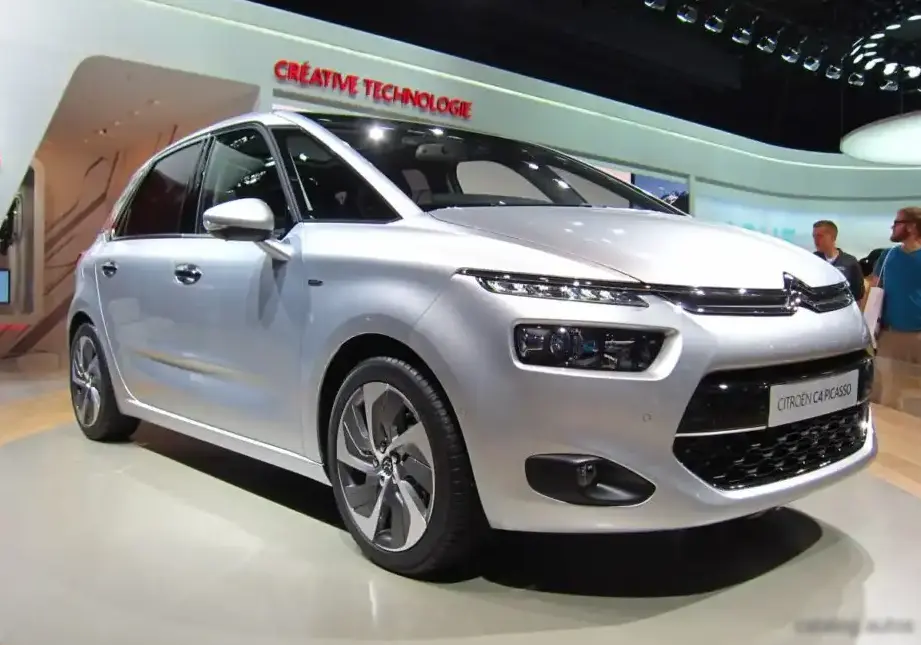
The Citroën C4 II Picasso 1.6 e-HDi AirDream EGS, produced between 2013 and 2015, represents a significant iteration of Citroën’s popular compact MPV. This variant, falling within the Phase I update of the second-generation C4 Picasso (internally designated as B78), was positioned as a fuel-efficient and practical option within the broader C4 Picasso lineup. It aimed to appeal to families seeking a comfortable and economical vehicle for everyday use. The “e-HDi” designation signifies Citroën’s implementation of diesel particulate filters and efficiency technologies, while “AirDream” denoted a higher trim level with enhanced features. The EGS (Electronically Controlled Gearbox) transmission was a key characteristic, offering automated shifting without the full complexity – and cost – of a traditional automatic.
Technical Specifications
| Brand | Citroen |
| Model | C4 |
| Generation | C4 II Picasso (Phase I, 2013) |
| Type (Engine) | 1.6 e-HDi (116 Hp) AirDream EGS |
| Start of production | 2013 |
| End of production | 2015 |
| Powertrain Architecture | Internal Combustion engine |
| Body type | Minivan, MPV |
| Seats | 5 |
| Doors | 5 |
| Fuel consumption (urban) | 4.4-4.5 l/100 km (53.5 – 52.3 US mpg, 64.2 – 62.8 UK mpg, 22.7 – 22.2 km/l) |
| Fuel consumption (extra urban) | 3.7-3.8 l/100 km (63.6 – 61.9 US mpg, 76.3 – 74.3 UK mpg, 27 – 26.3 km/l) |
| Fuel consumption (combined) | 4 l/100 km (58.8 US mpg, 70.6 UK mpg, 25 km/l) |
| CO2 emissions | 104-105 g/km |
| Fuel Type | Diesel |
| Acceleration 0 – 100 km/h | 12.3 sec |
| Acceleration 0 – 62 mph | 12.3 sec |
| Acceleration 0 – 60 mph | 11.7 sec |
| Maximum speed | 189 km/h (117.44 mph) |
| Emission standard | Euro 5 |
| Weight-to-power ratio | 11.2 kg/Hp, 89.6 Hp/tonne |
| Weight-to-torque ratio | 4.8 kg/Nm, 208.5 Nm/tonne |
| Power | 116 Hp @ 3600 rpm |
| Power per litre | 74.4 Hp/l |
| Torque | 270 Nm @ 1750 rpm (199.14 lb.-ft. @ 1750 rpm) |
| Engine layout | Front, Transverse |
| Engine Model/Code | 9HC DV6C |
| Engine displacement | 1560 cm3 (95.2 cu. in.) |
| Number of cylinders | 4 |
| Engine configuration | Inline |
| Cylinder Bore | 75 mm (2.95 in.) |
| Piston Stroke | 88.3 mm (3.48 in.) |
| Compression ratio | 16:1 |
| Number of valves per cylinder | 2 |
| Fuel injection system | Diesel Commonrail |
| Engine aspiration | Turbocharger, Intercooler |
| Engine oil capacity | 3.75 l (3.96 US qt | 3.3 UK qt) |
| Kerb Weight | 1295 kg (2854.99 lbs.) |
| Max. weight | 1940 kg (4276.97 lbs.) |
| Max load | 645 kg (1421.98 lbs.) |
| Trunk (boot) space – minimum | 537 l (18.96 cu. ft.) |
| Trunk (boot) space – maximum | 1710 l (60.39 cu. ft.) |
| Fuel tank capacity | 55 l (14.53 US gal | 12.1 UK gal) |
| Permitted trailer load with brakes (12%) | 1400 kg (3086.47 lbs.) |
| Permitted trailer load without brakes | 685 kg (1510.17 lbs.) |
| Permitted towbar download | 70 kg (154.32 lbs.) |
| Length | 4428 mm (174.33 in.) |
| Width | 1826 mm (71.89 in.) |
| Width with mirrors folded | 1971 mm (77.6 in.) |
| Width including mirrors | 2117 mm (83.35 in.) |
| Height | 1610-1625 mm (63.39 – 63.98 in.) |
| Wheelbase | 2785 mm (109.65 in.) |
| Front track | 1573-1587 mm (61.93 – 62.48 in.) |
| Rear (Back) track | 1576-1590 mm (62.05 – 62.6 in.) |
| Front overhang | 879 mm (34.61 in.) |
| Rear overhang | 764 mm (30.08 in.) |
| Minimum turning circle (turning diameter) | 11.1 m (36.42 ft.) |
| Drivetrain Architecture | The Internal combustion engine (ICE) drives the front wheels of the vehicle. |
| Drive wheel | Front wheel drive |
| Number of gears and type of gearbox | 6 gears, automatic transmission EGS |
| Front suspension | Independent, type McPherson with coil spring and anti-roll bar |
| Rear suspension | Semi-independent, coil spring |
| Front brakes | Ventilated discs |
| Rear brakes | Disc |
| Assisting systems | ABS (Anti-lock braking system) |
| Steering type | Steering rack and pinion |
| Power steering | Electric Steering |
| Tires size | 205/60 R16; 205/55 R17 |
| Wheel rims size | 16; 17 |
Powertrain & Engine Architecture
The heart of this C4 Picasso variant is the 1.6-liter (1560cc) DV6C engine, bearing the code 9HC. This engine is a member of the PSA Group’s (Peugeot-Citroën) DV engine family, known for its robust design and fuel efficiency. It’s an inline-four cylinder diesel engine featuring a turbocharger with an intercooler to enhance power and torque. The engine utilizes a common rail direct fuel injection system, delivering fuel at extremely high pressure for optimized combustion. The DV6C engine boasts 16 valves (four per cylinder) and a relatively high compression ratio of 16:1, contributing to its efficiency. The EGS transmission, while marketed as an automatic, is technically an automated manual transmission. It uses actuators to shift gears, offering a degree of convenience without the torque converter found in traditional automatics. This results in slightly less smooth shifts but better fuel economy compared to a conventional automatic.
Driving Characteristics
The 116 horsepower and 270 Nm (199 lb-ft) of torque produced by the 1.6 e-HDi engine provide adequate, though not exhilarating, performance. Acceleration from 0-60 mph takes around 11.7 seconds, and top speed is approximately 117 mph. The EGS transmission, with its six gears, aims to keep the engine within its optimal power band. However, the shifts can sometimes feel jerky, particularly at lower speeds. Compared to the more powerful 1.6 THP petrol variants or the 2.0-liter HDi diesels, this version prioritizes fuel economy over outright performance. The gear ratios are tuned for efficiency, resulting in a relaxed cruising experience but requiring more deliberate planning for overtaking maneuvers. The relatively low weight of the C4 Picasso helps mitigate the modest power output.
Equipment & Trim Levels
The AirDream trim level, as found in this 1.6 e-HDi variant, typically included features such as air conditioning, electric windows, a CD/radio system with USB connectivity, and alloy wheels. Higher-spec AirDream models could be equipped with options like a panoramic sunroof, navigation system, rear parking sensors, and leather upholstery. Interior upholstery was generally cloth, with a focus on practicality and durability. The dashboard layout was typical of the C4 Picasso, featuring a centrally mounted instrument cluster and a user-friendly infotainment system. Safety features included ABS, ESP (Electronic Stability Program), and multiple airbags.
Chassis & Braking
The C4 II Picasso utilizes a McPherson strut front suspension and a semi-independent coil spring rear suspension. This setup provides a comfortable ride quality, well-suited for everyday driving. The front brakes are ventilated discs, offering good stopping power, while the rear brakes are solid discs. The steering is electrically assisted, providing a light and responsive feel. Stabilizer bars are fitted to both the front and rear axles to reduce body roll during cornering. The suspension tuning is geared towards comfort rather than sporty handling.
Market Reception & Comparison
The Citroën C4 II Picasso 1.6 e-HDi AirDream EGS was generally well-received by critics for its fuel efficiency and practicality. However, the EGS transmission received mixed reviews, with some testers finding the shifts abrupt and lacking refinement. Compared to the petrol-powered versions, the diesel offered significantly better fuel economy, making it a popular choice for high-mileage drivers. Against competitors like the Renault Scenic and Volkswagen Touran, the C4 Picasso stood out with its distinctive styling and comfortable interior. The 1.6 e-HDi offered a compelling balance between running costs and usability.
Legacy
The 1.6 e-HDi engine, in various iterations, proved to be a reliable unit, although like all modern diesels, it’s susceptible to issues related to the diesel particulate filter (DPF) if not properly maintained. Regular servicing and occasional long journeys to allow the DPF to regenerate are crucial. The EGS transmission, while not as smooth as a traditional automatic, is generally durable. On the used car market, these C4 Picasso variants represent good value for money, offering a spacious and economical family vehicle. However, potential buyers should be aware of the potential DPF issues and carefully inspect the transmission for any signs of wear or malfunction.