
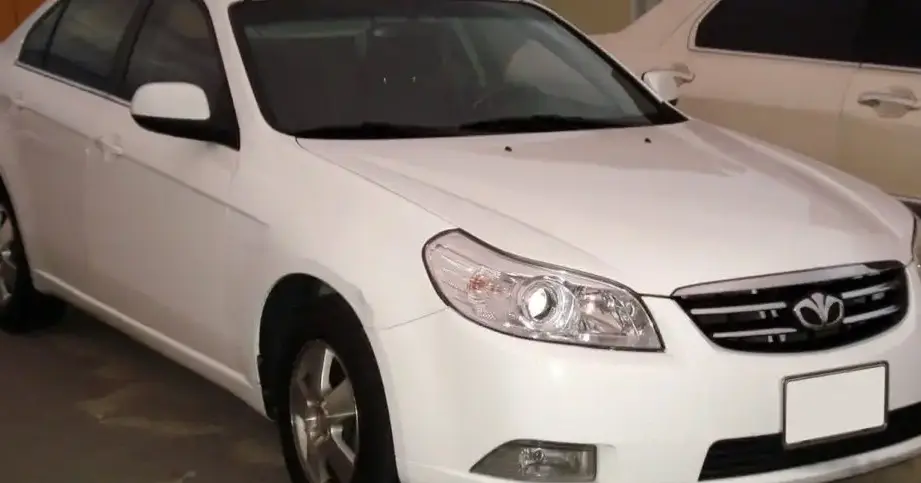
The Daewoo Tosca 2.5i R6 24V, produced between 2006 and 2011, represented a significant step forward for the Korean automaker in terms of design and engineering. Positioned as a mid-range offering within the Tosca lineup, it aimed to provide a more refined and powerful alternative to the base models. The Tosca itself was a rebadged version of the Opel/Vauxhall Vectra C, a product of General Motors’ global platform sharing strategy following their acquisition of Daewoo Motors. This variant, with its 2.5-liter inline-six engine, was primarily marketed towards buyers seeking a comfortable and relatively sporty sedan experience. It was sold primarily in South Korea and select export markets.
Technical Specifications
| Brand | Daewoo |
| Model | Tosca |
| Generation | Tosca |
| Type (Engine) | 2.5i R6 24V (152 Hp) |
| Start of production | 2006 |
| End of production | 2011 |
| Powertrain Architecture | Internal Combustion engine |
| Body type | Sedan |
| Seats | 5 |
| Doors | 4 |
| Fuel Type | Petrol (Gasoline) |
| Power | 152 Hp @ 5800 rpm |
| Power per litre | 61 Hp/l |
| Torque | 240 Nm @ 3800 rpm / 177.01 lb.-ft. @ 3800 rpm |
| Engine layout | Front, Transverse |
| Engine displacement | 2492 cm3 / 152.07 cu. in. |
| Number of cylinders | 6 |
| Engine configuration | Inline |
| Cylinder Bore | 77 mm / 3.03 in. |
| Piston Stroke | 89.2 mm / 3.51 in. |
| Compression ratio | 10:1 |
| Number of valves per cylinder | 4 |
| Fuel injection system | Multi-port manifold injection |
| Engine aspiration | Naturally aspirated engine |
| Engine oil capacity | 6.4 l / 6.76 US qt | 5.63 UK qt |
| Trunk (boot) space – minimum | 480 l / 16.95 cu. ft. |
| Fuel tank capacity | 65 l / 17.17 US gal | 14.3 UK gal |
| Length | 4805 mm / 189.17 in. |
| Width | 1810 mm / 71.26 in. |
| Height | 1450 mm / 57.09 in. |
| Wheelbase | 2700 mm / 106.3 in. |
| Front track | 1550 mm / 61.02 in. |
| Rear (Back) track | 1545 mm / 60.83 in. |
| Drivetrain Architecture | The Internal combustion engine (ICE) drives the front wheels of the vehicle. |
| Drive wheel | Front wheel drive |
| Number of gears and type of gearbox | 5 gears, manual transmission |
| Front suspension | Spring Strut |
| Rear suspension | Coil spring |
| Front brakes | Ventilated discs |
| Rear brakes | Disc |
| Assisting systems | ABS (Anti-lock braking system) |
| Steering type | Steering rack and pinion |
| Power steering | Hydraulic Steering |
| Tires size | 205/65 R15 |
| Wheel rims size | 6J x 15 |
Powertrain & Engine Architecture
The heart of the Tosca 2.5i is the X25 engine, a 2.5-liter (2492 cc) inline-six cylinder powerplant. This engine, derived from Opel designs, features a double overhead camshaft (DOHC) valvetrain with four valves per cylinder, contributing to its relatively high output for its displacement. The engine utilizes a multi-port fuel injection system, delivering fuel directly into the intake ports. The 10:1 compression ratio strikes a balance between performance and fuel efficiency. The engine’s inline-six configuration provides inherent smoothness compared to V6 or four-cylinder engines. The 5-speed manual transmission was the standard offering, providing drivers with direct control over the engine’s power. The transmission was designed to handle the engine’s torque output and deliver reasonable acceleration.
Driving Characteristics
The 152 horsepower and 240 Nm (177 lb-ft) of torque offered by the 2.5i engine provided a noticeable step up in performance compared to the lower-displacement engines available in the Tosca range. While not a sports sedan, the 2.5i offered brisk acceleration and comfortable highway cruising. The manual transmission allowed for precise gear selection, enabling drivers to maximize the engine’s power. The gear ratios were tuned for a balance of acceleration and fuel economy. Compared to a hypothetical automatic transmission version (which was not widely available in most markets), the manual offered a more engaging driving experience and slightly better fuel efficiency. The inline-six engine delivered a smooth and linear power delivery, making it easy to modulate throttle inputs.
Equipment & Trim Levels
The 2.5i trim level typically included features such as air conditioning, power windows and locks, a basic audio system, and cloth upholstery. Higher trim levels, often denoted with additional packages, could add features like alloy wheels, a sunroof, upgraded audio systems, and leather upholstery. Safety features generally included dual front airbags and ABS (Anti-lock Braking System). The interior design was functional and relatively understated, reflecting the car’s positioning as a mid-range offering. Optional extras often included a CD changer, upgraded speakers, and metallic paint finishes.
Chassis & Braking
The Tosca 2.5i utilized a front-wheel-drive layout with a MacPherson strut suspension in the front and a coil spring suspension in the rear. This suspension setup provided a comfortable ride quality, absorbing bumps and irregularities in the road surface effectively. The front brakes were ventilated discs, providing good stopping power, while the rear brakes were solid discs. The steering system was a rack and pinion setup with hydraulic power assistance, offering precise and responsive steering feel. The standard tire size was 205/65 R15, providing a good balance of grip and ride comfort.
Market Reception & Comparison
The Daewoo Tosca 2.5i was generally well-received by critics as a competent and comfortable mid-size sedan. It was praised for its smooth engine, comfortable ride, and relatively spacious interior. However, it was often criticized for its somewhat bland styling and lack of brand recognition outside of South Korea. Compared to other mid-size sedans available at the time, such as the Toyota Camry or Honda Accord, the Tosca offered a more affordable price point but lacked the same level of refinement and brand prestige. Fuel economy was considered average for its class. Reliability reports were mixed, with some owners reporting minor issues with electrical components.
Legacy
The Daewoo Tosca, and specifically the 2.5i variant, represents a transitional period for the Korean automotive industry. It showcased Daewoo’s (and later Chevrolet’s) ability to produce vehicles that were competitive with established global brands. While the Tosca itself is no longer in production, the underlying Opel/Vauxhall Vectra C platform continued to be used in various markets for several years. In the used car market, the Tosca 2.5i is often sought after by buyers looking for an affordable and reliable mid-size sedan with a relatively powerful engine. The inline-six engine, while requiring regular maintenance, is generally considered to be durable and long-lasting. Parts availability can be a challenge in some regions, but a dedicated community of owners and enthusiasts helps to keep these vehicles on the road.
