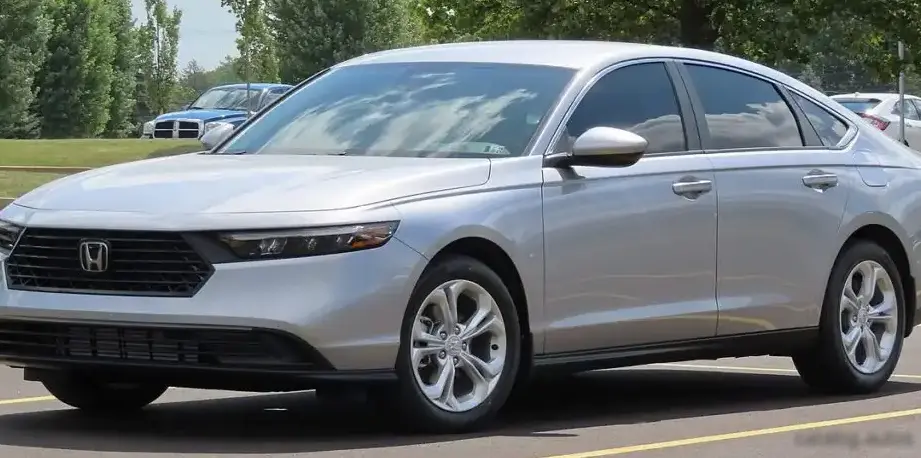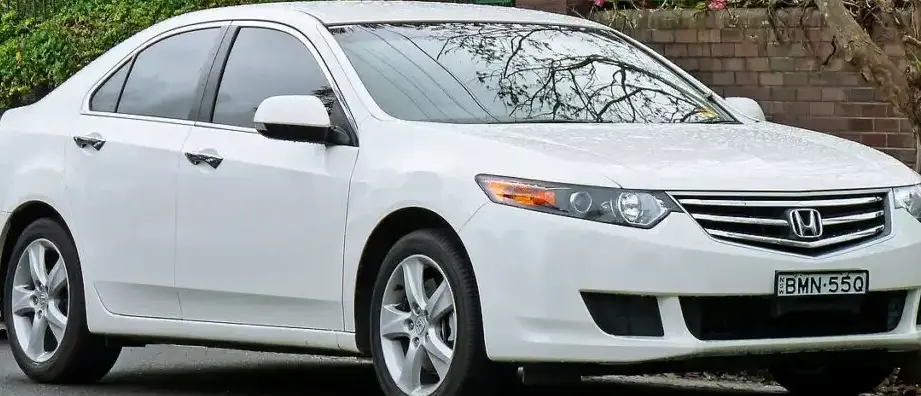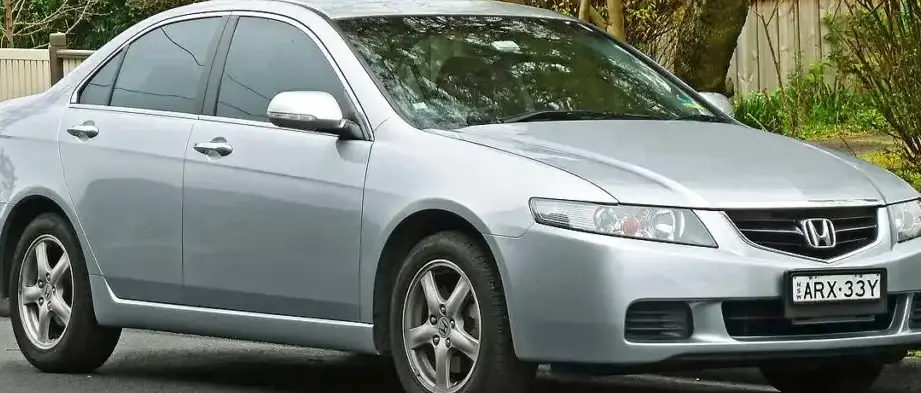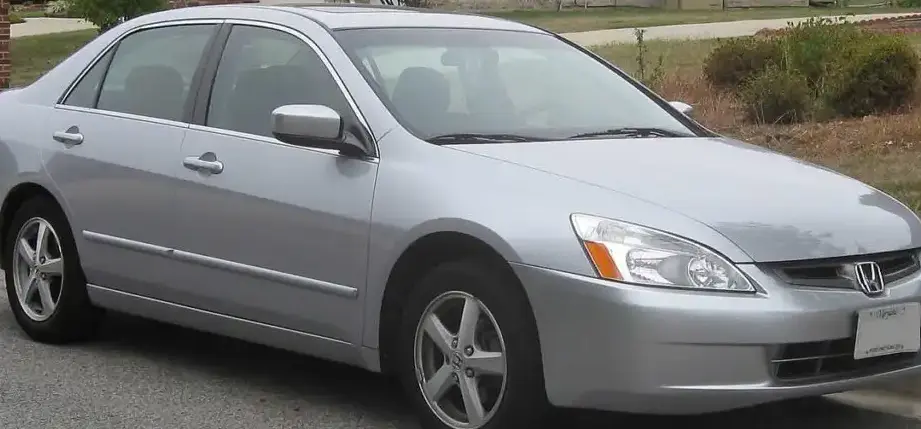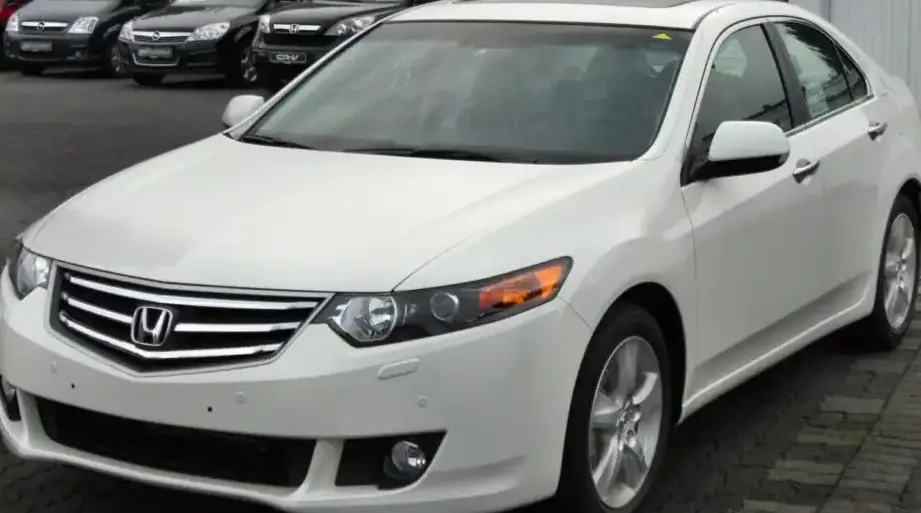
The Honda Accord VIII 2.2 i-DTEC Automatic, produced between 2008 and 2011, represented a significant offering in the mid-size sedan segment, particularly in European and Asian markets. This variant, powered by Honda’s 2.2-liter four-cylinder diesel engine paired with a five-speed automatic transmission, aimed to provide a balance of fuel efficiency, reasonable performance, and comfortable driving experience. It occupied a mid-range position within the Accord VIII lineup, slotting below the more powerful 2.4-liter petrol variants and above the base 2.0-liter models. The Accord VIII generation (2008-2012) was a crucial model for Honda, building upon the reputation for reliability and practicality established by its predecessors.
Technical Specifications
| Brand | Honda |
| Model | Accord |
| Generation | Accord VIII |
| Type (Engine) | 2.2 i-DTEC (150 Hp) Automatic |
| Start of production | 2008 |
| End of production | 2011 |
| Powertrain Architecture | Internal Combustion engine |
| Body type | Sedan |
| Seats | 5 |
| Doors | 4 |
| Fuel consumption (urban) | 8.6 l/100 km (27.4 US mpg) |
| Fuel consumption (extra urban) | 5.4 l/100 km (43.6 US mpg) |
| Fuel consumption (combined) | 6.6 l/100 km (35.6 US mpg) |
| Fuel Type | Diesel |
| Acceleration 0 – 100 km/h | 9.6 sec |
| Acceleration 0 – 62 mph | 9.6 sec |
| Acceleration 0 – 60 mph | 9.1 sec |
| Maximum speed | 207 km/h (128.62 mph) |
| Emission standard | Euro 5 |
| Weight-to-power ratio | 10.6 kg/Hp |
| Weight-to-torque ratio | 4.6 kg/Nm |
| Power | 150 Hp @ 4000 rpm |
| Torque | 350 Nm @ 2000 rpm (258.15 lb.-ft. @ 2000 rpm) |
| Engine layout | Front, Transverse |
| Engine Model/Code | N22B1 |
| Engine displacement | 2199 cm3 (134.19 cu. in.) |
| Number of cylinders | 4 |
| Engine configuration | Inline |
| Compression ratio | 16.3:1 |
| Number of valves per cylinder | 4 |
| Fuel injection system | Diesel Commonrail |
| Engine oil capacity | 5.5 l (5.81 US qt | 4.84 UK qt) |
| Coolant capacity | 6.9 l (7.29 US qt | 6.07 UK qt) |
| Kerb Weight | 1593 kg (3511.96 lbs) |
| Trunk (boot) space (minimum) | 467 l (16.49 cu. ft) |
| Fuel tank capacity | 65 l (17.17 US gal | 14.3 UK gal) |
| Length | 4726 mm (186.06 in) |
| Width | 1840 mm (72.44 in) |
| Height | 1440 mm (56.69 in) |
| Wheelbase | 2705 mm (106.5 in) |
| Minimum turning circle | 10.98 m (36.02 ft) |
| Drivetrain | Front wheel drive |
| Number of gears | 5 |
| Gearbox type | Automatic transmission |
| Front suspension | Double wishbone |
| Rear suspension | Independent multi-link with stabilizer |
| Front brakes | Ventilated discs |
| Rear brakes | Disc |
| Tire size | 215/60 R16 |
| Wheel rims size | 16 |
Powertrain & Engine Architecture
The heart of the Accord VIII 2.2 i-DTEC Automatic is Honda’s N22B1 engine, a 2.2-liter inline-four cylinder diesel. This engine utilizes a common-rail direct injection system, delivering fuel at extremely high pressure for optimized combustion. A turbocharger with an intercooler is employed to boost power and torque, mitigating the typical lag associated with turbocharged engines. The N22B1 features four valves per cylinder and a relatively high compression ratio of 16.3:1, contributing to its efficiency. The five-speed automatic transmission, while providing convenience, was a conventional torque converter type, not a dual-clutch or continuously variable transmission (CVT) found in some competitors. The transmission’s gear ratios were tuned for fuel economy and smooth cruising, rather than outright performance.
Driving Characteristics
The 2.2 i-DTEC Automatic offered a comfortable and refined driving experience. With 150 horsepower and 350 Nm (258 lb-ft) of torque, acceleration was adequate for everyday driving, achieving 0-60 mph in around 9.1 seconds. However, it wasn’t a particularly sporty variant. The automatic transmission, while smooth, could feel somewhat hesitant during quick overtaking maneuvers. Compared to the six-speed manual version of the same engine, the automatic traded some responsiveness for ease of use. The torque delivery was strong from low RPMs, making it well-suited for highway cruising and providing ample power for merging and passing. The automatic transmission’s shift points were programmed to prioritize fuel efficiency, sometimes holding gears longer than desired for spirited driving.
Equipment & Trim Levels
The 2.2 i-DTEC Automatic typically came equipped with a respectable level of standard features. These included air conditioning, power windows and locks, a CD player with auxiliary input, and alloy wheels. Higher trim levels added features such as leather upholstery, a sunroof, navigation system, and upgraded audio system. Safety features like ABS, electronic brakeforce distribution (EBD), and multiple airbags were standard across the range. The interior design was functional and well-built, though not overly luxurious. The dashboard layout was straightforward and easy to use, with logically placed controls.
Chassis & Braking
The Accord VIII featured a double wishbone front suspension and an independent multi-link rear suspension, providing a comfortable ride and good handling characteristics. Stabilizer bars were fitted to both axles to reduce body roll during cornering. The braking system consisted of ventilated discs at the front and solid discs at the rear. ABS (Anti-lock Braking System) was standard, enhancing braking performance and stability. The steering was a rack and pinion system, offering precise and responsive control.
Market Reception & Comparison
The Honda Accord VIII 2.2 i-DTEC Automatic was generally well-received by automotive critics. It was praised for its fuel efficiency, comfortable ride, and spacious interior. However, some reviewers noted that the automatic transmission could feel sluggish at times and that the engine lacked the outright performance of some competitors. Compared to the petrol-powered Accord variants, the diesel offered significantly better fuel economy, making it a popular choice for drivers covering long distances. Against rivals like the Ford Mondeo, Volkswagen Passat, and Toyota Avensis, the Accord offered a compelling combination of practicality, reliability, and refinement.
Legacy
The N22B1 engine, while not without its quirks, proved to be a relatively reliable powertrain when properly maintained. Common issues included diesel particulate filter (DPF) clogging, particularly on vehicles used primarily for short trips, and occasional injector problems. The five-speed automatic transmission, while generally durable, could experience wear and tear over time. Today, the Accord VIII 2.2 i-DTEC Automatic represents a good value proposition in the used car market, offering a comfortable and economical driving experience. Its reputation for reliability and Honda’s strong brand image continue to make it a desirable choice for buyers seeking a practical and dependable mid-size sedan.