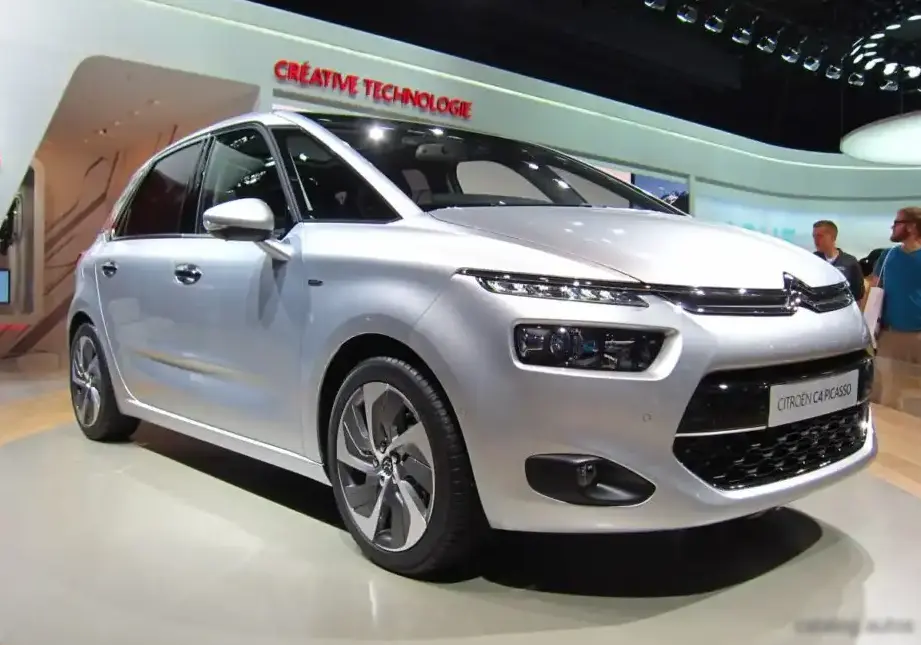
The Citroen C4 II Picasso 1.6 HDi 92 hp, produced between 2013 and 2014, represents an entry-level offering within the second generation of Citroen’s popular compact MPV. Positioned as a fuel-efficient and practical family vehicle, this variant aimed to provide accessible comfort and space within the broader C4 Picasso range. It falls within the Phase I refresh of the C4 II, characterized by subtle styling updates and refinements to the interior. This model was primarily marketed in Europe, where compact MPVs enjoyed significant popularity due to their versatility and suitability for urban environments.
Technical Specifications
| Brand | Citroen |
| Model | C4 |
| Generation | C4 II Picasso (Phase I, 2013) |
| Type (Engine) | 1.6 HDi (92 Hp) |
| Start of production | 2013 |
| End of production | 2014 |
| Powertrain Architecture | Internal Combustion engine |
| Body type | Minivan, MPV |
| Seats | 5 |
| Doors | 5 |
| Fuel consumption (urban) | 4.8 l/100 km (49 US mpg, 58.9 UK mpg, 20.8 km/l) |
| Fuel consumption (extra urban) | 3.8 l/100 km (61.9 US mpg, 74.3 UK mpg, 26.3 km/l) |
| Fuel consumption (combined) | 4.2 l/100 km (56 US mpg, 67.3 UK mpg, 23.8 km/l) |
| CO2 emissions | 110 g/km |
| Fuel Type | Diesel |
| Acceleration 0 – 100 km/h | 12.9 sec |
| Acceleration 0 – 62 mph | 12.9 sec |
| Acceleration 0 – 60 mph | 12.3 sec |
| Maximum speed | 173 km/h (107.5 mph) |
| Emission standard | Euro 5 |
| Weight-to-power ratio | 13.9 kg/Hp, 71.9 Hp/tonne |
| Weight-to-torque ratio | 5.6 kg/Nm, 179.8 Nm/tonne |
| Power | 92 Hp @ 4000 rpm |
| Power per litre | 59 Hp/l |
| Torque | 230 Nm @ 1750 rpm (169.64 lb.-ft. @ 1750 rpm) |
| Engine layout | Front, Transverse |
| Engine Model/Code | 9HP DV6DTED |
| Engine displacement | 1560 cm3 (95.2 cu. in.) |
| Number of cylinders | 4 |
| Engine configuration | Inline |
| Cylinder Bore | 75 mm (2.95 in.) |
| Piston Stroke | 88.3 mm (3.48 in.) |
| Compression ratio | 16:1 |
| Number of valves per cylinder | 2 |
| Fuel injection system | Diesel Commonrail |
| Engine aspiration | Turbocharger, Intercooler |
| Engine oil capacity | 3.75 l (3.96 US qt | 3.3 UK qt) |
| Kerb Weight | 1279 kg (2819.71 lbs.) |
| Max. weight | 1920 kg (4232.88 lbs.) |
| Max load | 641 kg (1413.16 lbs.) |
| Trunk (boot) space – minimum | 537 l (18.96 cu. ft.) |
| Trunk (boot) space – maximum | 1710 l (60.39 cu. ft.) |
| Fuel tank capacity | 55 l (14.53 US gal | 12.1 UK gal) |
| Permitted trailer load with brakes (12%) | 1250 kg (2755.78 lbs.) |
| Permitted trailer load without brakes | 675 kg (1488.12 lbs.) |
| Permitted towbar download | 70 kg (154.32 lbs.) |
| Length | 4428 mm (174.33 in.) |
| Width | 1826 mm (71.89 in.) |
| Width with mirrors folded | 1971 mm (77.6 in.) |
| Width including mirrors | 1971 mm (77.6 in.) |
| Height | 1610-1625 mm (63.39 – 63.98 in.) |
| Wheelbase | 2785 mm (109.65 in.) |
| Front track | 1573-1587 mm (61.93 – 62.48 in.) |
| Rear (Back) track | 1576-1590 mm (62.05 – 62.6 in.) |
| Front overhang | 879 mm (34.61 in.) |
| Rear overhang | 764 mm (30.08 in.) |
| Minimum turning circle (turning diameter) | 11.1 m (36.42 ft.) |
| Drivetrain Architecture | The Internal combustion engine (ICE) drives the front wheels of the vehicle. |
| Drive wheel | Front wheel drive |
| Number of gears and type of gearbox | 5 gears, manual transmission |
| Front suspension | Independent, type McPherson with coil spring and anti-roll bar |
| Rear suspension | Semi-independent, coil spring |
| Front brakes | Ventilated discs |
| Rear brakes | Disc |
| Assisting systems | ABS (Anti-lock braking system) |
| Steering type | Steering rack and pinion |
| Power steering | Electric Steering |
| Tires size | 205/60 R16 |
| Wheel rims size | 16 |
Powertrain & Engine Architecture
The heart of this C4 Picasso variant is the 1.6-liter HDi diesel engine, specifically the DV6DTED engine code (9HP). This engine is a four-cylinder, inline configuration, utilizing a turbocharger with intercooling to enhance power and efficiency. The DV6 family of engines were widely used across PSA Group (Peugeot, Citroen) vehicles and are known for their relatively robust design. Fuel is delivered via a common rail direct injection system, allowing for precise fuel metering and optimized combustion. The engine produces 92 horsepower at 4000 rpm and 230 Nm (169.64 lb-ft) of torque at 1750 rpm. This engine is paired with a five-speed manual transmission, chosen for its cost-effectiveness and fuel efficiency. While an automatic transmission was offered on other C4 Picasso models, it wasn’t available with this specific engine and power output.
Driving Characteristics
The 1.6 HDi 92 hp engine, coupled with the five-speed manual gearbox, delivers adequate, but not exhilarating, performance. Acceleration from 0-60 mph takes approximately 12.3 seconds, and top speed is around 107.5 mph. The engine’s torque peak at 1750 rpm provides reasonable pulling power for everyday driving, making it suitable for navigating urban roads and highway cruising. However, when fully loaded with passengers and luggage, the engine can feel strained, particularly when attempting overtaking maneuvers. The gear ratios are geared towards fuel economy, meaning the engine operates at relatively low revolutions per minute at cruising speeds. Compared to the more powerful 1.6 HDi 110 hp or the 2.0 HDi variants, this version offers a more economical driving experience at the expense of outright performance.
Equipment & Trim Levels
The 1.6 HDi 92 hp variant typically represented the entry-level trim within the C4 Picasso range. Standard equipment generally included air conditioning, electric front windows, a basic audio system with USB connectivity, and ABS brakes. Safety features such as driver and passenger airbags were also standard. Interior upholstery was typically cloth, and the dashboard featured a functional, if somewhat basic, design. Optional extras included rear parking sensors, alloy wheels, a panoramic sunroof, and a more advanced infotainment system with navigation. Higher trim levels, such as Exclusive, added features like automatic headlights and wipers, cruise control, and upgraded interior materials.
Chassis & Braking
The C4 II Picasso utilizes a McPherson strut front suspension and a semi-independent coil spring rear suspension. This setup provides a comfortable ride quality, absorbing bumps and imperfections in the road surface effectively. The front brakes are ventilated discs, offering good stopping power, while the rear brakes are solid discs. The steering is electrically assisted, providing light and easy steering feel. The suspension tuning is biased towards comfort rather than sporty handling, prioritizing a smooth and relaxed driving experience. Stabilizer bars are present on both axles to reduce body roll during cornering.
Market Reception & Comparison
The Citroen C4 II Picasso 1.6 HDi 92 hp was generally well-received by critics as a practical and economical family vehicle. Its fuel efficiency was a major selling point, with combined fuel consumption figures around 56 US mpg. However, some reviewers noted the engine’s lack of outright power, particularly when compared to higher-output variants. Compared to the 1.6 HDi 110 hp model, the 92 hp version offered lower running costs but sacrificed performance. The 2.0 HDi models provided significantly more power but came with higher fuel consumption and purchase price. Reliability was generally good, although, like all diesel engines, the particulate filter could require maintenance over time.
Legacy
The 1.6 HDi engine, in its various iterations, proved to be a durable and reliable powerplant. The DV6DTED version found in the C4 Picasso is generally considered a robust engine, capable of high mileage with proper maintenance. In the used car market, this variant represents an affordable entry point into C4 Picasso ownership. However, potential buyers should be aware of the potential for diesel particulate filter issues and ensure the vehicle has been regularly serviced. The C4 II Picasso, as a whole, remains a popular choice for families seeking a spacious, practical, and fuel-efficient MPV.