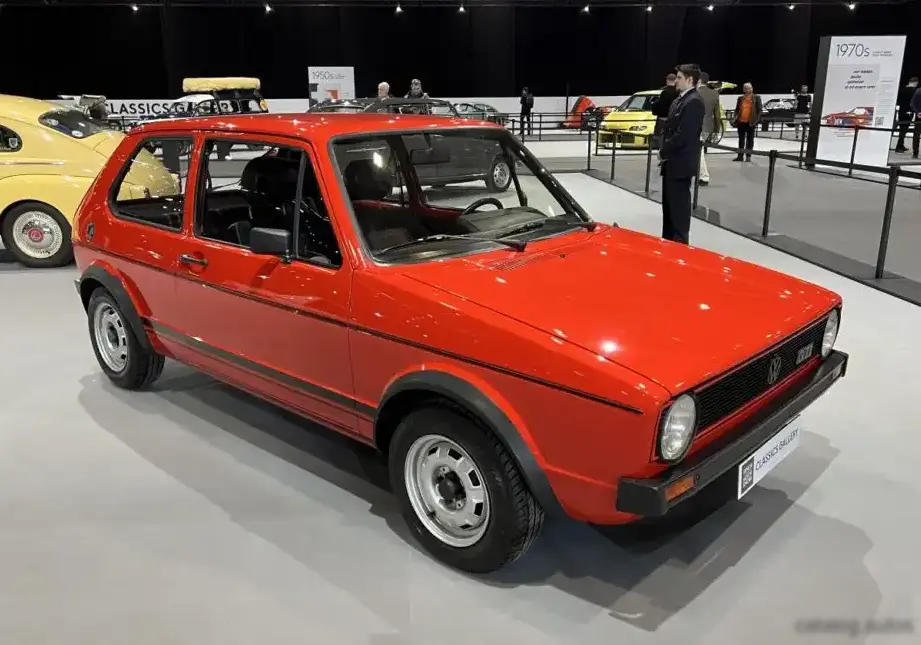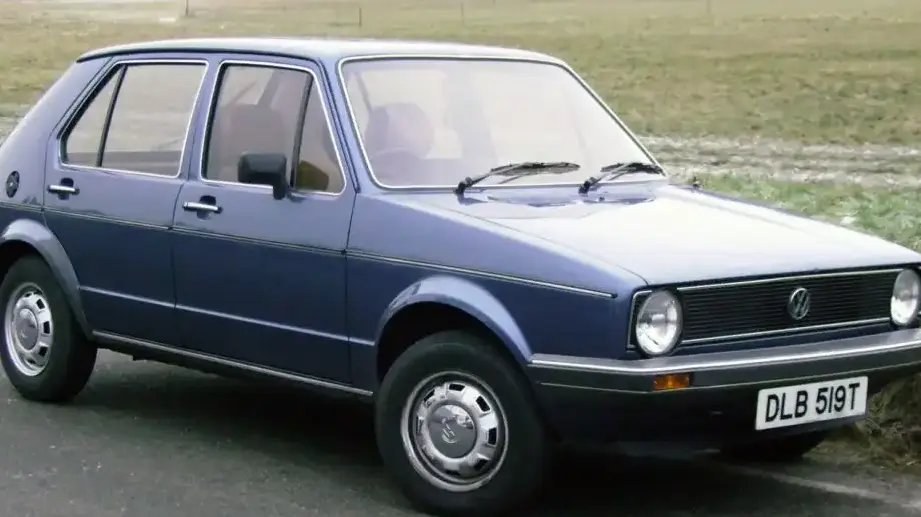
The Volkswagen Golf I (5-door) 1.6 D, produced between 1980 and 1983, represented Volkswagen’s entry into the diesel-powered hatchback market within the first generation Golf (Mk1) lineup. Positioned as an economy-focused variant, it offered a more fuel-efficient alternative to the gasoline-powered models. This five-door configuration broadened the Golf’s appeal to families and those prioritizing practicality. The 1.6 D sat at the lower end of the Golf I range, emphasizing affordability and operational costs over outright performance. It was a key component of Volkswagen’s strategy to offer a versatile and accessible vehicle to a wider customer base, particularly in Europe where diesel engines were gaining popularity.
Technical Specifications
| Brand | Volkswagen |
| Model | Golf |
| Generation | Golf I (5-door) |
| Type (Engine) | 1.6 D (54 Hp) |
| Start of production | 1980 |
| End of production | 1983 |
| Powertrain Architecture | Internal Combustion engine |
| Body type | Hatchback |
| Seats | 5 |
| Doors | 5 |
| Fuel Type | Diesel |
| Acceleration 0 – 100 km/h | 16.8 sec |
| Acceleration 0 – 62 mph | 16.8 sec |
| Acceleration 0 – 60 mph | 16 sec |
| Maximum speed | 143 km/h (88.86 mph) |
| Weight-to-power ratio | 14.4 kg/Hp, 69.7 Hp/tonne |
| Weight-to-torque ratio | 7.9 kg/Nm, 126.5 Nm/tonne |
| Power | 54 Hp @ 4800 rpm |
| Power per litre | 34 Hp/l |
| Torque | 98 Nm @ 2300 rpm (72.28 lb.-ft. @ 2300 rpm) |
| Engine layout | Front, Transverse |
| Engine Model/Code | CR, JK |
| Engine displacement | 1588 cm3 (96.91 cu. in.) |
| Number of cylinders | 4 |
| Engine configuration | Inline |
| Cylinder Bore | 76.5 mm (3.01 in.) |
| Piston Stroke | 86.4 mm (3.4 in.) |
| Compression ratio | 23:1 |
| Number of valves per cylinder | 2 |
| Fuel injection system | Precombustion chamber injection |
| Engine aspiration | Naturally aspirated engine |
| Engine oil capacity | 3.5 l (3.7 US qt | 3.08 UK qt) |
| Coolant | 4.5 l (4.76 US qt | 3.96 UK qt) |
| Kerb Weight | 775 kg (1708.58 lbs.) |
| Max. weight | 1200 kg (2645.55 lbs.) |
| Max load | 425 kg (936.96 lbs.) |
| Trunk (boot) space – minimum | 368 l (13 cu. ft.) |
| Trunk (boot) space – maximum | 1102 l (38.92 cu. ft.) |
| Fuel tank capacity | 40 l (10.57 US gal | 8.8 UK gal) |
| Length | 3723 mm (146.57 in.) |
| Width | 1610 mm (63.39 in.) |
| Height | 1410 mm (55.51 in.) |
| Wheelbase | 2400 mm (94.49 in.) |
| Front track | 1390 mm (54.72 in.) |
| Rear (Back) track | 1350 mm (53.15 in.) |
| Ride height (ground clearance) | 125 mm (4.92 in.) |
| Minimum turning circle | 10.5 m (34.45 ft.) |
| Drivetrain Architecture | The Internal combustion engine (ICE) drives the front wheels of the vehicle. |
| Drive wheel | Front wheel drive |
| Number of gears and type of gearbox | 4 gears, manual transmission |
| Front suspension | Independent, type McPherson with coil spring and anti-roll bar |
| Rear suspension | Coil spring, Torsion |
| Front brakes | Disc |
| Rear brakes | Drum |
| Steering type | Steering rack and pinion |
| Tires size | 175/70 R13 |
Powertrain & Engine Architecture
The heart of the Golf I 1.6 D was the 1.6-liter, inline-four cylinder diesel engine, designated with engine codes CR or JK depending on the specific production year and market. This engine utilized a precombustion chamber injection system, a common diesel technology of the era. This system involved injecting fuel into a small precombustion chamber connected to the main cylinder, where it was partially ignited before entering the main combustion chamber. This improved cold-starting performance and reduced engine noise compared to direct injection systems. The engine featured a relatively low compression ratio of 23:1, typical for diesel engines of the time, and a simple two-valve per cylinder configuration. The 1.6 D produced 54 horsepower at 4800 rpm and 98 Nm (72.28 lb-ft) of torque at 2300 rpm. The engine was transversely mounted, a layout that became a Volkswagen hallmark, contributing to efficient space utilization within the front-wheel-drive platform. The engine was paired with a four-speed manual transmission, optimized for fuel economy rather than sporty acceleration.
Driving Characteristics
The Golf I 1.6 D, with its 54 horsepower and four-speed manual gearbox, offered modest performance. Acceleration was leisurely, taking approximately 16.8 seconds to reach 62 mph (100 km/h). Top speed was around 88.86 mph (143 km/h). The engine’s torque, while not abundant, was available at relatively low engine speeds, making it reasonably tractable for everyday driving. Compared to the gasoline-powered Golf I variants, the 1.6 D prioritized fuel efficiency over outright speed. The gear ratios were spaced to maximize fuel economy, resulting in a somewhat sluggish feel when attempting quicker acceleration. Drivers accustomed to the more responsive gasoline engines would find the diesel noticeably slower, but the improved fuel economy was a significant trade-off. The manual transmission, while basic, provided a direct connection to the engine and allowed for precise control.
Equipment & Trim Levels
The 1.6 D trim level was generally considered the base model within the Golf I range. Standard equipment typically included cloth upholstery, basic instrumentation (speedometer, fuel gauge, temperature gauge), and a simple two-spoke steering wheel. The interior was functional and durable, reflecting the car’s economy-focused positioning. Optional extras included a radio, upgraded upholstery, and a sunroof. The exterior trim was minimal, with black plastic bumpers and steel wheels being standard. Higher trim levels, such as the GL, offered more luxurious features like upgraded interior trim, alloy wheels, and additional exterior chrome.
Chassis & Braking
The Golf I 1.6 D utilized a McPherson strut front suspension with coil springs and an anti-roll bar, providing a reasonable level of comfort and handling. The rear suspension employed a torsion beam setup, which was cost-effective and space-efficient. The braking system consisted of disc brakes on the front wheels and drum brakes on the rear. This configuration was typical for cars in this class during the early 1980s. The steering was a rack-and-pinion system, offering precise and responsive steering feel. The 1.6 D’s relatively low weight (775 kg / 1708.58 lbs) helped to mitigate the limitations of the braking system.
Market Reception & Comparison
The Golf I 1.6 D was well-received in Europe, where diesel engines were becoming increasingly popular due to their fuel efficiency and lower running costs. Critics praised its practicality, durability, and fuel economy. However, its performance was often criticized as being underwhelming. Compared to the gasoline-powered Golf I models, the 1.6 D offered significantly better fuel economy but at the expense of acceleration and overall refinement. The 1.6 D was a direct competitor to other small diesel hatchbacks of the era, such as the Fiat Ritmo Diesel and the Peugeot 205 Diesel. It generally offered a better balance of practicality and refinement than its competitors.
Legacy
The Volkswagen Golf I 1.6 D powertrain proved to be remarkably durable and reliable. Many examples remain on the road today, a testament to the engine’s robust design and build quality. The 1.6 D engine became a popular choice for budget-conscious buyers and those seeking a reliable and economical vehicle. In the used car market, the Golf I 1.6 D is often sought after by enthusiasts and collectors who appreciate its simplicity, durability, and classic Volkswagen charm. While not a performance icon, the 1.6 D played a significant role in establishing the Golf as a versatile and accessible vehicle, paving the way for the continued success of the Golf model line.