
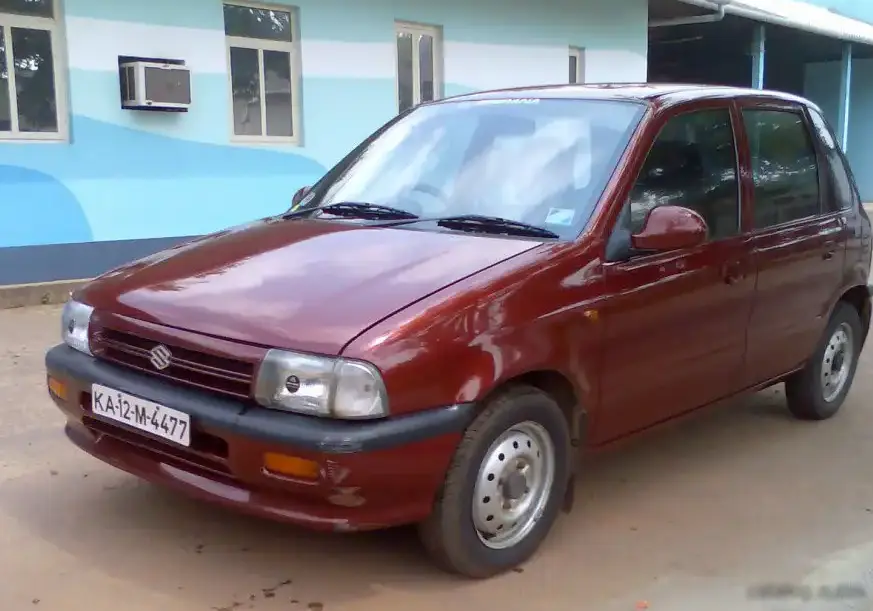
The Maruti Zen (EF) 1.0 i VXi, produced between 2002 and 2006, represents a significant iteration of Maruti Suzuki’s popular city car. Positioned as a mid-range trim within the second-generation Zen (EF) lineup, it offered a balance of affordability, fuel efficiency, and practicality for the burgeoning Indian middle class. The Zen, based on the globally recognized Suzuki Alto platform, played a crucial role in democratizing personal transportation in India, offering a modern hatchback alternative to existing offerings. This specific 1.0 i VXi variant, with its 60 horsepower engine and five-speed manual transmission, was a mainstay of Indian roads during its production run.
Technical Specifications
| Brand | Maruti |
| Model | Zen |
| Generation | ZEN (EF) |
| Type (Engine) | 1.0 i VXi (60 Hp) |
| Start of production | 2002 |
| End of production | 2006 |
| Powertrain Architecture | Internal Combustion engine |
| Body type | Hatchback |
| Seats | 5 |
| Doors | 5 |
| Fuel consumption (urban) | 6.3 l/100 km (37.3 US mpg, 44.8 UK mpg, 15.9 km/l) |
| Fuel consumption (extra urban) | 4.2 l/100 km (56 US mpg, 67.3 UK mpg, 23.8 km/l) |
| Fuel Type | Petrol (Gasoline) |
| Acceleration 0 – 100 km/h | 15.3 sec |
| Acceleration 0 – 62 mph | 15.3 sec |
| Acceleration 0 – 60 mph | 14.5 sec |
| Maximum speed | 150 km/h (93.21 mph) |
| Weight-to-power ratio | 12.8 kg/Hp, 78.4 Hp/tonne |
| Weight-to-torque ratio | 9.8 kg/Nm, 102 Nm/tonne |
| Power | 60 Hp @ 6000 rpm |
| Power per litre | 60.4 Hp/l |
| Torque | 78 Nm @ 4500 rpm (57.53 lb.-ft. @ 4500 rpm) |
| Engine layout | Front, Transverse |
| Engine displacement | 993 cm3 (60.6 cu. in.) |
| Number of cylinders | 4 |
| Engine configuration | Inline |
| Cylinder Bore | 72 mm (2.83 in.) |
| Piston Stroke | 61 mm (2.4 in.) |
| Compression ratio | 9.2:1 |
| Number of valves per cylinder | 2 |
| Fuel injection system | Multi-port manifold injection |
| Engine aspiration | Naturally aspirated engine |
| Kerb Weight | 765 kg (1686.54 lbs.) |
| Max. weight | 1160 kg (2557.36 lbs.) |
| Max load | 395 kg (870.83 lbs.) |
| Fuel tank capacity | 35 l (9.25 US gal | 7.7 UK gal) |
| Length | 3495 mm (137.6 in.) |
| Width | 1495 mm (58.86 in.) |
| Height | 1405 mm (55.31 in.) |
| Wheelbase | 2335 mm (91.93 in.) |
| Front track | 1335 mm (52.56 in.) |
| Rear track | 1305 mm (51.38 in.) |
| Minimum turning circle | 9.8 m (32.15 ft.) |
| Drivetrain Architecture | Front wheel drive |
| Number of gears and type of gearbox | 5 gears, manual transmission |
| Front suspension | Spring Strut |
| Rear suspension | Coil spring |
| Front brakes | Disc |
| Rear brakes | Drum |
| Assisting systems | ABS (Anti-lock braking system) |
| Steering type | Steering rack and pinion |
| Tires size | 145/70 R13 |
| Wheel rims size | 13 |
Powertrain & Engine Architecture
The heart of the Zen 1.0 i VXi is the F10D engine, a 993cc inline-four cylinder petrol engine. This engine, a staple of Suzuki’s small car lineup, utilizes a multi-point fuel injection system for efficient fuel delivery. The engine features a single overhead camshaft (SOHC) operating two valves per cylinder. While not a powerhouse, the F10D was known for its reliability and relatively smooth operation. The five-speed manual transmission was the standard offering, providing adequate gear ratios for city driving and highway cruising. The transmission was chosen for its simplicity and cost-effectiveness, aligning with the Zen’s overall value proposition. The engine’s relatively low compression ratio of 9.2:1 contributed to its ability to run on the readily available, and sometimes lower-quality, fuel common in India at the time.
Driving Characteristics
The Zen 1.0 i VXi, with its 60 horsepower and 78 Nm of torque, offered modest performance. Acceleration from 0-100 km/h took around 15.3 seconds, making it primarily suited for urban commutes. The five-speed gearbox allowed drivers to keep the engine in its optimal power band, but overtaking maneuvers required careful planning. Compared to higher-spec Zen variants with larger engines, the 1.0 i VXi felt noticeably less powerful. However, its lighter weight and nimble handling made it enjoyable to drive in congested city environments. The gear ratios were tuned for fuel efficiency rather than outright performance, prioritizing economy over spirited driving. The steering, while not particularly communicative, was light and easy to use, making parking and maneuvering a breeze.
Equipment & Trim Levels
The 1.0 i VXi trim level represented a step up from the base Zen model. Standard features included power steering, air conditioning, and basic instrumentation. The interior typically featured cloth upholstery and a functional, if somewhat spartan, dashboard layout. Optional extras, such as a stereo system and power windows, were available, allowing buyers to customize their Zen to some extent. The VXi trim also included body-colored bumpers and door handles, adding a touch of visual appeal. The focus was on providing essential comfort and convenience features at an affordable price point.
Chassis & Braking
The Zen (EF) utilized a relatively simple chassis design. The front suspension employed a MacPherson strut setup, while the rear featured a coil spring arrangement. This configuration provided a comfortable ride quality, although it wasn’t particularly sporty. The braking system consisted of disc brakes on the front wheels and drum brakes on the rear. ABS (Anti-lock Braking System) was included as a standard safety feature, a notable inclusion for a car in its class at the time. The relatively lightweight construction of the Zen helped to compensate for the modest braking performance.
Market Reception & Comparison
The Maruti Zen 1.0 i VXi was well-received in the Indian market. Critics praised its fuel efficiency, affordability, and ease of driving. It was often compared to other small hatchbacks of the time, such as the Hyundai Santro and the Daewoo Matiz. The Zen generally offered a better driving experience and a more refined interior than its competitors, although it wasn’t as spacious. Its fuel economy figures of around 6.3 l/100 km (urban) and 4.2 l/100 km (extra urban) were highly competitive, making it an attractive option for budget-conscious buyers. Reliability was also a strong point, with the F10D engine proving to be durable and relatively maintenance-free.
Legacy
The Maruti Zen (EF) 1.0 i VXi remains a popular choice in the used car market in India. Its simple mechanicals and readily available spare parts make it relatively easy and inexpensive to maintain. While older examples may require some restoration work, the Zen’s robust construction ensures that many are still on the road today. The Zen played a significant role in shaping the Indian automotive landscape, establishing Maruti Suzuki as a dominant player in the small car segment. It’s remembered fondly by many as a reliable, affordable, and practical city car that helped to put India on wheels.
