
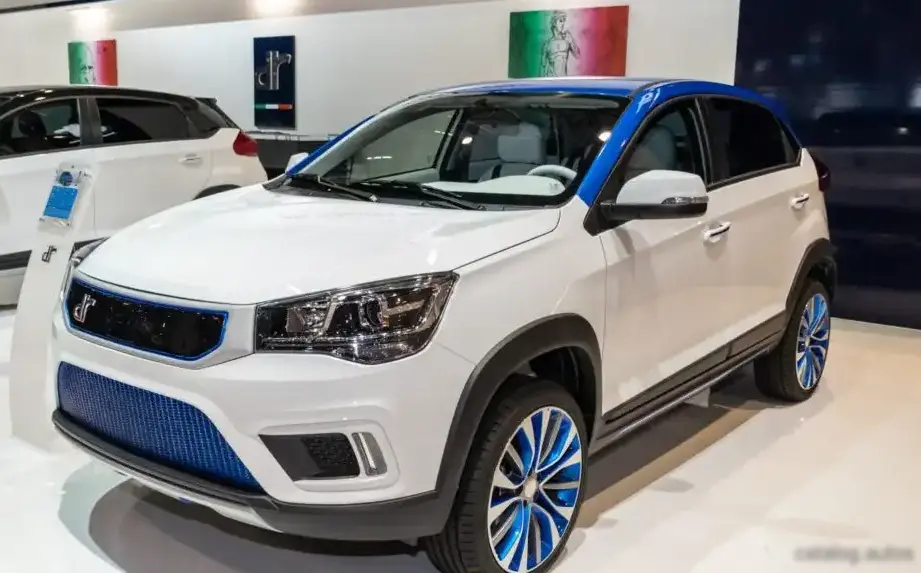
The DR 3EV EV 54.3 kWh (122 Hp) marked DR Automobiles’ initial venture into the electric vehicle (EV) market. Introduced in 2019 and produced for a single model year, the 3EV is a compact crossover/coupe positioned as an accessible entry point into electric mobility. Heavily based on the Chery Tiggo 4x platform, DR Automobiles applied their own styling and trim levels to create a unique offering. The 3EV aimed to provide a practical, five-seater vehicle with a usable all-electric range, targeting European consumers seeking a budget-friendly EV option. While DR Automobiles is a relatively new brand, the 3EV was a significant step in establishing their presence and demonstrating their commitment to alternative fuel vehicles.
Technical Specifications
| Brand | DR |
| Model | 3 |
| Generation | 3EV |
| Type (Engine) | EV 54.3 kWh (122 Hp) |
| Start of production | 2019 |
| End of production | 2019 |
| Powertrain Architecture | BEV (Electric Vehicle) |
| Body type | Coupe, SUV |
| Seats | 5 |
| Doors | 5 |
| Fuel Type | Electricity |
| Maximum speed | 151 km/h (93.83 mph) |
| Weight-to-power ratio | 12.4 kg/Hp, 80.5 Hp/tonne |
| Gross battery capacity | 54.3 kWh |
| All-electric range | 401 km (249.17 mi) |
| Electric motor power | 122 Hp |
| Electric motor Torque | 276 Nm (203.57 lb.-ft.) |
| System power | 122 Hp |
| Kerb Weight | 1515 kg (3340 lbs.) |
| Length | 4200 mm (165.35 in.) |
| Width | 1760 mm (69.29 in.) |
| Height | 1570 mm (61.81 in.) |
| Wheelbase | 2555 mm (100.59 in.) |
| Front track | 1495 mm (58.86 in.) |
| Rear (Back) track | 1484 mm (58.43 in.) |
| Drive wheel | Front wheel drive |
| Front suspension | Independent type McPherson |
| Front brakes | Ventilated discs |
| Rear brakes | Disc |
| Assisting systems | ABS (Anti-lock braking system) |
| Tires size | 205/50 R17; 205/45 R18 |
| Wheel rims size | 17; 18 |
Powertrain & Engine Architecture
The DR 3EV utilizes a fully electric powertrain, designated as a Battery Electric Vehicle (BEV). At the heart of the system is a single electric motor producing 122 horsepower and 276 Nm (203.57 lb.-ft.) of torque. This motor is powered by a 54.3 kWh lithium-ion battery pack. While specific details regarding the battery chemistry and cell configuration are limited, it’s understood to be a standard lithium-ion setup common in many contemporary EVs. The vehicle employs a front-wheel-drive configuration. The electric motor delivers instant torque, characteristic of EV powertrains, providing brisk acceleration from a standstill. The powertrain lacks a traditional multi-gear transmission; instead, it utilizes a single-speed reduction gear to transfer power to the front wheels. This simplicity contributes to the smooth and direct feel of the drivetrain. The charging system supports both AC and DC charging, allowing for flexibility in replenishing the battery. AC charging provides a slower, overnight charge, while DC fast charging can significantly reduce charging times when using compatible charging stations.
Driving Characteristics
The DR 3EV offers a driving experience typical of entry-level electric vehicles. Acceleration is adequate for urban and suburban driving, with the instant torque providing responsive performance. The single-speed transmission means there are no gear changes, resulting in a smooth and linear power delivery. Top speed is limited to 151 km/h (93.83 mph). Handling is generally competent, though not particularly sporty. The McPherson strut front suspension provides a comfortable ride, absorbing bumps and imperfections in the road surface reasonably well. The rear disc brakes, combined with the regenerative braking system, offer sufficient stopping power. Regenerative braking captures energy during deceleration, increasing efficiency and extending the vehicle’s range. Compared to potential gasoline-powered alternatives, the 3EV provides a quieter and more refined driving experience, free from engine noise and vibrations. However, it lacks the performance of more powerful EVs or gasoline-powered vehicles in the same price bracket. The overall driving experience prioritizes efficiency and ease of use over outright performance.
Equipment & Trim Levels
The DR 3EV was offered with a relatively basic level of standard equipment, reflecting its position as an affordable EV. Standard features typically included air conditioning, power windows, central locking, and an infotainment system with a touchscreen display. Safety features such as ABS (Anti-lock Braking System) were also standard. Interior upholstery was typically cloth, and the dashboard design was functional but not particularly luxurious. Optional extras, depending on the market and availability, may have included alloy wheels, a rearview camera, and parking sensors. The trim levels were fairly limited, with the focus being on providing a cost-effective electric vehicle rather than offering a wide range of customization options. The emphasis was on delivering essential features at a competitive price point, making electric mobility accessible to a wider audience.
Chassis & Braking
The DR 3EV utilizes a front-wheel-drive chassis with an independent McPherson strut suspension system at the front. The rear suspension configuration is not widely documented, but it is likely a torsion beam setup to minimize cost and complexity. The braking system consists of ventilated discs at the front and solid discs at the rear. The ABS (Anti-lock Braking System) is standard, enhancing safety by preventing wheel lockup during hard braking. Tire sizes varied depending on the trim level, with 205/50 R17 and 205/45 R18 being common options. The chassis is designed to accommodate the weight of the battery pack, which is located under the floor of the vehicle, lowering the center of gravity and improving stability. This low center of gravity contributes to improved handling and cornering stability.
Market Reception & Comparison
The DR 3EV received mixed reviews from automotive critics. While praised for its affordability and usable all-electric range of 401 km (249.17 mi), it was criticized for its basic interior, limited features, and somewhat unrefined driving experience. Compared to other EVs available in Europe at the time, the 3EV offered a competitive price point but lacked the sophistication and performance of more established models. Fuel economy, being an EV, is measured in energy consumption, and the 3EV performed adequately in this regard. Reliability data is limited due to the short production run and relatively low sales volume. However, given its reliance on proven Chery Tiggo 4x components, it’s likely to have a reasonable level of reliability. The 3EV aimed to appeal to budget-conscious buyers seeking an entry-level EV, but it faced competition from more established brands offering more refined and feature-rich options.
Legacy
The DR 3EV, despite its short production run, represents an important milestone for DR Automobiles as their first electric vehicle. While it didn’t achieve significant sales success, it served as a valuable learning experience for the company and paved the way for future EV models. On the used car market, the 3EV is relatively rare, and prices vary depending on condition and mileage. The long-term reliability of the powertrain is still being assessed, but the electric motor and battery pack are generally considered to be durable components. The 3EV’s legacy lies in its role as a pioneering effort by DR Automobiles to enter the electric vehicle market and offer a more affordable EV option to consumers. It demonstrated the brand’s willingness to embrace new technologies and contribute to the growing EV landscape, even if on a small scale.
