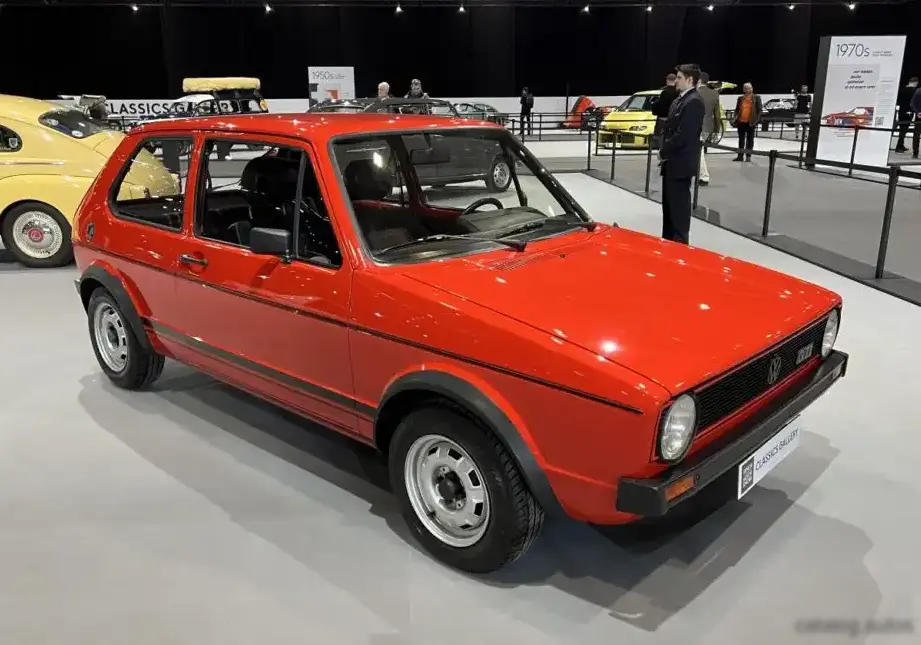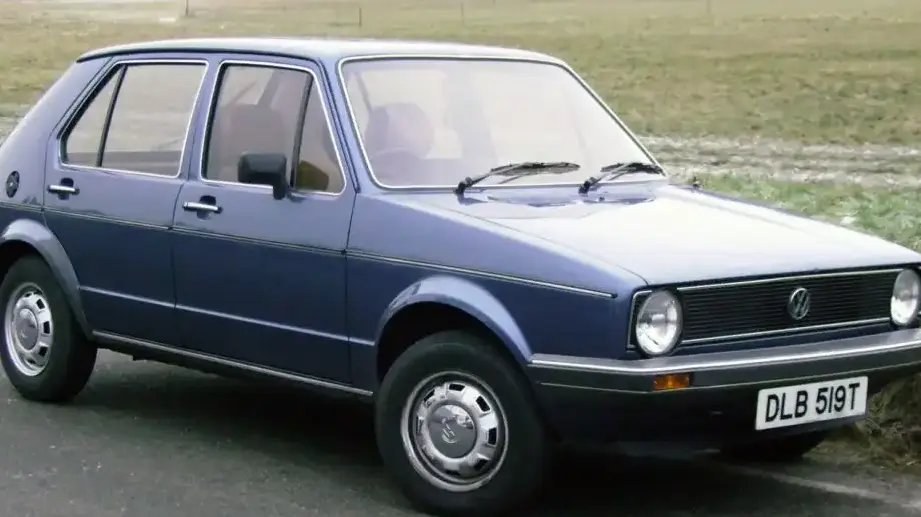
The Volkswagen Golf I (5-door) 1.6 TD, produced from 1982 to 1983, represented a significant expansion of the original Golf lineup. Introduced as part of the Mk1 Golf’s mid-life revisions, this variant aimed to provide a fuel-efficient and practical option for European buyers increasingly concerned with rising fuel costs. Positioned as an economy-focused model, it sat below the gasoline-powered versions in terms of outright performance but offered a compelling alternative with its diesel torque and improved fuel economy. The 1.6 TD utilized Volkswagen’s established diesel technology, offering a durable and relatively simple powertrain within the popular A1 platform.
Technical Specifications
| Brand | Volkswagen |
| Model | Golf |
| Generation | Golf I (5-door) |
| Type (Engine) | 1.6 TD (70 Hp) |
| Start of production | 1982 |
| End of production | 1983 |
| Powertrain Architecture | Internal Combustion engine |
| Body type | Hatchback |
| Seats | 5 |
| Doors | 5 |
| Fuel Type | Diesel |
| Acceleration 0 – 100 km/h | 13.5 sec |
| Acceleration 0 – 62 mph | 13.5 sec |
| Acceleration 0 – 60 mph | 12.8 sec |
| Maximum speed | 155 km/h (96.31 mph) |
| Weight-to-power ratio | 12.1 kg/Hp, 82.4 Hp/tonne |
| Weight-to-torque ratio | 6.5 kg/Nm, 152.9 Nm/tonne |
| Power | 70 Hp @ 4500 rpm |
| Power per litre | 44.1 Hp/l |
| Torque | 130 Nm @ 2600 rpm (95.88 lb.-ft. @ 2600 rpm) |
| Engine layout | Front, Transverse |
| Engine Model/Code | CY |
| Engine displacement | 1588 cm3 (96.91 cu. in.) |
| Number of cylinders | 4 |
| Engine configuration | Inline |
| Cylinder Bore | 76.5 mm (3.01 in.) |
| Piston Stroke | 86.4 mm (3.4 in.) |
| Compression ratio | 23:1 |
| Number of valves per cylinder | 2 |
| Fuel injection system | Precombustion chamber injection |
| Engine aspiration | Turbocharger |
| Valvetrain | SOHC |
| Engine oil capacity | 3.5 l (3.7 US qt | 3.08 UK qt) |
| Coolant | 4.5 l (4.76 US qt | 3.96 UK qt) |
| Kerb Weight | 850 kg (1873.93 lbs.) |
| Max. weight | 1270 kg (2799.87 lbs.) |
| Max load | 420 kg (925.94 lbs.) |
| Trunk (boot) space – minimum | 368 l (13 cu. ft.) |
| Trunk (boot) space – maximum | 1102 l (38.92 cu. ft.) |
| Fuel tank capacity | 40 l (10.57 US gal | 8.8 UK gal) |
| Length | 3723 mm (146.57 in.) |
| Width | 1610 mm (63.39 in.) |
| Height | 1410 mm (55.51 in.) |
| Wheelbase | 2400 mm (94.49 in.) |
| Front track | 1390 mm (54.72 in.) |
| Rear (Back) track | 1350 mm (53.15 in.) |
| Ride height (ground clearance) | 125 mm (4.92 in.) |
| Minimum turning circle | 10.5 m (34.45 ft.) |
| Drivetrain Architecture | The Internal combustion engine (ICE) drives the front wheels of the vehicle. |
| Drive wheel | Front wheel drive |
| Number of gears and type of gearbox | 5 gears, manual transmission |
| Front suspension | Independent type McPherson |
| Rear suspension | Coil spring, Torsion |
| Front brakes | Disc |
| Rear brakes | Drum |
| Steering type | Steering rack and pinion |
| Tires size | 175/70 R13 |
| Wheel rims size | 13 |
Powertrain & Engine Architecture
The heart of the Golf I 1.6 TD was the CY engine, a 1.6-liter inline-four diesel engine. This engine utilized a precombustion chamber injection system, a common design for diesel engines of the era. This system involved injecting fuel into a small precombustion chamber connected to the main cylinder, where it was partially ignited before entering the main combustion chamber. This improved cold-starting performance and reduced engine noise compared to direct injection systems. The engine featured a single overhead camshaft (SOHC) valvetrain operating two valves per cylinder. The addition of a turbocharger significantly boosted power output to 70 horsepower, a notable increase over naturally aspirated diesel engines of the time. The five-speed manual transmission was the only gearbox option available, geared for maximizing fuel efficiency and providing adequate torque multiplication for everyday driving.
Driving Characteristics
The 1.6 TD offered a distinctly different driving experience compared to the gasoline-powered Golfs. While lacking the brisk acceleration of the GTI or even the 1.5-liter gasoline models, the diesel engine delivered a substantial amount of low-end torque. This made it well-suited for navigating hilly terrain and carrying a full load of passengers. The five-speed gearbox allowed drivers to keep the engine in its optimal torque band, providing reasonable performance in most situations. However, the engine could feel strained at higher speeds, and the overall driving experience was more about practicality and fuel economy than outright excitement. Compared to the later 1.9 TDI engines, the 1.6 TD was noticeably less refined and offered lower peak power, but it was still a capable and economical performer for its time.
Equipment & Trim Levels
The 1.6 TD typically came with a relatively basic level of equipment, reflecting its position as an economy-focused model. Standard features generally included cloth upholstery, a basic instrument cluster, and manual windows and door locks. Optional extras, such as a sunroof, upgraded stereo, and alloy wheels, were available, allowing buyers to personalize their vehicles. Interior trim was typically functional and durable, prioritizing practicality over luxury. The five-door body style provided enhanced accessibility and passenger space compared to the three-door version.
Chassis & Braking
The Golf I 1.6 TD utilized a McPherson strut front suspension and a torsion beam rear suspension. This setup provided a comfortable ride and predictable handling characteristics. The front brakes were disc brakes, offering adequate stopping power, while the rear brakes were drum brakes, a cost-saving measure common on economy models. The steering was a rack-and-pinion system, providing precise and responsive steering feel. The 175/70 R13 tires offered a good balance of grip and fuel efficiency.
Market Reception & Comparison
The Golf I 1.6 TD was generally well-received in European markets, particularly by buyers seeking a fuel-efficient and reliable family car. Critics praised its low running costs and durable powertrain. However, some reviewers noted its lack of outright performance and relatively noisy engine. Compared to the gasoline-powered Golfs, the 1.6 TD offered significantly better fuel economy but lacked the same level of refinement and driving enjoyment. Against competitors like the Ford Escort Diesel and Opel Kadett Diesel, the Golf 1.6 TD offered a compelling combination of practicality, reliability, and fuel efficiency.
Legacy
The Volkswagen Golf I 1.6 TD powertrain proved to be remarkably durable and reliable. Many examples remain on the road today, a testament to the quality of its engineering. While not as sought-after as the GTI or other high-performance variants, the 1.6 TD has gained a following among enthusiasts who appreciate its simplicity and fuel efficiency. In the used car market, these models are typically affordable and represent a practical and economical option for those seeking a classic Volkswagen. The 1.6 TD laid the groundwork for Volkswagen’s continued success in the diesel market, paving the way for the development of more advanced and refined diesel engines in subsequent Golf generations.