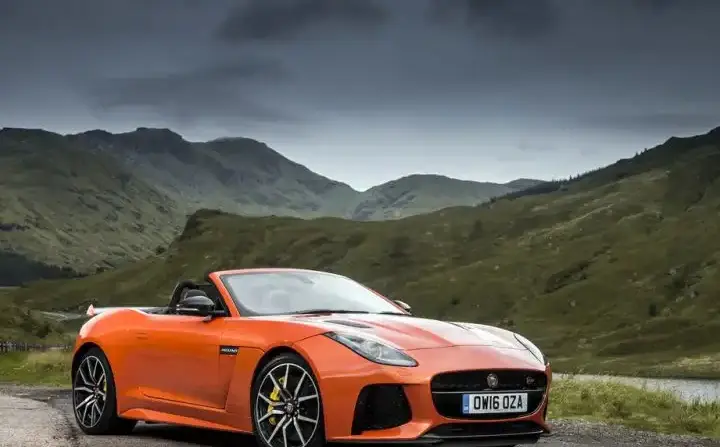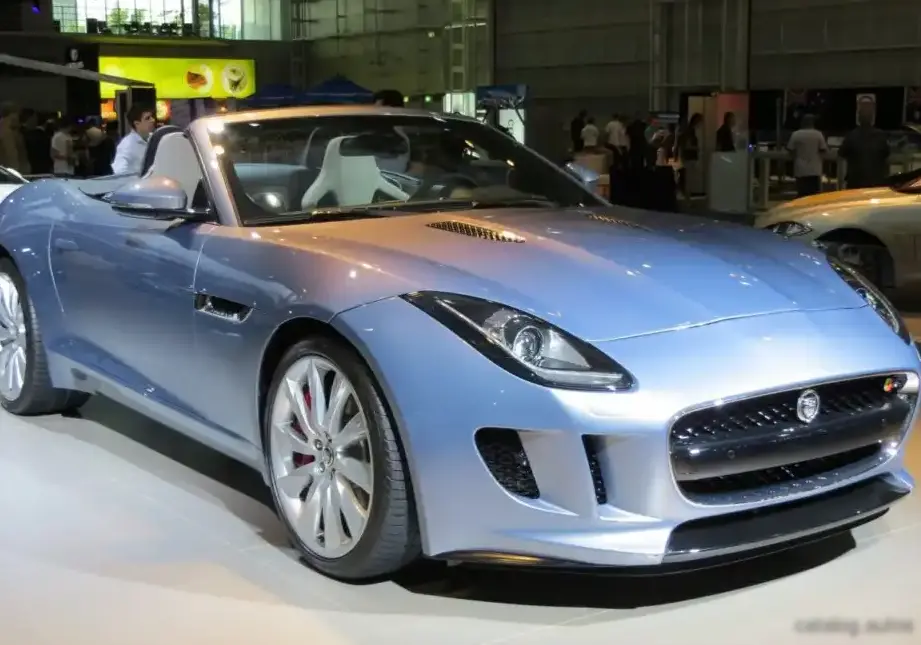
The Jaguar F-Type Convertible 3.0 V6 (340 hp) represents a pivotal entry point into the first generation (X152) of Jaguar’s modern sports car lineage. Introduced in 2013 and continuing through the 2017 model year, this variant aimed to deliver a compelling blend of performance, luxury, and open-air driving enjoyment. Positioned as the mid-range offering in the initial F-Type lineup, it slotted between the supercharged 2.0-liter four-cylinder and the more potent 5.0-liter V8 models. The F-Type was Jaguar’s attempt to recapture the spirit of the iconic E-Type, offering a modern interpretation of a classic grand tourer.
Technical Specifications
| Brand | Jaguar |
| Model | F-type |
| Generation | F-type Convertible |
| Type (Engine) | 3.0 V6 (340 Hp) |
| Start of production | 2013 |
| End of production | 2017 |
| Powertrain Architecture | Internal Combustion engine |
| Body type | Cabriolet |
| Seats | 2 |
| Doors | 2 |
| Fuel consumption (economy) – urban | 13.5 l/100 km (17.4 US mpg, 20.9 UK mpg, 7.4 km/l) |
| Fuel consumption (economy) – extra urban | 7.6 l/100 km (30.9 US mpg, 37.2 UK mpg, 13.2 km/l) |
| Fuel consumption (economy) – combined | 9.8 l/100 km (24 US mpg, 28.8 UK mpg, 10.2 km/l) |
| CO2 emissions | 234 g/km |
| Fuel Type | Petrol (Gasoline) |
| Acceleration 0 – 100 km/h | 5.7 sec |
| Acceleration 0 – 62 mph | 5.7 sec |
| Acceleration 0 – 60 mph | 5.4 sec |
| Maximum speed | 260 km/h (161.56 mph) |
| Weight-to-power ratio | 4.7 kg/Hp, 214.2 Hp/tonne |
| Weight-to-torque ratio | 3.5 kg/Nm, 283.6 Nm/tonne |
| Power | 340 Hp @ 6500 rpm |
| Power per litre | 113.5 Hp/l |
| Torque | 450 Nm @ 3500-5000 rpm (331.9 lb.-ft. @ 3500-5000 rpm) |
| Engine layout | Front, Longitudinal |
| Engine Model/Code | 306PS |
| Engine displacement | 2995 cm3 (182.77 cu. in.) |
| Number of cylinders | 6 |
| Engine configuration | V-engine |
| Cylinder Bore | 84.5 mm (3.33 in.) |
| Piston Stroke | 89 mm (3.5 in.) |
| Compression ratio | 10.5:1 |
| Number of valves per cylinder | 4 |
| Fuel injection system | Direct injection |
| Engine aspiration | Supercharger, Intercooler |
| Engine oil capacity | 7.25 l (7.66 US qt | 6.38 UK qt) |
| Coolant | 9.6 l (10.14 US qt | 8.45 UK qt) |
| Kerb Weight | 1587 kg (3498.74 lbs.) |
| Max. weight | 2000 kg (4409.25 lbs.) |
| Max load | 413 kg (910.51 lbs.) |
| Trunk (boot) space – minimum | 196 l (6.92 cu. ft.) |
| Fuel tank capacity | 70 l (18.49 US gal | 15.4 UK gal) |
| Length | 4470 mm (175.98 in.) |
| Width | 1923 mm (75.71 in.) |
| Width including mirrors | 2042 mm (80.39 in.) |
| Height | 1308 mm (51.5 in.) |
| Wheelbase | 2622 mm (103.23 in.) |
| Front track | 1597 mm (62.87 in.) |
| Rear (Back) track | 1649 mm (64.92 in.) |
| Ride height (ground clearance) | 108 mm (4.25 in.) |
| Minimum turning circle (turning diameter) | 11 m (36.09 ft.) |
| Drivetrain Architecture | Rear wheel drive |
| Drive wheel | Rear wheel drive |
| Number of gears and type of gearbox | 6 gears, manual transmission |
| Front suspension | Double wishbone |
| Rear suspension | Double wishbone |
| Front brakes | Ventilated discs |
| Rear brakes | Disc |
| Assisting systems | ABS (Anti-lock braking system) |
| Steering type | Steering rack and pinion |
| Tires size | 245/45 R18; 275/40 R18 |
| Wheel rims size | 8.5J x 18; 9.5J x 18 |
Powertrain & Engine Architecture
At the heart of the F-Type 3.0 V6 lies Jaguar’s AJ306 engine. This 2.995-liter, supercharged V6 is a member of the AJ-V6 engine family, known for its robust construction and responsiveness. The engine utilizes direct fuel injection and a Roots-type supercharger, delivering a broad torque curve and a characteristic supercharger whine. The 340 hp variant employs a slightly lower boost pressure compared to the 400 hp version. The engine’s architecture is longitudinal, meaning it’s mounted lengthwise in the chassis, driving the rear wheels. The standard transmission for this model was a six-speed manual, though an eight-speed automatic transmission (ZF 8HP45) was also available, and became increasingly popular. The automatic transmission offered smoother shifts and enhanced convenience, but at the expense of some driver engagement.
Driving Characteristics
The 340 hp F-Type Convertible offered a compelling driving experience, balancing performance with everyday usability. Acceleration from 0-60 mph took approximately 5.4 seconds with the automatic transmission, and 5.7 seconds with the manual. While not as brutally fast as the V8 models, the V6 provided ample power for spirited driving on both winding roads and open highways. The supercharger provided instant throttle response, and the exhaust note was suitably sporty. The automatic transmission, while smooth, could sometimes feel hesitant during quick downshifts. The suspension, tuned for a balance between comfort and handling, provided a relatively compliant ride, though it wasn’t as focused on track performance as some competitors.
Equipment & Trim Levels
The F-Type 3.0 V6 Convertible came reasonably well-equipped as standard. Key features included leather upholstery, power-adjustable seats, a touchscreen infotainment system, and automatic climate control. Optional extras were plentiful, allowing buyers to personalize their vehicles. These included premium audio systems (Meridian), heated seats, navigation, and various cosmetic enhancements. Trim levels were relatively simple, with options primarily revolving around interior materials and exterior styling cues. The base model offered a good level of luxury, while higher-spec versions added more premium features.
Chassis & Braking
The F-Type Convertible utilized a lightweight aluminum chassis, contributing to its relatively low curb weight of around 3,498 lbs. The suspension featured double wishbones at both the front and rear, providing a good balance of handling and ride comfort. Braking duties were handled by ventilated discs at all four corners, providing ample stopping power. ABS (Anti-lock Braking System) was standard. The rear brakes were discs, a step up from the drums found on some earlier Jaguar models. The steering system employed a rack and pinion setup, offering precise and responsive steering feel.
Market Reception & Comparison
The Jaguar F-Type Convertible was widely praised by automotive critics upon its release. The 3.0 V6 variant was particularly well-received for its blend of performance, luxury, and value. It offered a more accessible entry point into the F-Type range compared to the more expensive V8 models. Fuel economy was reasonable for a sports car, averaging around 24 mpg combined. Compared to rivals like the Porsche 911 and BMW Z4, the F-Type offered a more dramatic design and a more characterful driving experience, though some critics noted that the Porsche offered a more refined and focused driving experience. Reliability was generally good, though some owners reported minor issues with the infotainment system.
Legacy
The Jaguar F-Type Convertible 3.0 V6 (340 hp) remains a desirable sports car in the used car market. The AJ306 engine has proven to be relatively reliable, provided it has been properly maintained. Regular oil changes and adherence to Jaguar’s recommended service intervals are crucial. The availability of parts is good, and the F-Type benefits from a strong enthusiast community. This variant represents a sweet spot in the F-Type lineup, offering a compelling combination of performance, style, and affordability. It solidified Jaguar’s return to the sports car market and laid the foundation for future generations of the F-Type.