Technical Specifications
| Brand | Lexus |
| Model | SC |
| Generation | SC I (Z30) |
| Type (Engine) | 400 (245 Hp) |
| Start of production | 1994 |
| End of production | 1999 |
| Powertrain Architecture | Internal Combustion engine |
| Body type | Coupe |
| Seats | 4 |
| Doors | 2 |
| Fuel consumption (urban) | 18 l/100 km (13.1 US mpg, 15.7 UK mpg, 5.6 km/l) |
| Fuel consumption (combined) | 11.8 l/100 km (19.9 US mpg, 23.9 UK mpg, 8.5 km/l) |
| Fuel Type | Petrol (Gasoline) |
| Acceleration 0 – 100 km/h | 6.9 sec |
| Acceleration 0 – 62 mph | 6.9 sec |
| Acceleration 0 – 60 mph | 6.6 sec |
| Maximum speed | 241 km/h (149.75 mph) |
| Weight-to-power ratio | 6.7 kg/Hp, 149.4 Hp/tonne |
| Weight-to-torque ratio | 4.7 kg/Nm, 213.4 Nm/tonne |
| Power | 245 Hp @ 5400 rpm |
| Power per litre | 61.7 Hp/l |
| Torque | 350 Nm @ 4400 rpm (258.15 lb.-ft. @ 4400 rpm) |
| Engine layout | Front, Longitudinal |
| Engine Model/Code | 1UZ-FE |
| Engine displacement | 3969 cm3 (242.2 cu. in.) |
| Number of cylinders | 8 |
| Engine configuration | V-engine |
| Cylinder Bore | 87.5 mm (3.44 in.) |
| Piston Stroke | 82.5 mm (3.25 in.) |
| Compression ratio | 10:1 |
| Number of valves per cylinder | 4 |
| Fuel injection system | Multi-port manifold injection |
| Engine aspiration | Naturally aspirated engine |
| Valvetrain | DOHC |
| Engine oil capacity | 4.7 l (4.97 US qt | 4.14 UK qt) |
| Coolant capacity | 11.6 l (12.26 US qt | 10.21 UK qt) |
| Kerb Weight | 1640 kg (3615.58 lbs.) |
| Trunk (boot) space (minimum) | 265 l (9.36 cu. ft.) |
| Fuel tank capacity | 78 l (20.61 US gal | 17.16 UK gal) |
| Length | 4860 mm (191.34 in.) |
| Width | 1790 mm (70.47 in.) |
| Height | 1335 mm (52.56 in.) |
| Wheelbase | 2690 mm (105.91 in.) |
| Front track | 1520 mm (59.84 in.) |
| Rear track | 1525 mm (60.04 in.) |
| Drivetrain Architecture | Rear wheel drive |
| Number of gears | 4 |
| Gearbox type | Automatic transmission |
| Front suspension | Double wishbone |
| Rear suspension | Coil spring |
| Front brakes | Ventilated discs |
| Rear brakes | Ventilated discs |
| Assisting systems | ABS (Anti-lock braking system) |
| Steering type | Steering rack and pinion |
| Power steering | Hydraulic Steering |
| Tires size | 225/55 R16 V |
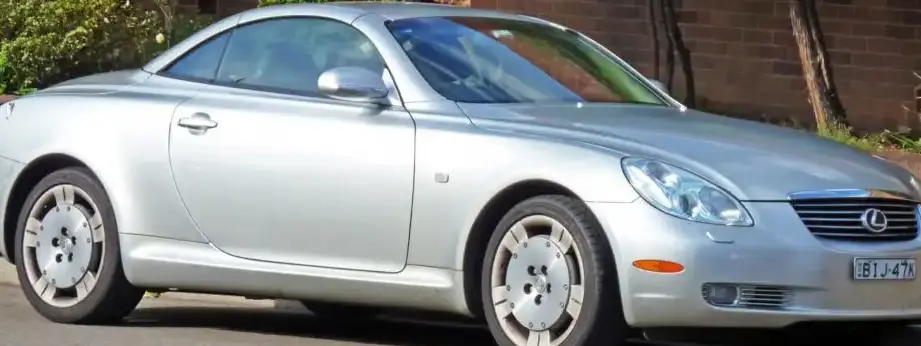
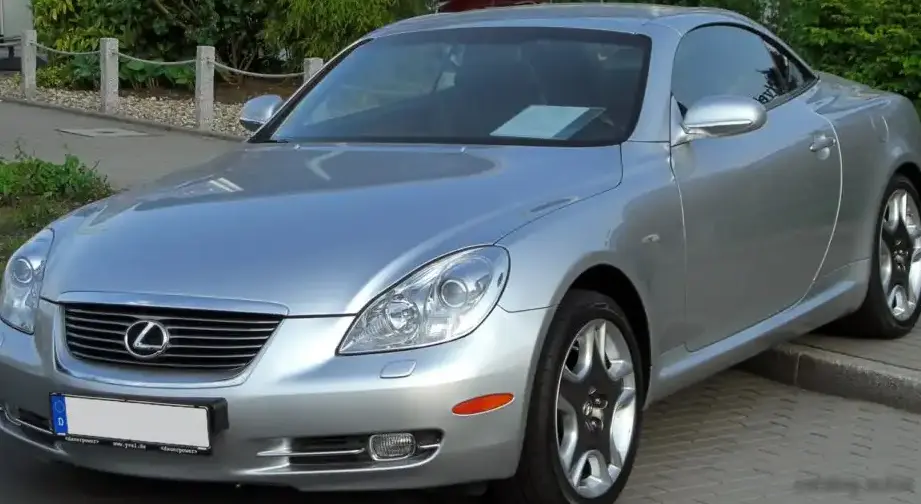
The Lexus SC 400, launched in 1994, was the initial offering in the SC line, representing Lexus’s commitment to a luxury coupe experience. Built on the Z30 platform, it shared a foundation with the Japanese-market Toyota Soarer, but received substantial refinement and Lexus-specific features. The SC 400 aimed to provide a comfortable, powerful, and sophisticated grand touring experience, differentiating itself from more overtly sporty competitors. The 4.0-liter V8 engine paired with a four-speed automatic transmission was the sole powertrain option for the SC 400 in the US market, positioning it as the premium trim level within the SC range. Production continued through 1999, after which it was replaced by the second-generation SC.
Powertrain & Engine Architecture
The heart of the SC 400 is the 1UZ-FE 4.0-liter V8 engine. This engine, a cornerstone of Lexus’s early reputation for reliability, is a naturally aspirated, all-aluminum alloy V8 featuring a 60-degree V-angle. It utilizes a double overhead camshaft (DOHC) valvetrain with four valves per cylinder. Fuel delivery is managed by a multi-port fuel injection system, ensuring precise fuel metering for optimal performance and efficiency. The 1UZ-FE is known for its smooth power delivery and robust construction.
The engine is mated to a four-speed automatic transmission (A340E). This transmission was chosen for its smoothness and ability to complement the V8’s torque characteristics, prioritizing a relaxed driving experience over aggressive shifting. While not offering the driver engagement of a manual transmission, the automatic was well-suited to the SC 400’s grand touring mission. The transmission features electronically controlled torque converter lock-up for improved fuel economy at highway speeds. Gear ratios were tuned for comfortable cruising and responsive acceleration, though it lacked the close ratios found in performance-oriented automatics.
Driving Characteristics
The SC 400, with its 245 horsepower and 350 lb-ft of torque, delivers a smooth and effortless driving experience. Acceleration to 60 mph takes approximately 6.6 seconds, respectable for the era, but not the primary focus of the vehicle. The automatic transmission provides seamless gear changes, contributing to a refined ride. The emphasis is on relaxed cruising and comfortable highway travel. Compared to the later SC 300 (with its inline-six engine and available manual transmission), the SC 400 offers significantly more low-end torque, making it feel more powerful and responsive in everyday driving situations. However, the SC 400’s greater weight and the four-speed automatic transmission mean it doesn’t feel as nimble or engaging as the SC 300, particularly on winding roads.
Equipment & Trim Levels
The SC 400 came standard with a comprehensive list of luxury features. Leather upholstery was standard, along with power-adjustable front seats, a premium sound system, automatic climate control, and power windows and locks. Wood trim adorned the interior, enhancing the sense of luxury. Optional extras included a navigation system (a relatively new feature at the time), a sunroof, and upgraded audio options. The SC 400’s interior was designed to be a comfortable and inviting space, prioritizing driver and passenger comfort. The dashboard layout was clean and functional, with easy-to-read gauges and intuitive controls.
Chassis & Braking
The SC 400 utilizes a double wishbone suspension setup at the front and a coil spring suspension at the rear. This configuration provides a comfortable ride while maintaining reasonable handling characteristics. The suspension was tuned for a balance between comfort and control, prioritizing a smooth ride over aggressive cornering. Braking duties are handled by ventilated disc brakes on all four wheels, providing ample stopping power. An Anti-lock Braking System (ABS) was standard, enhancing safety and control during emergency braking situations. The SC 400’s chassis was designed to be rigid and stable, contributing to its overall refinement.
Market Reception & Comparison
The Lexus SC 400 was generally well-received by automotive critics. It was praised for its smooth ride, powerful engine, and luxurious interior. However, some critics noted that its handling wasn’t as sharp as some of its European competitors. Compared to the SC 300, the SC 400 offered a more powerful and refined driving experience, but at a higher price point. Fuel economy was a common criticism, with the V8 engine consuming a significant amount of fuel, especially in city driving. Despite this, the SC 400’s reliability and build quality were consistently praised.
Legacy
The Lexus SC 400 has developed a loyal following among enthusiasts. The 1UZ-FE engine is renowned for its durability and longevity, with many examples exceeding 200,000 miles with minimal maintenance. The SC 400’s comfortable ride and luxurious interior have also contributed to its enduring appeal. In the used car market, well-maintained examples command a premium, particularly those with low mileage and a complete service history. While not a performance icon, the SC 400 remains a desirable grand tourer, offering a unique blend of luxury, power, and reliability. Its influence can be seen in subsequent Lexus models, which continue to prioritize refinement and build quality.