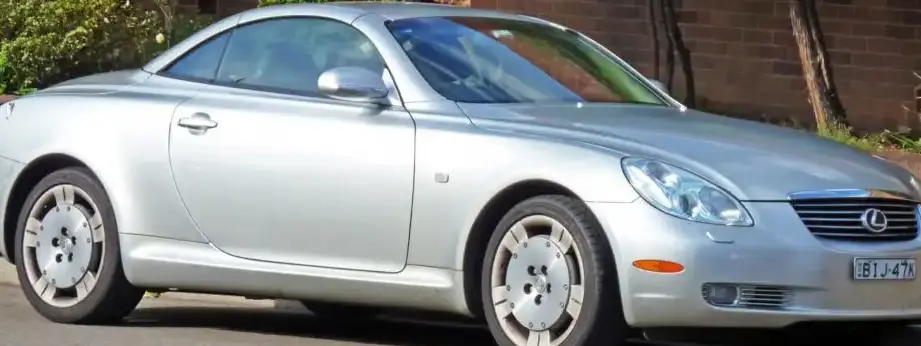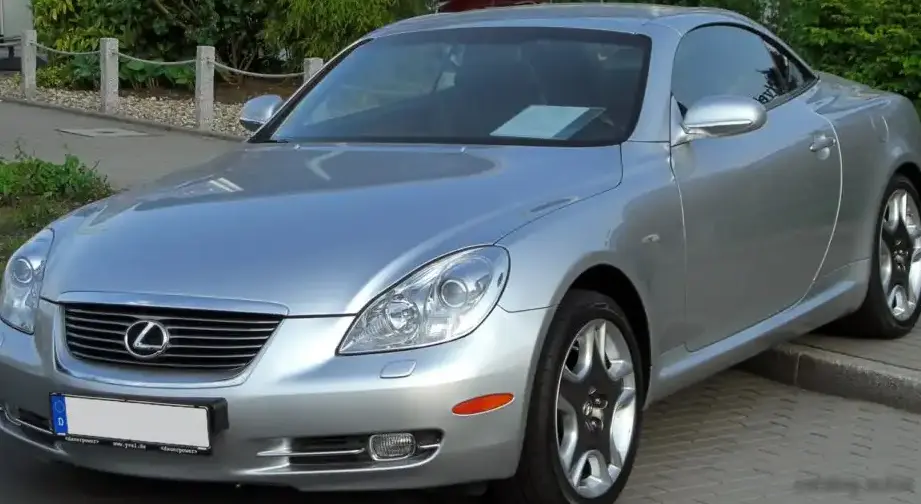
The Lexus SC 400, produced from 1994 to 2001, represents Lexus’s initial foray into the luxury grand touring coupe market. Part of the first generation SC (Z30) platform, it was designed to compete with established European GT cars like the Mercedes-Benz CL and BMW 8 Series. The SC 400 served as the flagship model of the SC line, offering a blend of sophisticated styling, a powerful V8 engine, and a comfortable, well-appointed interior. It was positioned as a premium offering, above the SC 300 (which featured a straight-six engine), and aimed at buyers seeking a refined and capable grand tourer. The Z30 chassis, shared with the Toyota Soarer in Japan, provided a solid foundation for the SC’s luxurious character.
Technical Specifications
| Brand | Lexus |
| Model | SC |
| Generation | SC I (Z30) |
| Type (Engine) | 400 (294 Hp) |
| Start of production | 1994 |
| End of production | 2001 |
| Powertrain Architecture | Internal Combustion engine |
| Body type | Coupe |
| Seats | 4 |
| Doors | 2 |
| Fuel consumption (urban) | 12.4 l/100 km (19 US mpg, 22.8 UK mpg) |
| Fuel consumption (extra urban) | 9.4 l/100 km (25 US mpg, 30.1 UK mpg) |
| Fuel Type | Petrol (Gasoline) |
| Acceleration 0 – 100 km/h | 6.9 sec |
| Acceleration 0 – 62 mph | 6.9 sec |
| Acceleration 0 – 60 mph | 6.6 sec |
| Maximum speed | 241 km/h (149.75 mph) |
| Weight-to-power ratio | 5.5 kg/Hp, 182.6 Hp/tonne |
| Weight-to-torque ratio | 3.8 kg/Nm, 260.9 Nm/tonne |
| Power | 294 Hp @ 6000 rpm |
| Power per litre | 74.1 Hp/l |
| Torque | 420 Nm @ 4000 rpm (309.78 lb.-ft. @ 4000 rpm) |
| Engine layout | Front, Longitudinal |
| Engine Model/Code | 1UZ-FE |
| Engine displacement | 3969 cm3 (242.2 cu. in.) |
| Number of cylinders | 8 |
| Engine configuration | V-engine |
| Cylinder Bore | 87.5 mm (3.44 in.) |
| Piston Stroke | 82.5 mm (3.25 in.) |
| Compression ratio | 10.5:1 |
| Number of valves per cylinder | 4 |
| Fuel injection system | Multi-port manifold injection |
| Engine aspiration | Naturally aspirated engine |
| Valvetrain | DOHC |
| Engine oil capacity | 4.7 l (4.97 US qt | 4.14 UK qt) |
| Coolant | 11.6 l (12.26 US qt | 10.21 UK qt) |
| Kerb Weight | 1610 kg (3549.44 lbs.) |
| Max. weight | 1875 kg (4133.67 lbs.) |
| Max load | 265 kg (584.22 lbs.) |
| Trunk (boot) space – minimum | 265 l (9.36 cu. ft.) |
| Fuel tank capacity | 78 l (20.61 US gal | 17.16 UK gal) |
| Length | 4850 mm (190.94 in.) |
| Width | 1790 mm (70.47 in.) |
| Height | 1340 mm (52.76 in.) |
| Wheelbase | 2690 mm (105.91 in.) |
| Front track | 1520 mm (59.84 in.) |
| Rear (Back) track | 1520 mm (59.84 in.) |
| Drivetrain Architecture | The Internal combustion engine (ICE) drives the rear wheels of the vehicle. |
| Drive wheel | Rear wheel drive |
| Number of gears and type of gearbox | 4 gears, automatic transmission |
| Front suspension | Double wishbone |
| Rear suspension | Coil spring |
| Front brakes | Ventilated discs |
| Rear brakes | Disc |
| Assisting systems | ABS (Anti-lock braking system) |
| Steering type | Steering rack and pinion |
| Power steering | Hydraulic Steering |
| Tires size | 225/55 R16 |
Powertrain & Engine Architecture
The heart of the SC 400 is the 1UZ-FE 4.0-liter V8 engine. This engine, a cornerstone of Toyota’s luxury division, is renowned for its smoothness and durability. The 1UZ-FE features a cast-iron block and aluminum cylinder heads, employing a double overhead camshaft (DOHC) valvetrain with four valves per cylinder. Fuel delivery is managed by a multi-port fuel injection system, contributing to refined throttle response. The engine produces 294 horsepower at 6000 rpm and 309 lb-ft of torque at 4000 rpm. Paired exclusively with a four-speed automatic transmission, the 1UZ-FE delivers power to the rear wheels. This transmission, while providing smooth shifts, is a point of criticism for some enthusiasts who prefer the control of a manual gearbox. The automatic transmission was tuned for comfort and refinement, prioritizing a relaxed driving experience over sporty responsiveness.
Driving Characteristics
The SC 400 with the four-speed automatic offers a distinctly grand touring experience. Acceleration to 60 mph takes approximately 6.6 seconds, respectable for the era but noticeably slower than the SC 300 equipped with a manual transmission. The automatic transmission’s gear ratios are geared towards cruising comfort, resulting in a relaxed highway demeanor. While not a sports car, the SC 400 provides ample power for confident passing maneuvers. The suspension, tuned for comfort, absorbs bumps effectively, but can exhibit some body roll during aggressive cornering. The rear-wheel-drive configuration contributes to balanced handling, though it lacks the agility of more focused sports coupes.
Equipment & Trim Levels
The SC 400 came generously equipped, reflecting its luxury positioning. Standard features included leather upholstery, power-adjustable front seats, a premium sound system, automatic climate control, and power windows and locks. Optional extras included a navigation system (a relatively new feature at the time), a sunroof, and upgraded leather trim. The interior design emphasized elegance and comfort, with woodgrain accents and a driver-focused layout. The SC 400’s interior was designed to provide a serene and refined environment for both driver and passengers.
Chassis & Braking
The SC 400 utilizes a double wishbone suspension setup at the front and a coil spring suspension at the rear. This configuration provides a comfortable ride while maintaining reasonable handling characteristics. Braking duties are handled by ventilated discs at the front and solid discs at the rear, supplemented by an Anti-lock Braking System (ABS). The braking system is adequate for the car’s weight and performance, but lacks the stopping power of more modern braking technologies. The chassis is robust and well-built, contributing to the SC 400’s overall feeling of solidity.
Market Reception & Comparison
The Lexus SC 400 was generally well-received by automotive critics, praised for its smooth engine, luxurious interior, and comfortable ride. However, the four-speed automatic transmission was often criticized for its lack of sportiness. Compared to the SC 300, the SC 400 offered significantly more power and torque, but at the expense of slightly lower fuel economy. The SC 400’s fuel consumption averaged around 19 mpg in the city and 25 mpg on the highway. Reliability was a strong point for the SC 400, with the 1UZ-FE engine proving to be exceptionally durable.
Legacy
The Lexus SC 400 has developed a loyal following among enthusiasts, particularly those who appreciate its blend of luxury, performance, and reliability. The 1UZ-FE engine is renowned for its longevity, with many examples exceeding 200,000 miles with minimal maintenance. In the used car market, the SC 400 remains a relatively affordable grand tourer, offering a compelling value proposition for buyers seeking a comfortable and stylish coupe. While not a performance icon, the SC 400 represents a significant milestone in Lexus’s history, establishing the brand as a serious contender in the luxury car segment. Its enduring appeal is a testament to its well-engineered design and timeless styling.