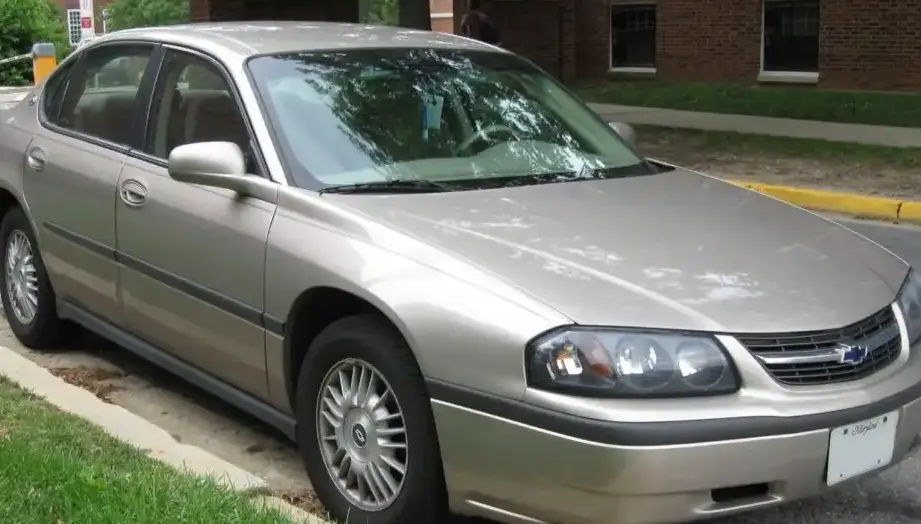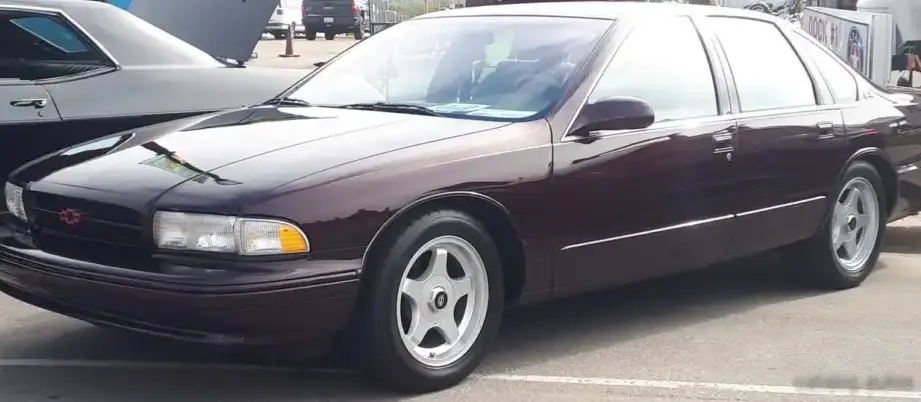
The Chevrolet Impala VII 5.7i, produced between 1994 and 1996, represented a significant return to form for the iconic Impala nameplate. This generation, designated as the Impala VII, marked a shift back to a full-size, rear-wheel-drive sedan after a decade-long hiatus. Positioned as the performance-oriented trim within the Impala VII lineup, the 5.7i boasted a powerful V8 engine and aimed to recapture the spirit of the classic Impalas of the 1960s. It was a direct response to consumer demand for a large American sedan with substantial power, competing with models like the Ford Crown Victoria and Buick Park Avenue.
Technical Specifications
| Brand | Chevrolet |
| Model | Impala |
| Generation | Impala VII |
| Type (Engine) | 5.7i (264 Hp) |
| Start of production | 1994 |
| End of production | 1996 |
| Powertrain Architecture | Internal Combustion engine |
| Body type | Sedan |
| Seats | 6 |
| Doors | 4 |
| Fuel consumption (combined) | 11.3 l/100 km (20.8 US mpg / 25 UK mpg / 8.8 km/l) |
| Fuel Type | Petrol (Gasoline) |
| Maximum speed | 195 km/h (121.17 mph) |
| Weight-to-power ratio | 7 kg/Hp, 142.7 Hp/tonne |
| Weight-to-torque ratio | 4.1 kg/Nm, 241.6 Nm/tonne |
| Power | 264 Hp @ 5000 rpm |
| Power per litre | 46 Hp/l |
| Torque | 447 Nm @ 3200 rpm (329.69 lb.-ft. @ 3200 rpm) |
| Engine layout | Front, Longitudinal |
| Engine Model/Code | LT1 |
| Engine displacement | 5733 cm3 (349.85 cu. in.) |
| Number of cylinders | 8 |
| Engine configuration | V-engine |
| Cylinder Bore | 101.6 mm (4 in.) |
| Piston Stroke | 88.4 mm (3.48 in.) |
| Compression ratio | 10.5:1 |
| Number of valves per cylinder | 2 |
| Fuel injection system | Multi-port manifold injection |
| Engine aspiration | Naturally aspirated engine |
| Engine oil capacity | 4.7 l (4.97 US qt | 4.14 UK qt) |
| Coolant | 12.6 l (13.31 US qt | 11.09 UK qt) |
| Kerb Weight | 1850 kg (4078.55 lbs.) |
| Fuel tank capacity | 87 l (22.98 US gal | 19.14 UK gal) |
| Length | 5439 mm (214.13 in.) |
| Width | 1968 mm (77.48 in.) |
| Height | 1415 mm (55.71 in.) |
| Wheelbase | 2945 mm (115.94 in.) |
| Front track | 1568 mm (61.73 in.) |
| Rear track | 1542 mm (60.71 in.) |
| Drivetrain Architecture | Rear wheel drive |
Powertrain & Engine Architecture
The heart of the Impala VII 5.7i was the Chevrolet LT1 5.7-liter (349.85 cubic inch) V8 engine. This engine, a descendant of the legendary small-block Chevrolet V8, featured a cast iron block with aluminum cylinder heads. The LT1 utilized a reverse-flow cooling system, which improved cylinder head temperature control and allowed for a more efficient intake manifold design. Fuel delivery was handled by a multi-port fuel injection system, providing precise fuel metering for optimal performance and emissions. The engine produced 264 horsepower at 5000 rpm and 330 lb-ft of torque at 3200 rpm. The engine was mated to a 4L60E four-speed automatic transmission, a robust and reliable unit designed to handle the V8’s power. This transmission featured electronic control for smoother shifting and improved fuel efficiency.
Driving Characteristics
The Impala VII 5.7i offered a distinctly American driving experience. The combination of the powerful V8 and the rear-wheel-drive layout provided strong acceleration and a comfortable ride. While not a sports car, the 5.7i delivered brisk performance, capable of reaching 60 mph in around 7 seconds. The 4L60E automatic transmission provided smooth, albeit not particularly quick, shifts. Compared to the base 3.1-liter V6 Impala, the 5.7i offered a substantial performance upgrade. The V8’s torque made it more capable of handling highway cruising and passing maneuvers. However, the increased weight of the V8 engine and the rear-wheel-drive system did result in slightly lower fuel economy compared to the V6 models.
Equipment & Trim Levels
The Impala VII 5.7i was generally well-equipped, reflecting its position as the premium trim level. Standard features included air conditioning, power windows and locks, a tilt steering wheel, and a premium sound system. Upholstery was typically cloth, although leather interiors were available as an option. The dashboard featured a straightforward layout with easy-to-read gauges. Optional extras included a sunroof, upgraded sound systems, and alloy wheels. The 5.7i also often included features like traction control and a limited-slip differential, enhancing both performance and safety.
Chassis & Braking
The Impala VII utilized a traditional body-on-frame construction, providing a robust and durable chassis. The suspension consisted of independent front suspension with coil springs and a solid rear axle with multi-leaf springs. The rear brakes were drums, while the front brakes were discs. This configuration was typical for full-size, rear-wheel-drive American sedans of the era. While the suspension provided a comfortable ride, it wasn’t particularly sporty. Stabilizer bars were included to reduce body roll during cornering, but the Impala VII was primarily designed for straight-line cruising.
Market Reception & Comparison
The Impala VII 5.7i was generally well-received by automotive critics, who praised its powerful engine and comfortable ride. However, some critics noted that the car felt somewhat dated compared to more modern, front-wheel-drive sedans. Fuel economy was also a concern, as the 5.7i consumed significantly more fuel than its V6-powered counterparts. In terms of reliability, the LT1 engine proved to be generally durable, although the 4L60E transmission could be prone to issues if not properly maintained. Compared to the base Impala, the 5.7i offered a significant performance advantage but came at a higher price point.
Legacy
The Chevrolet Impala VII 5.7i represents a nostalgic chapter in American automotive history. While it wasn’t a groundbreaking vehicle in terms of technology or innovation, it offered a compelling combination of power, comfort, and classic American styling. Today, the Impala VII 5.7i is a sought-after classic car, particularly among enthusiasts who appreciate its rear-wheel-drive layout and powerful V8 engine. Well-maintained examples are becoming increasingly rare, and values are steadily rising. The LT1 engine remains a popular choice for engine swaps and restorations, ensuring that the spirit of the Impala VII 5.7i will live on for years to come. The 4L60E transmission, while sometimes requiring rebuilds, is still supported with readily available parts.