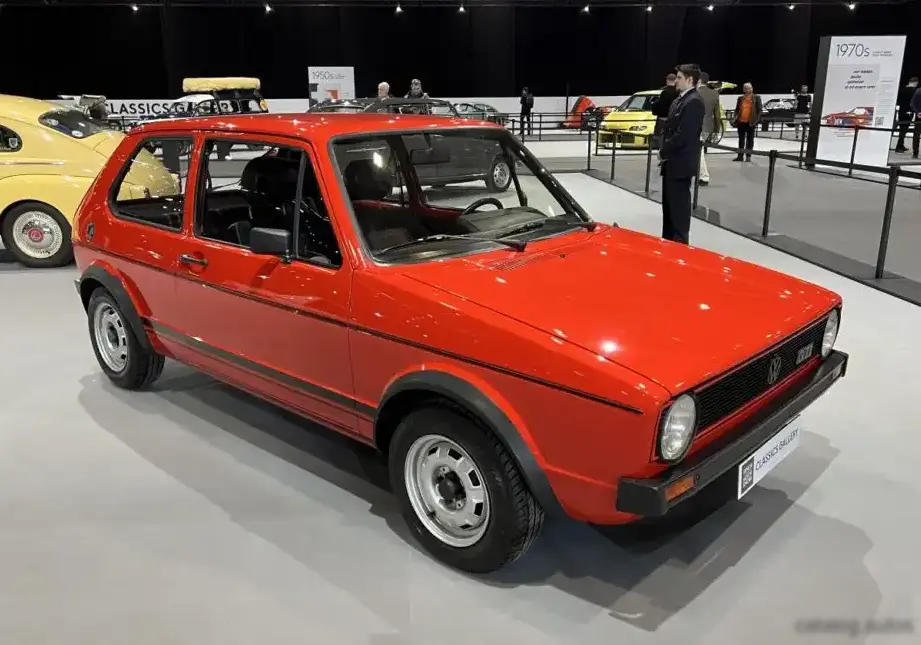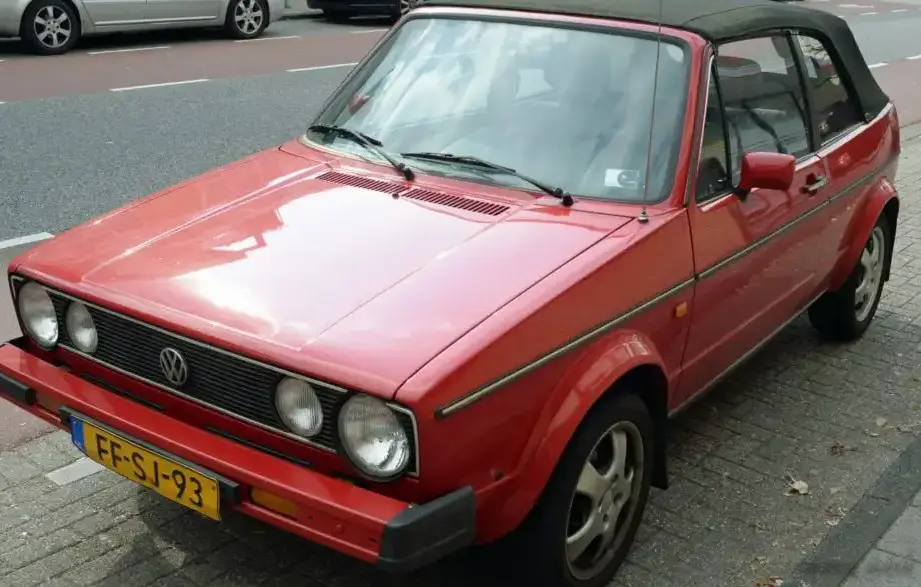
The Volkswagen Golf I Cabrio 1.8 (90 hp) represents a significant iteration of the original Golf Cabriolet, produced from 1983 to 1992. Positioned as a more accessible entry point into the open-top Golf range, this variant offered a blend of practicality, affordability, and the classic Golf driving experience. It was built upon the Golf Mk1 platform (internally designated as the 1HX0) and served as a popular alternative to more expensive and performance-oriented Cabriolet models. This version aimed to broaden the appeal of the Golf Cabriolet, attracting buyers who prioritized fuel efficiency and ease of use over outright speed. It was particularly popular in markets where open-top motoring was favored, including the United States, Canada, and throughout Europe.
Technical Specifications
| Brand | Volkswagen |
| Model | Golf |
| Generation | Golf I Cabrio |
| Type (Engine) | 1.8 (90 Hp) |
| Start of production | 1983 |
| End of production | 1992 |
| Powertrain Architecture | Internal Combustion engine |
| Body type | Cabriolet |
| Fuel Type | Petrol (Gasoline) |
| Power | 90 Hp |
| Engine Model/Code | EX |
| Engine aspiration | Naturally aspirated engine |
| Engine oil capacity | 4 l (4.23 US qt | 3.52 UK qt) |
| Coolant capacity | 6.3 l (6.66 US qt | 5.54 UK qt) |
Powertrain & Engine Architecture
The Golf I Cabrio 1.8 (90 hp) was powered by the Volkswagen EX engine, a 1.8-liter inline-four cylinder gasoline engine. This engine belonged to the EA827 family, a series of robust and relatively simple engines known for their durability. The EX engine featured a single overhead camshaft (SOHC) valvetrain operating two valves per cylinder. Fuel delivery was managed by Bosch mechanical fuel injection – a system common for the era, offering a balance between efficiency and performance. Unlike later fuel injection systems, the Bosch system relied on mechanical components and air pressure to meter fuel, rather than electronic control. The engine’s 90 horsepower output was achieved at 5,200 rpm, with peak torque of 109 lb-ft (148 Nm) arriving at 3,200 rpm.
The transmission paired with this engine was typically a four-speed automatic gearbox. This automatic transmission, while providing convenience, was not known for its sportiness. It featured a traditional torque converter and aimed for smooth shifts rather than rapid acceleration. The gear ratios were geared towards fuel economy and comfortable cruising, rather than maximizing performance. A five-speed manual transmission was also available as an option, offering a more engaging driving experience and slightly improved fuel efficiency, but the automatic was a popular choice for buyers prioritizing ease of use.
Driving Characteristics
The driving experience in the Golf I Cabrio 1.8 (90 hp) with the automatic transmission was characterized by relaxed cruising and adequate, though not exhilarating, performance. Acceleration from 0 to 60 mph (0-97 km/h) took approximately 12-14 seconds, making it noticeably slower than the manual transmission versions or those equipped with the larger 1.8 or 1.6 liter engines. The automatic transmission’s gear ratios prioritized fuel economy, resulting in a somewhat sluggish response during overtaking maneuvers. However, the engine proved to be reasonably flexible, providing sufficient power for everyday driving situations. The Cabriolet’s relatively light weight (around 2,100 lbs or 950 kg) helped to mitigate the effects of the lower horsepower output. The steering was light and precise, typical of the Mk1 Golf, and the suspension provided a comfortable ride, although it could feel somewhat bouncy on uneven surfaces.
Equipment & Trim Levels
The 1.8 (90 hp) automatic Golf Cabriolet typically represented a mid-range trim level. Standard equipment generally included cloth upholstery, basic instrumentation (speedometer, fuel gauge, temperature gauge), and a four-speaker stereo system. Power steering was often an optional extra, as was air conditioning. Interior trim was relatively simple, reflecting the car’s positioning as an affordable open-top option. The dashboard layout was functional and straightforward, with easy-to-read controls. Optional extras included upgraded stereo systems, alloy wheels, and a leather-wrapped steering wheel. The convertible top was manually operated, a cost-saving measure compared to the electrically operated tops found on more expensive models.
Chassis & Braking
The Golf I Cabriolet utilized a MacPherson strut front suspension and a twist-beam rear suspension. This setup provided a good balance between ride comfort and handling. The front suspension incorporated stabilizer bar, while the rear suspension did not. Braking was typically accomplished with disc brakes on the front wheels and drum brakes on the rear wheels. This configuration was common for vehicles in this price range during the 1980s. The braking system was adequate for normal driving conditions, but lacked the stopping power of more modern braking systems. The steering was a rack-and-pinion system, providing precise and responsive steering feel.
Market Reception & Comparison
The Golf I Cabrio 1.8 (90 hp) automatic received generally positive reviews for its affordability, practicality, and enjoyable open-top driving experience. Critics noted that the automatic transmission dulled the driving experience compared to the manual version, but acknowledged that it appealed to a wider range of buyers. Compared to the more powerful Golf Cabriolet variants (such as those with the 1.8 liter 105 hp engine or the GTI models), the 90 hp version offered a more economical and accessible entry point into the Cabriolet market. Fuel economy was a strong point, averaging around 28-32 mpg (8.4-7.3 L/100km) in mixed driving conditions. The 1.6 liter diesel Cabriolet offered even better fuel economy, but at the expense of performance. The 90 hp automatic was often seen as a good compromise between performance, economy, and convenience.
Legacy
The Golf I Cabrio 1.8 (90 hp) automatic has proven to be a relatively reliable and durable classic car. The EX engine is known for its longevity, and the automatic transmission, while not particularly sophisticated, is generally robust. However, like all cars of this era, they are susceptible to rust, particularly in areas with harsh winters. Today, these Cabriolets are popular among classic car enthusiasts and are relatively affordable to purchase and maintain. Parts availability is generally good, thanks to the Golf Mk1’s widespread popularity. The 1.8 (90 hp) automatic variant is often seen as a good entry-level classic, offering a taste of open-top motoring without the high price tag of more desirable or rare models. It remains a fondly remembered and appreciated part of Volkswagen’s history.