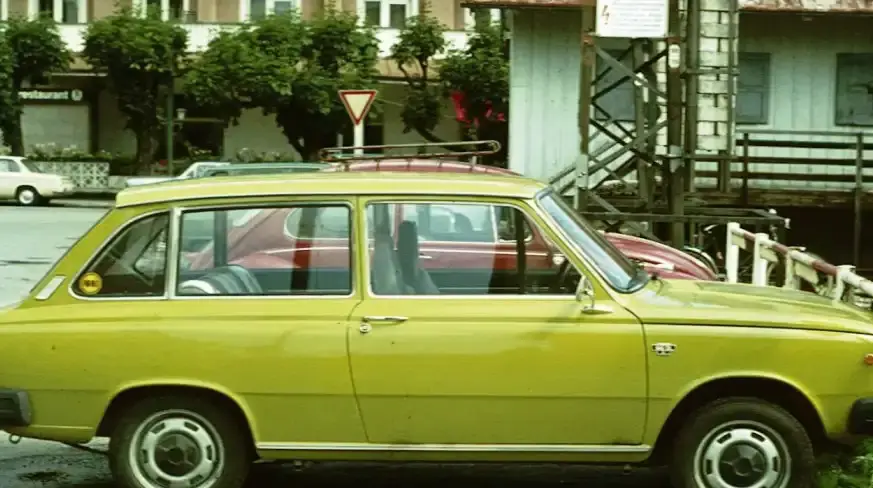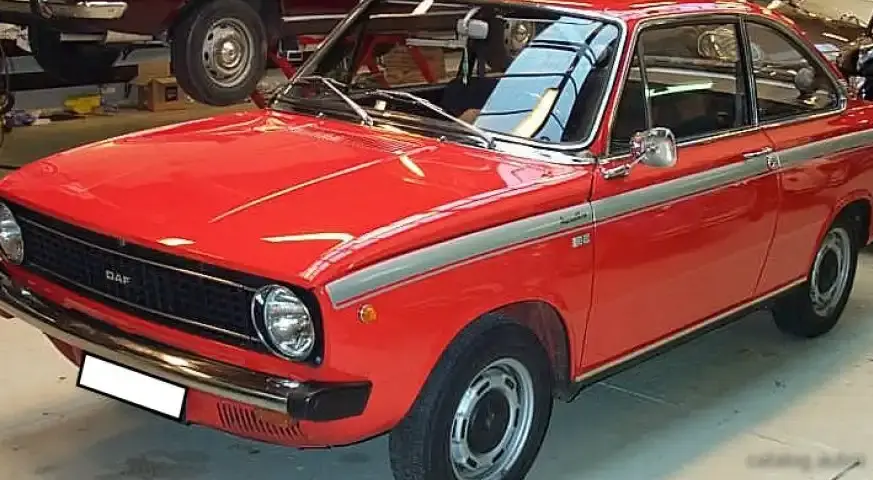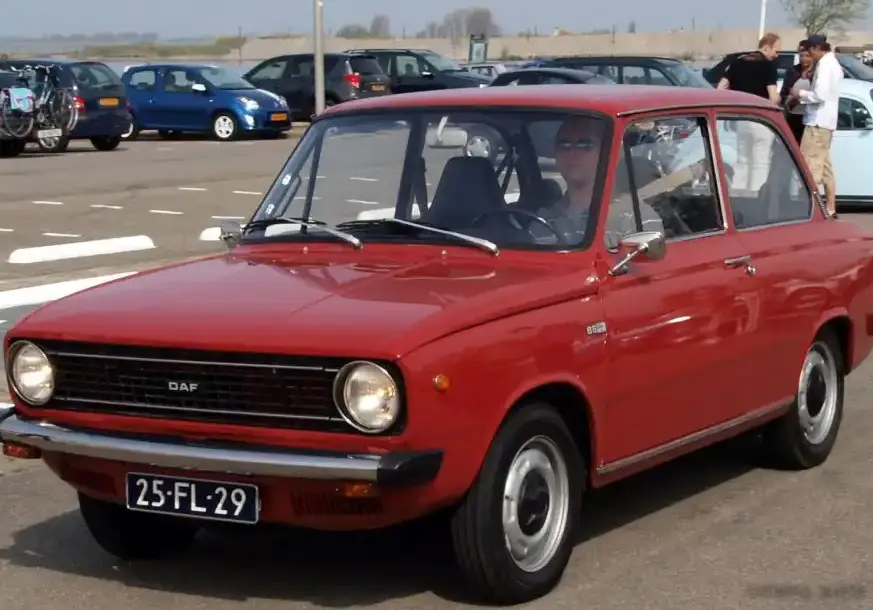
The DAF 66 1.1, producing 48 horsepower, represents an entry-level variant of the DAF 66, a compact sedan produced between 1972 and 1975. Positioned as the most accessible model in the 66 lineup, it aimed to provide affordable transportation during a period of rising fuel costs and increasing demand for economical vehicles. The DAF 66 itself was a significant vehicle for the Dutch manufacturer, representing a move towards more conventional styling while retaining the innovative continuously variable transmission (CVT) that DAF had pioneered. This 1.1-liter version was primarily targeted at buyers seeking basic, reliable transportation, prioritizing fuel efficiency over outright performance.
Technical Specifications
| Brand | DAF |
| Model | 66 |
| Generation | 66 |
| Type (Engine) | 1.1 (48 Hp) |
| Start of Production | 1972 |
| End of Production | 1975 |
| Powertrain Architecture | Internal Combustion Engine |
| Body Type | Sedan |
| Fuel Type | Petrol (Gasoline) |
| Power | 48 Hp |
| Engine Aspiration | Naturally Aspirated |
Powertrain & Engine Architecture
The DAF 66 1.1 was powered by a 1,108 cc (67.6 cubic inch) inline four-cylinder engine. This engine, while relatively simple in design, was robust and intended for longevity. It featured a single overhead camshaft (SOHC) valvetrain operating two valves per cylinder. Fuel delivery was managed by a Solex carburetor, a common setup for vehicles of this era and price point. The engine’s modest 48 horsepower output at approximately 5,500 rpm and 66 lb-ft of torque at 3,500 rpm were sufficient for city driving and moderate highway speeds, but it wasn’t designed for rapid acceleration or sustained high-speed cruising.
Crucially, the DAF 66 was equipped with a Variomatic transmission – DAF’s trademark continuously variable transmission. This system utilized two pulleys connected by a V-belt. The pulleys’ diameters were adjusted hydraulically based on engine speed and throttle position, providing a seamless and stepless gear ratio. While offering smooth acceleration and eliminating the need for manual gear changes, the Variomatic was known for its distinctive whine and a somewhat ‘rubber band’ feel, where engine speed wouldn’t always directly correlate with vehicle speed. The Variomatic was a defining feature of DAF vehicles and a key selling point, despite its unconventional operation compared to traditional automatic or manual transmissions.
Driving Characteristics
The driving experience in the DAF 66 1.1 was characterized by its smoothness and ease of operation, largely due to the Variomatic transmission. Acceleration was gentle, and the car felt most comfortable at moderate speeds. The lack of fixed gear ratios meant that the engine could operate at its most efficient point for a given speed, contributing to reasonable fuel economy for the time. However, the 48 horsepower engine meant that overtaking maneuvers required careful planning, and hill climbs could be sluggish. Compared to the later and more powerful 1.3-liter versions of the DAF 66, the 1.1 felt noticeably underpowered. The Variomatic, while convenient, also contributed to a different driving feel; drivers accustomed to traditional transmissions often found the lack of distinct gear changes unusual. The car’s relatively light weight (around 1,785 lbs) helped to mitigate the engine’s power deficit to some extent.
Equipment & Trim Levels
The DAF 66 1.1 was typically offered with a fairly basic level of equipment, reflecting its position as the entry-level model. Standard features generally included cloth upholstery, basic instrumentation (speedometer, fuel gauge, and temperature gauge), and manually operated windows and door locks. The interior was functional and designed for durability rather than luxury. Optional extras, such as a radio, heated rear window, and upgraded upholstery, were available, but these added to the vehicle’s cost. The dashboard layout was simple and straightforward, prioritizing ease of use. Exterior trim was minimal, with basic chrome accents and steel wheels typically fitted. Paint options were limited to a range of solid colors.
Chassis & Braking
The DAF 66 featured an independent suspension system at all four wheels, utilizing coil springs and wishbones. This setup provided a relatively comfortable ride, especially considering the car’s price point. The front suspension incorporated an anti-roll bar to reduce body roll during cornering. The rear suspension was designed to accommodate the Variomatic transmission and maintain a level ride height. Braking was initially provided by drum brakes on all four wheels, although later models sometimes featured front disc brakes. The braking system was adequate for normal driving conditions, but lacked the stopping power of more modern vehicles. Steering was by a rack and pinion system, providing reasonably precise control.
Market Reception & Comparison
The DAF 66 1.1 was generally well-received as an affordable and practical family car. Critics praised its smooth Variomatic transmission and comfortable ride, but noted its lack of performance. Compared to other small sedans of the early 1970s, such as the Ford Escort or the Volkswagen Beetle, the DAF 66 offered a unique driving experience thanks to its CVT. However, the Beetle was significantly cheaper, and the Escort offered more performance. The 1.3-liter DAF 66 provided a noticeable improvement in performance and was often considered a more desirable option for those willing to spend a little more. Fuel economy was a strong point for the 1.1-liter version, making it an attractive option during the oil crises of the 1970s. Reliability was generally good, although the Variomatic transmission required periodic maintenance and adjustment.
Legacy
The DAF 66, and particularly the 1.1-liter variant, holds a unique place in automotive history. While DAF as a company was eventually absorbed into Volvo in 1975, the Variomatic transmission technology continued to influence the development of CVTs in other vehicles. Today, the DAF 66 1.1 is a relatively rare classic car, sought after by enthusiasts who appreciate its innovative engineering and quirky charm. The 1.1-liter engine is known for its durability, but finding parts can be challenging due to the car’s limited production run. Well-maintained examples command a modest but growing value in the classic car market. The DAF 66 1.1 serves as a reminder of a time when Dutch automotive engineering dared to be different, offering a unique and memorable driving experience.