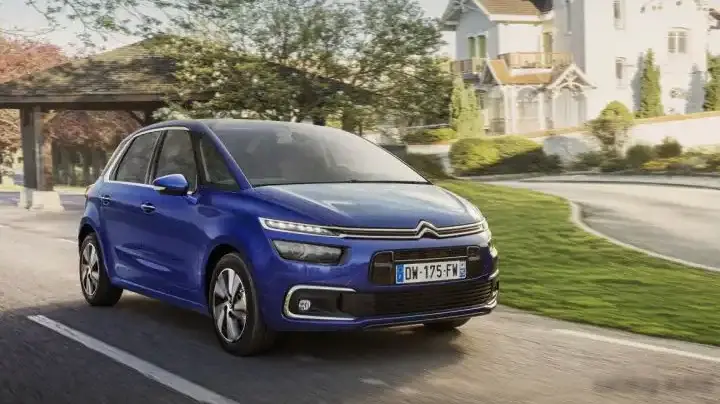
The Citroen C4 II Picasso 1.6 BlueHDi 120 S&S, produced between 2016 and 2018, represents a mid-life refresh of the second-generation C4 Picasso, a compact minivan (MPV) designed to appeal to families seeking practicality and fuel efficiency. This variant, part of the Phase II update, slotted into the middle of the C4 Picasso range, offering a balance between performance, economy, and equipment. It was primarily marketed in Europe, where the MPV segment remained strong, and aimed to compete with vehicles like the Renault Scenic and Volkswagen Touran. The “S&S” designation indicates the inclusion of Citroen’s Stop & Start system, designed to reduce fuel consumption in urban driving.
Technical Specifications
| Brand | Citroen |
| Model | C4 |
| Generation | C4 II Picasso (Phase II, 2016) |
| Type (Engine) | 1.6 BlueHDi (120 Hp) S&S |
| Start of production | 2016 |
| End of production | 2018 |
| Powertrain Architecture | Internal Combustion engine |
| Body type | Minivan, MPV |
| Seats | 5 |
| Doors | 5 |
| Fuel consumption (urban) | 4.4 l/100 km (53.5 US mpg, 64.2 UK mpg, 22.7 km/l) |
| Fuel consumption (extra urban) | 3.5 l/100 km (67.2 US mpg, 80.7 UK mpg, 28.6 km/l) |
| Fuel consumption (combined) | 3.8 l/100 km (61.9 US mpg, 74.3 UK mpg, 26.3 km/l) |
| CO2 emissions | 100 g/km |
| Fuel Type | Diesel |
| Acceleration 0 – 100 km/h | 11.3 sec |
| Acceleration 0 – 62 mph | 11.3 sec |
| Acceleration 0 – 60 mph | 10.7 sec |
| Maximum speed | 189 km/h (117.44 mph) |
| Emission standard | Euro 6 |
| Weight-to-power ratio | 11 kg/Hp, 90.9 Hp/tonne |
| Weight-to-torque ratio | 4.4 kg/Nm, 227.3 Nm/tonne |
| Power | 120 Hp @ 3500 rpm |
| Power per litre | 76.9 Hp/l |
| Torque | 300 Nm @ 1750 rpm (221.27 lb.-ft. @ 1750 rpm) |
| Engine layout | Front, Transverse |
| Engine Model/Code | BHZ DV6FC |
| Engine displacement | 1560 cm3 (95.2 cu. in.) |
| Number of cylinders | 4 |
| Engine configuration | Inline |
| Cylinder Bore | 75 mm (2.95 in.) |
| Piston Stroke | 88.3 mm (3.48 in.) |
| Compression ratio | 16:1 |
| Number of valves per cylinder | 2 |
| Fuel injection system | Diesel Commonrail |
| Engine aspiration | Turbocharger, Intercooler |
| Engine oil capacity | 3.75 l (3.96 US qt | 3.3 UK qt) |
| Kerb Weight | 1320 kg (2910.1 lbs.) |
| Max. weight | 1950 kg (4299.01 lbs.) |
| Max load | 630 kg (1388.91 lbs.) |
| Trunk (boot) space – minimum | 630 l (22.25 cu. ft.) |
| Trunk (boot) space – maximum | 1851 l (65.37 cu. ft.) |
| Fuel tank capacity | 55 l (14.53 US gal | 12.1 UK gal) |
| AdBlue tank | 17 l (4.49 US gal | 3.74 UK gal) |
| Permitted trailer load with brakes (12%) | 1400 kg (3086.47 lbs.) |
| Permitted trailer load without brakes | 660 kg (1455.05 lbs.) |
| Permitted towbar download | 70 kg (154.32 lbs.) |
| Length | 4438 mm (174.72 in.) |
| Width | 1826 mm (71.89 in.) |
| Width with mirrors folded | 1971 mm (77.6 in.) |
| Width including mirrors | 2117 mm (83.35 in.) |
| Height | 1610-1625 mm (63.39 – 63.98 in.) |
| Wheelbase | 2785 mm (109.65 in.) |
| Front track | 1573-1587 mm (61.93 – 62.48 in.) |
| Rear (Back) track | 1576-1590 mm (62.05 – 62.6 in.) |
| Front overhang | 889 mm (35 in.) |
| Rear overhang | 764 mm (30.08 in.) |
| Minimum turning circle | 11.1 m (36.42 ft.) |
| Drivetrain Architecture | Front wheel drive |
| Drive wheel | Front wheel drive |
| Number of gears and type of gearbox | 6 gears, manual transmission |
| Front suspension | Independent, type McPherson with coil spring and anti-roll bar |
| Rear suspension | Semi-independent, coil spring |
| Front brakes | Ventilated discs |
| Rear brakes | Disc |
| Assisting systems | ABS (Anti-lock braking system) |
| Steering type | Steering rack and pinion |
| Power steering | Electric Steering |
| Tires size | 205/60 R16; 205/55 R17 |
| Wheel rims size | 16; 17 |
Powertrain & Engine Architecture
The heart of the C4 II Picasso 1.6 BlueHDi 120 S&S is the PSA Group’s DV6FC engine, specifically the BHZ variant. This is a 1.6-liter, four-cylinder diesel engine employing common-rail direct injection and a turbocharger with an intercooler. The engine benefits from advanced technologies like a particulate filter to meet stringent Euro 6 emission standards. The DV6 engine family is known for its relatively compact size and efficient combustion. The 16:1 compression ratio is typical for modern diesel engines, contributing to thermal efficiency. The engine utilizes a single overhead camshaft (SOHC) design with two valves per cylinder. The Stop & Start system automatically shuts off the engine when the vehicle is stationary (at traffic lights, for example) and restarts it instantly when the clutch is depressed (in the manual transmission version). The 6-speed manual transmission was the standard offering, chosen for its balance of fuel efficiency and driver engagement.
Driving Characteristics
The 120 horsepower and 300 Nm (221 lb-ft) of torque provided by the 1.6 BlueHDi engine offered adequate performance for everyday driving. Acceleration from 0-100 km/h (0-62 mph) took around 11.3 seconds, which wasn’t particularly brisk but sufficient for most situations. The engine’s peak torque was available from a low 1750 rpm, providing good responsiveness in urban and highway driving. The 6-speed manual transmission was well-matched to the engine’s characteristics, allowing drivers to keep the engine in its optimal power band. Compared to the more powerful 150 hp BlueHDi variant, the 120 hp version felt less strained during overtaking maneuvers and uphill climbs. However, it offered significantly better fuel economy, making it a popular choice for drivers prioritizing efficiency.
Equipment & Trim Levels
The C4 II Picasso 1.6 BlueHDi 120 S&S typically came equipped with a respectable level of standard features. These included air conditioning, electric front and rear windows, a touchscreen infotainment system with Bluetooth connectivity, and cruise control. Higher trim levels added features such as automatic climate control, rear parking sensors, a panoramic sunroof, and upgraded upholstery. Interior materials were generally of good quality, with a focus on practicality and durability. The dashboard layout was modern and ergonomic, with a central touchscreen controlling many of the vehicle’s functions.
Chassis & Braking
The C4 II Picasso featured a McPherson strut front suspension and a semi-independent coil spring rear suspension. This setup provided a comfortable ride quality, absorbing bumps and imperfections in the road surface effectively. The front brakes were ventilated discs, while the rear brakes were solid discs, providing adequate stopping power for the vehicle’s weight. ABS (Anti-lock Braking System) was standard, enhancing safety during emergency braking situations. The electric power steering offered light and precise steering feel, making it easy to maneuver in tight spaces.
Market Reception & Comparison
The Citroen C4 II Picasso 1.6 BlueHDi 120 S&S was generally well-received by automotive critics. It was praised for its fuel efficiency, comfortable ride, and spacious interior. However, some critics noted that the engine could feel a bit underpowered when fully loaded or driving on steep hills. Compared to the 150 hp BlueHDi variant, the 120 hp version offered better fuel economy but slightly slower performance. It also represented a more affordable entry point into the C4 Picasso range, making it attractive to budget-conscious buyers. Against competitors like the Renault Scenic and Volkswagen Touran, the C4 Picasso offered a unique blend of French flair and practicality.
Legacy
The 1.6 BlueHDi engine, in its various iterations, proved to be a reliable and durable powertrain. While some early versions of the DV6 engine experienced issues with the exhaust gas recirculation (EGR) valve and diesel particulate filter (DPF), these problems were largely addressed in later revisions. Today, the C4 II Picasso 1.6 BlueHDi 120 S&S remains a popular choice in the used car market, offering a compelling combination of fuel efficiency, practicality, and affordability. Regular maintenance, including timely oil changes and DPF regeneration, is crucial to ensure the long-term reliability of this powertrain.