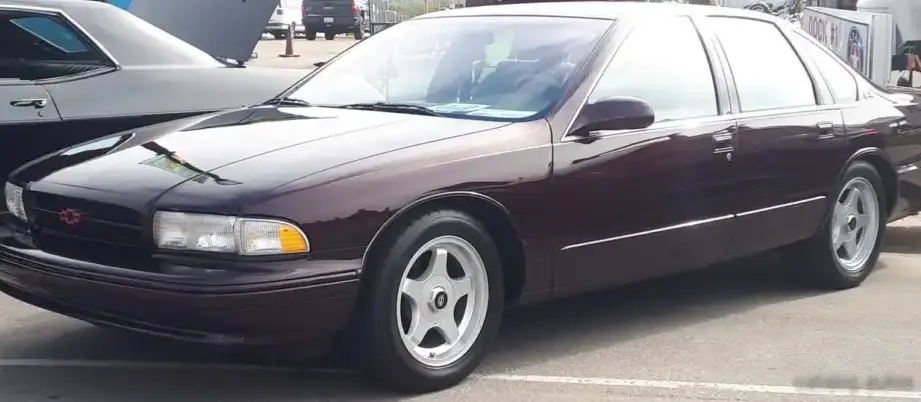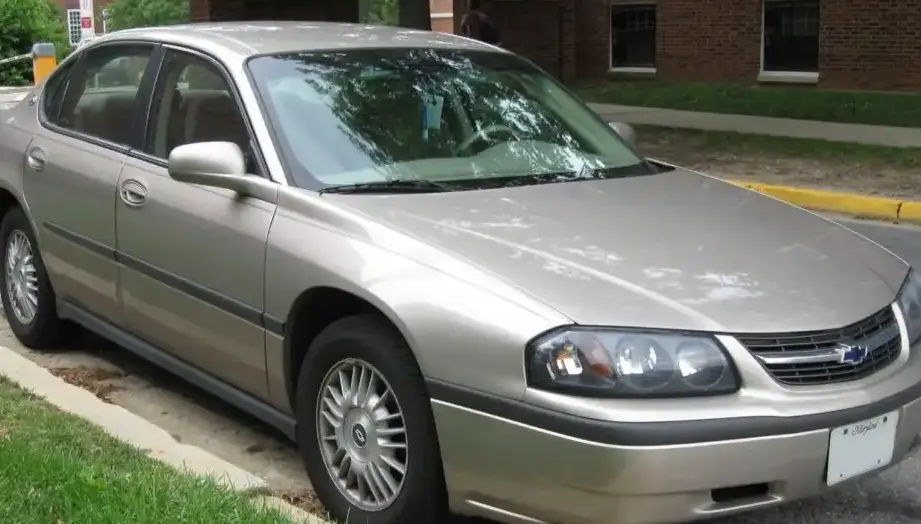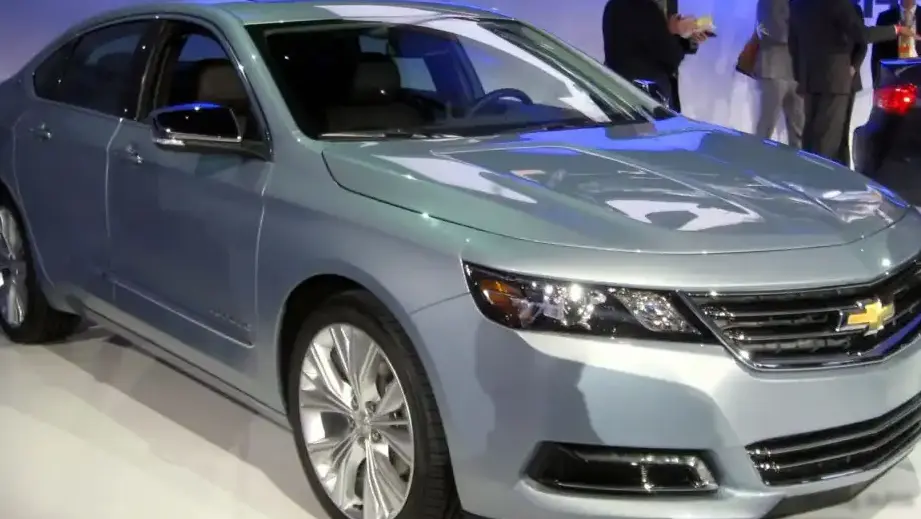
The Chevrolet Impala X 2.4 Ecotec eAssist Automatic, produced from 2013 to 2015, represented a significant step in the Impala’s evolution, particularly in its embrace of fuel-efficient technology. This variant was positioned as a mid-range offering within the tenth-generation Impala (2014-2020) lineup, bridging the gap between the base 2.5L four-cylinder model and the more powerful 3.6L V6. It was a key component of Chevrolet’s strategy to offer a full-size sedan with competitive fuel economy in a segment traditionally dominated by larger, less efficient engines. The “eAssist” designation signified Chevrolet’s mild hybrid system, aimed at enhancing fuel efficiency without the full complexity – and cost – of a traditional hybrid.
Technical Specifications
| Brand | Chevrolet |
| Model | Impala |
| Generation | Impala X |
| Type (Engine) | 2.4 Ecotec (182 Hp) eAssist Automatic |
| Start of production | 2013 |
| End of production | 2015 |
| Powertrain Architecture | FHEV (Full Hybrid Electric Vehicle) |
| Body type | Sedan |
| Seats | 5 |
| Doors | 4 |
| Fuel consumption (urban) | 9.4 l/100 km (25 US mpg) |
| Fuel consumption (extra urban) | 6.7 l/100 km (35.1 US mpg) |
| Fuel Type | Petrol (Gasoline) |
| Gross battery capacity | 0.5 kWh |
| Electric motor power | 15 Hp @ 1000-2200 rpm |
| Electric motor Torque | 107 Nm @ 1000 rpm (78.92 lb.-ft. @ 1000 rpm) |
| System power | 182 Hp @ 6200 rpm |
| System torque | 233 Nm @ 4900 rpm (171.85 lb.-ft. @ 4900 rpm) |
| Engine layout | Front, Transverse |
| Engine Model/Code | LUK |
| Engine displacement | 2383 cm3 (145.42 cu. in.) |
| Number of cylinders | 4 |
| Engine configuration | Inline |
| Cylinder Bore | 88 mm (3.46 in.) |
| Piston Stroke | 98 mm (3.86 in.) |
| Compression ratio | 11.2:1 |
| Number of valves per cylinder | 4 |
| Fuel injection system | Direct injection |
| Valvetrain | DOHC |
| Engine oil capacity | 4.7 l (4.97 US qt | 4.14 UK qt) |
| Coolant | 9.6 l (10.14 US qt | 8.45 UK qt) |
| Trunk (boot) space (minimum) | 532 l (18.79 cu. ft.) |
| Fuel tank capacity | 60 l (15.85 US gal | 13.2 UK gal) |
| Length | 5113 mm (201.3 in.) |
| Width | 1854 mm (72.99 in.) |
| Height | 1496 mm (58.9 in.) |
| Wheelbase | 2837 mm (111.69 in.) |
| Front track | 1580 mm (62.2 in.) |
| Rear track | 1576 mm (62.05 in.) |
| Minimum turning circle | 11.75 m (38.55 ft.) |
| Drive wheel | Front wheel drive |
| Number of gears | 6 |
| Gearbox type | Automatic transmission |
| Front suspension | Independent, McPherson with coil spring and anti-roll bar |
| Rear suspension | Independent multi-link spring suspension with stabilizer |
| Front brakes | Ventilated discs |
| Rear brakes | Disc |
Powertrain & Engine Architecture
The heart of the Impala X 2.4 eAssist is the LU8 2.4-liter inline-four cylinder engine. This engine utilizes direct fuel injection and a double overhead camshaft (DOHC) valvetrain, contributing to its efficiency and respectable power output. The engine’s 11.2:1 compression ratio further aids in maximizing combustion efficiency. The “eAssist” system isn’t a full hybrid like the Toyota Prius; instead, it employs a 15-horsepower electric motor integrated into the powertrain. This motor assists the gasoline engine during acceleration and allows for regenerative braking, capturing energy normally lost during deceleration to recharge a small 0.5 kWh lithium-ion battery. The electric motor doesn’t propel the vehicle on its own, but it significantly reduces the load on the gasoline engine, particularly in city driving. The powertrain is coupled with a six-speed automatic transmission, tuned to prioritize fuel economy and smooth shifts.
Driving Characteristics
The 182 horsepower and 171.85 lb-ft of torque delivered by the combined system provided adequate, though not exhilarating, performance. Acceleration from 0 to 60 mph was typically in the 8.5-9.5 second range. Compared to the 3.6L V6 Impala, the 2.4L eAssist felt noticeably less powerful, especially during highway merging and passing maneuvers. However, the eAssist system provided a subtle boost during initial acceleration, making city driving feel more responsive. The six-speed automatic transmission generally shifted smoothly, but could sometimes feel hesitant when downshifting for quicker acceleration. The focus was clearly on efficiency, with the transmission programming prioritizing higher gears at lower speeds. The overall driving experience was comfortable and refined, typical of a full-size sedan, but lacked the sporty feel of some competitors.
Equipment & Trim Levels
The Impala X 2.4 eAssist typically came standard with features like Chevrolet’s MyLink infotainment system with an 8-inch touchscreen, Bluetooth connectivity, a rearview camera, and keyless entry. Interior upholstery was generally cloth, with available upgrades to leather. Common options included a sunroof, heated front seats, a premium audio system, and advanced safety features like lane departure warning and forward collision alert. The trim level often dictated the availability of these options, with higher trims offering more standard features and a wider range of customization possibilities. The interior design was modern and spacious, offering comfortable seating for five adults.
Chassis & Braking
The Impala X utilized an independent suspension system at all four wheels. The front suspension employed a McPherson strut design with coil springs and an anti-roll bar, while the rear featured a multi-link setup, also with a stabilizer bar. This suspension configuration provided a comfortable ride, absorbing bumps and imperfections in the road effectively. Braking duties were handled by ventilated discs at the front and solid discs at the rear. Anti-lock brakes (ABS) were standard, providing enhanced stopping power and control. The steering system was an electric power-assisted rack-and-pinion setup, offering light and precise steering feel.
Market Reception & Comparison
Critics generally praised the Impala X 2.4 eAssist for its improved fuel economy compared to the V6 models, achieving around 25 mpg in the city and 35 mpg on the highway. However, some reviewers found the performance to be underwhelming, particularly for a full-size sedan. Compared to competitors like the Ford Taurus and Toyota Avalon, the Impala offered a more modern interior and a more engaging driving experience, but the fuel economy advantage wasn’t always significant. The eAssist system was seen as a worthwhile addition, but not a game-changer. Reliability reports were generally positive, with few major issues reported with the powertrain.
Legacy
The Chevrolet Impala X 2.4 Ecotec eAssist Automatic represents an interesting chapter in the Impala’s history, showcasing Chevrolet’s early efforts to incorporate hybrid technology into its mainstream lineup. While the eAssist system wasn’t as sophisticated as those found in dedicated hybrids, it demonstrated a commitment to improving fuel efficiency. On the used car market, these models are generally well-regarded for their reliability and fuel economy. The 2.4L engine and six-speed automatic transmission have proven to be durable and relatively inexpensive to maintain. However, potential buyers should be aware of the potential for battery degradation in the eAssist system, although replacement costs are typically lower than those for full hybrid battery packs. The Impala X 2.4 eAssist remains a viable option for buyers seeking a comfortable, spacious, and fuel-efficient full-size sedan.