
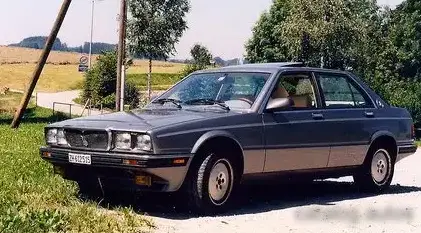
The Maserati 420/430, specifically the 430i variant producing 247 horsepower, represents a pivotal, though often overlooked, chapter in the storied Italian automaker’s history. Produced between 1988 and 1994, this model aimed to bridge the gap between Maserati’s grand touring heritage and a more accessible, executive sedan market. While not achieving the sales success of its predecessors like the Ghibli, the 430i offered a unique blend of Italian flair, performance, and relative practicality. It was the final evolution of the 420/430 series, incorporating refinements and a more powerful engine compared to earlier iterations.
Technical Specifications
| Brand | Maserati |
| Model | 420/430 |
| Generation | 420/430 |
| Type (Engine) | 430 i (247 Hp) |
| Start of Production | 1988 |
| End of Production | 1994 |
| Powertrain Architecture | Internal Combustion Engine |
| Body Type | Sedan |
| Fuel Type | Petrol (Gasoline) |
| Power | 247 Hp |
| Engine Model/Code | AM332 |
| Engine Aspiration | Naturally Aspirated |
| Engine Oil Capacity | 6 l (6.34 US qt | 5.28 UK qt) |
| Coolant Capacity | 8.5 l (8.98 US qt | 7.48 UK qt) |
Powertrain & Engine Architecture
The heart of the 430i is the AM332 engine, a 2.8-liter (2789 cc) V6. This engine is a significant departure from Maserati’s traditional V8 configurations, adopted to meet evolving market demands for fuel efficiency and reduced emissions. The AM332 is a 60-degree V6, featuring a cast-iron block and aluminum cylinder heads. It utilizes a single overhead camshaft (SOHC) design per bank, operating two valves per cylinder. Fuel delivery is managed by Bosch Motronic electronic fuel injection, a system chosen for its reliability and tunability. The engine’s 247 horsepower at 6250 rpm and 221 lb-ft of torque at 4500 rpm were respectable figures for its time, allowing for a 0-60 mph time of around 6.4 seconds and a top speed of approximately 149 mph. The engine’s architecture, while modern for the late 1980s, retained a distinctly Italian character with its emphasis on smooth power delivery and a pleasing exhaust note. The transmission offered was a four-speed automatic, a key characteristic of this variant, aimed at providing a more comfortable and effortless driving experience.
Driving Characteristics
The 430i, equipped with the four-speed automatic transmission, offered a distinctly different driving experience compared to the earlier, manual-transmission 420 models. While the automatic transmission sacrificed some of the driver engagement and responsiveness of a manual, it provided a smoother, more relaxed cruising experience. The gear ratios were tuned for comfortable highway driving, with a focus on minimizing engine revs at higher speeds. Acceleration was brisk, but not as immediate as the manual versions. The automatic transmission, while reliable, wasn’t known for its particularly quick shifts. Compared to the later Biturbo models, the 430i felt more refined and less overtly sporty. The suspension, while firm enough to provide good handling, prioritized ride comfort over outright performance. The steering was precise, but lacked the feedback of more focused sports sedans. Overall, the 430i offered a balanced driving experience, suitable for both daily commuting and longer journeys.
Equipment & Trim Levels
The 430i was generally well-equipped for its price point, reflecting Maserati’s commitment to luxury. Standard features included leather upholstery, power windows, power locks, air conditioning, and an electric sunroof. The interior design was classic Italian, with a focus on elegant simplicity. Dashboard materials were of high quality, and the instrumentation was clear and easy to read. Optional extras included a premium sound system, upgraded leather trim, and a rear seat entertainment system. The exterior styling was understated and elegant, with clean lines and a relatively conservative profile. The 430i was available in a range of colors, with metallic paints being a popular choice. The trim level was largely consistent across all 430i models, with options being the primary means of personalization.
Chassis & Braking
The 420/430 series utilized a relatively conventional chassis design, with an independent suspension at all four wheels. The front suspension featured MacPherson struts, while the rear suspension employed a semi-trailing arm configuration. Stabilizer bars were fitted to both the front and rear axles to reduce body roll during cornering. Braking duties were handled by ventilated disc brakes at the front and solid disc brakes at the rear. Anti-lock braking system (ABS) was standard equipment, enhancing safety and control. The chassis was designed to provide a balance between ride comfort and handling performance. The steering was a power-assisted rack-and-pinion system, offering precise and responsive control. The overall chassis setup was well-suited to the car’s intended role as a comfortable and capable grand tourer.
Market Reception & Comparison
The Maserati 430i received mixed reviews from automotive critics. While praised for its elegant styling, comfortable interior, and refined driving experience, it was often criticized for its relatively high price and lack of outright performance compared to its German rivals. Fuel economy was also a concern, with the V6 engine consuming a significant amount of gasoline. Compared to the earlier 420 models, the 430i offered a noticeable improvement in performance and refinement. However, it lacked the raw excitement of the Biturbo models. The 430i’s target audience was affluent buyers seeking a luxurious and comfortable sedan with a touch of Italian flair. It competed with models such as the BMW 5 Series, Mercedes-Benz E-Class, and Jaguar XJ6.
Legacy
The Maserati 430i, while not a commercial success, holds a unique place in the brand’s history. It represents a transitional period for Maserati, as the company attempted to adapt to changing market demands. The AM332 V6 engine, while not as iconic as Maserati’s V8s, proved to be a reliable and durable powerplant. Today, the 430i is a relatively rare and sought-after classic car. Well-maintained examples command a premium price, appealing to collectors and enthusiasts who appreciate its unique blend of Italian style and performance. The automatic transmission, while not favored by purists, has proven to be relatively trouble-free. Overall, the 430i remains a testament to Maserati’s enduring commitment to luxury, performance, and Italian design.
