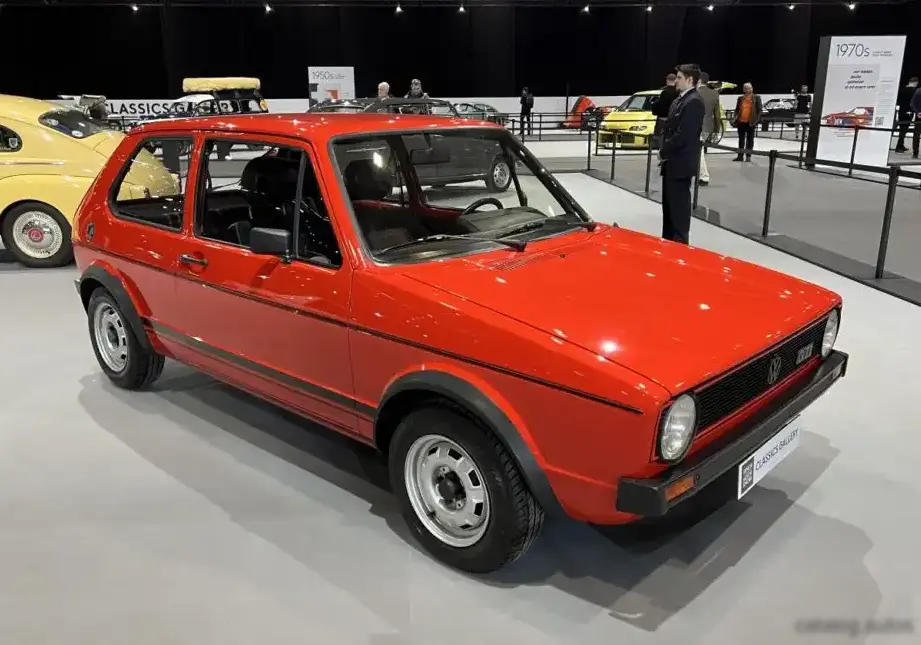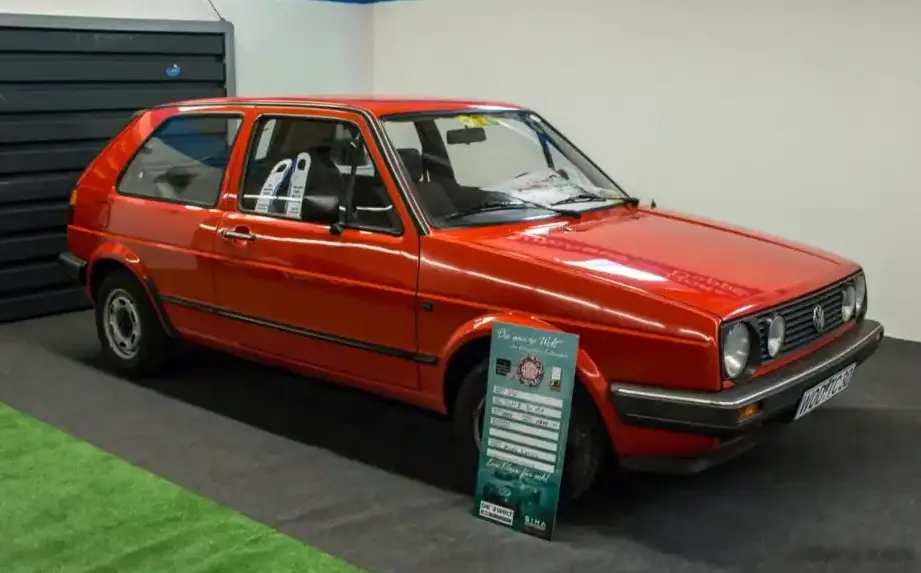
The Volkswagen Golf MkII 1.0, produced between 1985 and 1987, represented the entry point into the second generation Golf range. This 3-door hatchback, powered by a modest 1.0-liter engine, was primarily aimed at budget-conscious buyers in European markets. It served as a practical and economical option within a lineup that also included more powerful and sophisticated variants like the GTI and diesel models. The 1.0L Golf II was built on the A1 platform, continuing the Golf’s legacy as a versatile and popular family car.
Technical Specifications
| Brand | Volkswagen |
| Model | Golf |
| Generation | Golf II (3-door) |
| Type (Engine) | 1.0 (50 Hp) |
| Start of production | 1985 |
| End of production | 1987 |
| Powertrain Architecture | Internal Combustion engine |
| Body type | Hatchback |
| Seats | 5 |
| Doors | 3 |
| Fuel Type | Petrol (Gasoline) |
| Maximum speed | 144 km/h (89.48 mph) |
| Power | 50 Hp @ 5500 rpm |
| Power per litre | 47.9 Hp/l |
| Torque | 74 Nm @ 3000 rpm (54.58 lb.-ft. @ 3000 rpm) |
| Engine layout | Front, Transverse |
| Engine Model/Code | HZ |
| Engine displacement | 1043 cm3 (63.65 cu. in.) |
| Number of cylinders | 4 |
| Engine configuration | Inline |
| Cylinder Bore | 75 mm (2.95 in.) |
| Piston Stroke | 59 mm (2.32 in.) |
| Compression ratio | 9.5:1 |
| Number of valves per cylinder | 2 |
| Fuel injection system | Carburettor |
| Engine aspiration | Naturally aspirated engine |
| Engine oil capacity | 3.5 l (3.7 US qt | 3.08 UK qt) |
| Trunk (boot) space – minimum | 345 l (12.18 cu. ft.) |
| Trunk (boot) space – maximum | 1145 l (40.44 cu. ft.) |
| Fuel tank capacity | 55 l (14.53 US gal | 12.1 UK gal) |
| Length | 3985 mm (156.89 in.) |
| Width | 1665 mm (65.55 in.) |
| Height | 1415 mm (55.71 in.) |
| Wheelbase | 2475 mm (97.44 in.) |
| Front track | 1413 mm (55.63 in.) |
| Rear (Back) track | 1408 mm (55.43 in.) |
| Front overhang | 810 mm (31.89 in.) |
| Rear overhang | 700 mm (27.56 in.) |
| Ride height (ground clearance) | 120 mm (4.72 in.) |
| Drag coefficient (Cd) | 0.34 |
| Minimum turning circle (turning diameter) | 10.5 m (34.45 ft.) |
| Drivetrain Architecture | The Internal combustion engine (ICE) drives the front wheels of the vehicle. |
| Drive wheel | Front wheel drive |
| Number of gears and type of gearbox | 4 gears, manual transmission |
| Front suspension | Independent type McPherson |
| Rear suspension | Elastic beam |
| Front brakes | Disc |
| Rear brakes | Drum |
| Steering type | Steering rack and pinion |
| Tires size | 155/65 R13 |
| Wheel rims size | 5J x 13 |
Powertrain & Engine Architecture
The heart of the Golf II 1.0 was the HZ engine, a 1043cc inline four-cylinder unit. This engine utilized a single carburetor for fuel delivery, a relatively simple system compared to the fuel injection found in higher-spec Golfs. The engine featured a two-valve per cylinder configuration and a compression ratio of 9.5:1. The HZ engine was known for its simplicity and durability, but its output was modest. The four-speed manual transmission was standard, providing a straightforward driving experience. The engine’s transverse mounting contributed to efficient packaging within the front-wheel-drive layout.
Driving Characteristics
The 1.0-liter Golf II was not a performance car. With only 50 horsepower, acceleration was leisurely, and highway overtaking required careful planning. The four-speed gearbox was geared for economy rather than outright speed. Compared to the more potent GTI or even the 1.6-liter Golf, the 1.0 felt significantly underpowered. However, its light weight and nimble handling made it enjoyable to drive around town. The gear ratios were spaced to maximize fuel efficiency, resulting in a relaxed cruising experience at lower speeds. The steering, while not particularly sporty, was accurate and provided adequate feedback.
Equipment & Trim Levels
The Golf II 1.0 was typically offered with a basic level of equipment. Standard features included cloth upholstery, a simple dashboard layout, and manual windows and door locks. The interior was functional and durable, prioritizing practicality over luxury. Optional extras were limited, but could include a basic radio, upgraded seat fabrics, and sometimes, a sunroof. The trim level was generally considered the base model, lacking the refinements found in higher-spec versions. The focus was on providing affordable transportation with essential features.
Chassis & Braking
The Golf II 1.0 utilized a McPherson strut front suspension and an elastic beam rear suspension. This setup provided a reasonable balance between ride comfort and handling. The front brakes were disc brakes, offering adequate stopping power, while the rear brakes were drums, a cost-saving measure for the entry-level model. The suspension was tuned for comfort, resulting in a relatively soft ride. Stabilizer bars were often omitted to further reduce costs. The 155/65 R13 tires provided adequate grip for everyday driving conditions.
Market Reception & Comparison
The Golf II 1.0 was generally well-received as an affordable and economical option. Critics acknowledged its practicality and fuel efficiency, but often noted its lack of performance. Compared to the 1.6-liter Golf, the 1.0 offered significantly less power but at a lower purchase price. The 1.6-liter provided a more refined driving experience and was better suited for highway driving. The diesel models, while more expensive initially, offered superior fuel economy. The 1.0L Golf II was a popular choice for first-time car buyers and those seeking a reliable and inexpensive mode of transportation.
Legacy
The Volkswagen Golf II 1.0, while not a particularly sought-after model today, holds a place in automotive history as a symbol of affordable and practical motoring. The HZ engine, while simple, proved to be relatively durable and reliable. Finding well-maintained examples can be challenging, as many were used as everyday cars and subjected to heavy use. In the used car market, these models are typically valued for their simplicity and low running costs. They appeal to enthusiasts looking for a classic Volkswagen experience without the expense of a GTI or other higher-spec variants. The Golf II 1.0 represents a significant chapter in the Golf’s ongoing success story, demonstrating Volkswagen’s commitment to providing accessible transportation to a wide range of buyers.