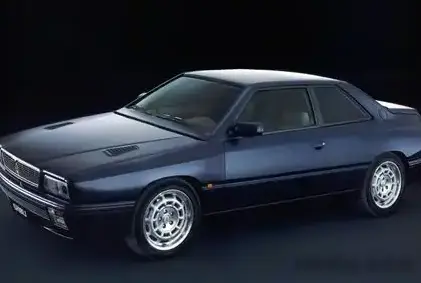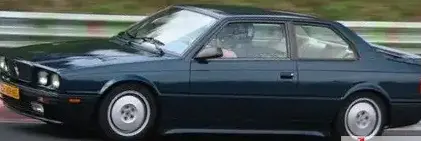
The Maserati Biturbo 222 E, produced solely in 1989, represents a high-performance iteration of the Biturbo sedan, marking a significant point in Maserati’s attempt to blend luxury and sporting performance in a more accessible package. It was a limited-production model designed to showcase the potential of the Biturbo platform and served as a precursor to further high-performance variants. The 222 E distinguished itself through a more powerful engine, upgraded brakes, and subtle aesthetic enhancements compared to the standard Biturbo models. It occupied the top echelon of the Biturbo range, positioned above the standard 2.8-liter models and aimed at enthusiasts seeking a genuine Italian sports sedan experience.
Technical Specifications
| Brand | Maserati |
| Model | Biturbo |
| Generation | Biturbo |
| Type (Engine) | 222 E (247 Hp) |
| Start of Production | 1989 |
| End of Production | 1989 |
| Powertrain Architecture | Internal Combustion Engine |
| Body Type | Sedan |
| Fuel Type | Petrol (Gasoline) |
| Power | 247 Hp |
| Engine Model/Code | AM331 |
| Engine Aspiration | Naturally Aspirated |
Powertrain & Engine Architecture
The heart of the 222 E is the AM331 engine, a 2.8-liter V6. This engine is a 90-degree V6, utilizing a twin overhead camshaft (DOHC) design with four valves per cylinder. Unlike earlier Biturbo engines which employed turbocharging, the 222 E featured a naturally aspirated configuration, allowing for a more linear power delivery and arguably greater reliability. The engine benefited from revised cylinder heads, larger intake valves, and a higher compression ratio (9.2:1) compared to the standard 2.8-liter Biturbo. Fuel delivery was managed by Bosch mechanical fuel injection, a system chosen for its responsiveness and relative simplicity. The AM331 produced 247 horsepower at 6250 rpm and 228 lb-ft of torque at 4500 rpm. The engine was mated to a ZF five-speed manual transmission, chosen for its robustness and precise shift feel. An automatic transmission was not offered on the 222 E, reflecting its performance-oriented nature.
Driving Characteristics
The 222 E offered a noticeably more engaging driving experience than its turbocharged siblings. The naturally aspirated engine provided a more immediate throttle response and a willingness to rev freely. While the turbocharged Biturbos offered strong mid-range punch, the 222 E excelled in delivering power throughout the rev range. The five-speed manual transmission allowed drivers to fully exploit the engine’s capabilities. Acceleration was brisk, with contemporary tests indicating a 0-60 mph time of around 5.8 seconds, making it competitive with other sports sedans of the era. Handling was generally well-balanced, although the Biturbo platform, while independent suspension all around, wasn’t known for razor-sharp precision. The steering was direct, providing good feedback to the driver. The lack of turbo lag contributed to a more predictable and confidence-inspiring driving experience.
Equipment & Trim Levels
The 222 E was relatively well-equipped, reflecting its position as the flagship Biturbo model. Standard features included leather upholstery, power windows, power locks, air conditioning, and a premium sound system. The interior trim was upgraded with burled walnut veneer on the dashboard and door panels. The 222 E also featured a unique three-spoke steering wheel and distinctive badging. Optional extras included a sunroof, upgraded audio systems, and metallic paint finishes. The interior, while luxurious, retained a distinctly Italian aesthetic, prioritizing style and comfort over outright minimalism. The seats were supportive and comfortable, designed for long-distance driving.
Chassis & Braking
The Biturbo 222 E utilized a steel unibody construction. Suspension consisted of independent double wishbones at the front and a semi-trailing arm setup at the rear. Stabilizer bars were fitted front and rear to reduce body roll during cornering. A key upgrade for the 222 E was the braking system. It featured larger ventilated disc brakes at all four corners, providing significantly improved stopping power compared to the standard Biturbo models, which often used rear drum brakes. The braking system was further enhanced with ABS (Anti-lock Braking System) as standard equipment. Wheel size was typically 15-inch alloy wheels, fitted with performance tires to maximize grip.
Market Reception & Comparison
The Maserati Biturbo 222 E received generally positive reviews from automotive journalists. Critics praised its powerful engine, engaging driving dynamics, and luxurious interior. However, some noted the Biturbo’s reputation for questionable reliability, a common criticism leveled at Maserati during this period. Compared to the standard 2.8-liter Biturbo, the 222 E offered a substantial performance upgrade, but at a significantly higher price. Compared to rivals like the BMW M5 and Mercedes-Benz 190E 2.5-16, the 222 E offered a more exotic and arguably more stylish alternative, but lacked the same level of build quality and long-term reliability. Fuel economy was typical for a high-performance V6 of the era, averaging around 17 mpg in city driving and 22 mpg on the highway.
Legacy
The Maserati Biturbo 222 E, despite its limited production run, holds a special place in Maserati history. It represented a bold attempt to create a high-performance sports sedan that could compete with established German rivals. While the Biturbo’s overall reliability record remains a concern, the 222 E’s naturally aspirated engine is generally considered more robust than the turbocharged versions. Today, the 222 E is a sought-after collectible, appealing to enthusiasts who appreciate its unique blend of Italian style, performance, and exclusivity. Well-maintained examples command premium prices in the used car market. The 222 E serves as a reminder of a time when Maserati was striving to redefine itself as a manufacturer of both luxurious and high-performance automobiles. Finding parts can be challenging, and specialist knowledge is often required for maintenance and repair, making ownership a commitment for dedicated enthusiasts.