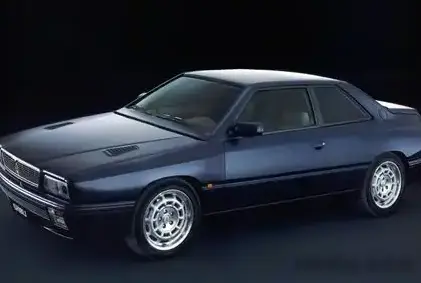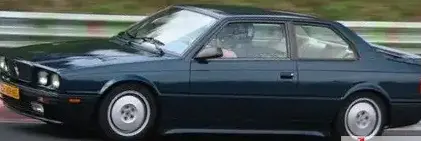
The Maserati Biturbo 222 SE, produced between 1989 and 1994, represents a significant evolution within the Biturbo lineage. Positioned as a higher-performance variant of the Biturbo sedan, the 222 SE aimed to deliver a more engaging driving experience while retaining the luxury and Italian flair synonymous with the Maserati brand. It was a key model in Maserati’s attempt to establish itself as a producer of sporty, yet attainable, luxury vehicles during a period of financial instability. The “222” designation refers to the engine’s approximate power output in metric horsepower (which translates to roughly 224 US horsepower), and the “SE” denoted a higher trim level with enhanced equipment and detailing. This model occupied the upper echelon of the Biturbo range, sitting above the standard Biturbo and Biturbo E models, but below the more exclusive Biturbo Espada.
Technical Specifications
| Brand | Maserati |
| Model | Biturbo |
| Generation | Biturbo |
| Type (Engine) | 222 SE (224 Hp) |
| Start of Production | 1989 |
| End of Production | 1994 |
| Powertrain Architecture | Internal Combustion Engine |
| Body Type | Sedan |
| Fuel Type | Petrol (Gasoline) |
| Power | 224 Hp |
| Engine Model/Code | AM331 |
| Engine Aspiration | Naturally Aspirated |
Powertrain & Engine Architecture
The heart of the Biturbo 222 SE is the AM331 engine, a 2.2-liter (2226 cc) V6. This engine is a 90-degree V6, notable for its compact size and twin-turbocharged configuration. However, the 222 SE variant distinguishes itself by being naturally aspirated, foregoing the turbochargers of the earlier Biturbo models. This change was implemented to improve reliability and offer a more linear power delivery. The engine utilizes a cast iron block with aluminum alloy cylinder heads. Fuel delivery is managed by Bosch mechanical fuel injection, a system chosen for its relative simplicity and robustness. The valvetrain consists of two valves per cylinder, operated by a single overhead camshaft. The engine produces 224 horsepower at 6250 rpm and 192 lb-ft of torque at 4500 rpm. The transmission is a five-speed manual, although a four-speed automatic was also available, though less common and generally considered to diminish the driving experience. The automatic transmission, a GM-sourced unit, was not particularly known for its responsiveness or smoothness.
Driving Characteristics
The naturally aspirated 222 SE offers a distinctly different driving experience compared to the turbocharged Biturbo models. While lacking the immediate surge of boost, the 222 SE provides a more predictable and progressive power delivery. Acceleration is brisk, with a 0-60 mph time of around 6.5 seconds, making it competitive with other sports sedans of the era. The five-speed manual transmission allows for precise control, while the automatic, when equipped, feels somewhat sluggish. The gear ratios are relatively closely spaced, encouraging frequent shifting to maintain optimal engine speed. Handling is generally good, thanks to the independent suspension, but the Biturbo’s relatively heavy weight (around 3,400 lbs) can be felt in corners. The steering is direct, providing decent feedback, but lacks the precision of more modern systems. Compared to the earlier turbocharged Biturbo, the 222 SE feels less frantic and more refined, prioritizing usability over outright performance.
Equipment & Trim Levels
The “SE” designation for the 222 SE signifies a higher level of equipment and interior refinement. Standard features included leather upholstery, power windows, power locks, air conditioning, and a premium sound system. The interior trim featured wood veneer accents on the dashboard and door panels, adding to the luxurious ambiance. Optional extras included a sunroof, upgraded audio systems, and various exterior color options. The seats were typically offered in Connolly leather, and the dashboard gauges were often trimmed with chrome bezels. The 222 SE also received subtle exterior styling enhancements, such as a revised front grille and unique alloy wheels, distinguishing it from the lower-spec Biturbo models. The overall interior design, while luxurious, reflected the early 1990s aesthetic, with a focus on dark wood and rich leather tones.
Chassis & Braking
The Biturbo 222 SE utilizes an independent suspension system all around, featuring double wishbones at the front and a semi-trailing arm setup at the rear. This suspension configuration provides a comfortable ride while maintaining reasonable handling characteristics. The braking system consists of ventilated disc brakes at the front and solid disc brakes at the rear. Anti-lock braking system (ABS) was standard equipment on the 222 SE, enhancing safety and control during hard braking. The steering is a power-assisted rack-and-pinion system. Stabilizer bars are fitted to both the front and rear axles to reduce body roll during cornering. The chassis, while robust, is prone to corrosion in areas exposed to salt and moisture, a common issue with Italian cars of this era.
Market Reception & Comparison
The Biturbo 222 SE was generally well-received by automotive critics, who praised its stylish design, luxurious interior, and engaging driving experience. However, it was also criticized for its build quality issues and questionable reliability. Compared to its siblings, the 222 SE offered a more refined and predictable driving experience than the turbocharged models, but lacked their outright performance. The naturally aspirated engine proved to be more reliable than the earlier turbocharged units, but still required regular maintenance. Fuel economy was reasonable for a V6-powered sports sedan, averaging around 18 mpg in city driving and 24 mpg on the highway. Against competitors such as the BMW 5 Series and Mercedes-Benz E-Class, the Biturbo 222 SE offered a unique blend of Italian style and performance at a competitive price point.
Legacy
The Maserati Biturbo 222 SE, while not a commercial success in the same vein as its German rivals, holds a significant place in Maserati’s history. It represented a bold attempt to revitalize the brand and appeal to a wider audience. Today, the Biturbo 222 SE is a sought-after classic car, particularly among enthusiasts who appreciate its unique character and Italian heritage. The naturally aspirated engine is generally considered to be more reliable than the turbocharged versions, making the 222 SE a more practical choice for ownership. However, finding well-maintained examples can be challenging, as many Biturbos suffered from neglect and corrosion. Parts availability can also be an issue, requiring owners to rely on specialist suppliers and online forums. Despite these challenges, the Biturbo 222 SE remains a compelling and rewarding classic car, offering a glimpse into a bygone era of Italian automotive passion and design.