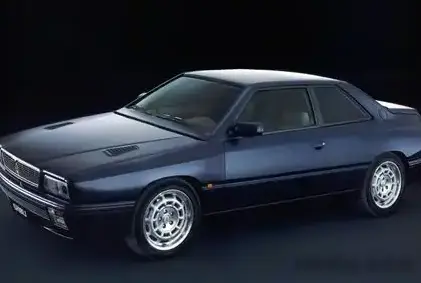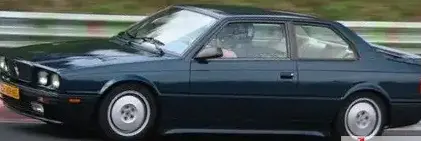
The Maserati Biturbo 425, produced between 1984 and 1987, represented a pivotal moment for the Italian manufacturer. It was the first model in the Biturbo family, a line of sports sedans intended to revitalize Maserati’s fortunes and broaden its appeal beyond ultra-luxury grand tourers. The 425 designation referred to the engine displacement in cubic centimeters, and this variant served as the initial offering, establishing the core characteristics of the Biturbo platform. It was built on a shortened version of the De Tomaso Longchamp chassis, marking a departure from Maserati’s traditional construction methods and a move towards more modern, mass-production techniques. The Biturbo aimed to deliver a blend of Italian style, performance, and relative affordability, targeting a market segment previously dominated by German manufacturers like BMW and Mercedes-Benz.
Technical Specifications
| Brand | Maserati |
| Model | Biturbo |
| Generation | Biturbo |
| Type (Engine) | 425 (203 Hp) |
| Start of production | 1984 |
| End of production | 1987 |
| Powertrain Architecture | Internal Combustion engine |
| Body type | Sedan |
| Seats | 5 |
| Doors | 4 |
| Fuel Type | Petrol (Gasoline) |
| Acceleration 0 – 100 km/h | 6.6 sec |
| Acceleration 0 – 62 mph | 6.6 sec |
| Acceleration 0 – 60 mph | 6.3 sec |
| Maximum speed | 230 km/h (142.92 mph) |
| Weight-to-power ratio | 5.8 kg/Hp, 172 Hp/tonne |
| Weight-to-torque ratio | 3.9 kg/Nm, 257.6 Nm/tonne |
| Power | 203 Hp @ 5500 rpm |
| Power per litre | 81.5 Hp/l |
| Torque | 304 Nm @ 3200 rpm (224.22 lb.-ft. @ 3200 rpm) |
| Engine layout | Front, Longitudinal |
| Engine displacement | 2491 cm3 (152.01 cu. in.) |
| Number of cylinders | 6 |
| Engine configuration | V-engine |
| Cylinder Bore | 91.59 mm (3.61 in.) |
| Piston Stroke | 63 mm (2.48 in.) |
| Compression ratio | 7.8:1 |
| Number of valves per cylinder | 3 |
| Fuel injection system | Carburettor |
| Engine aspiration | BiTurbo, Intercooler |
| Valvetrain | DOHC |
| Engine oil capacity | 5.5 l (5.81 US qt | 4.84 UK qt) |
| Coolant | 8.5 l (8.98 US qt | 7.48 UK qt) |
| Kerb Weight | 1180 kg (2601.45 lbs.) |
| Trunk (boot) space – minimum | 550 l (19.42 cu. ft.) |
| Fuel tank capacity | 82 l (21.66 US gal | 18.04 UK gal) |
| Length | 4400 mm (173.23 in.) |
| Width | 1730 mm (68.11 in.) |
| Height | 1360 mm (53.54 in.) |
| Wheelbase | 2600 mm (102.36 in.) |
| Front track | 1442 mm (56.77 in.) |
| Rear (Back) track | 1453 mm (57.2 in.) |
| Minimum turning circle | 11.7 m (38.39 ft.) |
| Drivetrain Architecture | Rear wheel drive |
| Number of gears and type of gearbox | 5 gears, manual transmission |
| Front suspension | Independent, type McPherson with coil spring and anti-roll bar |
| Rear suspension | Independent multi-link suspension |
| Front brakes | Ventilated discs |
| Rear brakes | Disc |
| Steering type | Steering rack and pinion |
| Tires size | 205/60 R14 |
| Wheel rims size | 6.5J x 14 |
Powertrain & Engine Architecture
The heart of the Biturbo 425 was its 2.5-liter V6 engine, designated the AM161. This engine was notable for its 90-degree V-angle and twin-turbocharger setup – a relatively uncommon feature for production cars in the early 1980s. The use of two small turbochargers, rather than a single large one, was intended to reduce turbo lag and provide a broader powerband. The engine utilized a single overhead camshaft (SOHC) per cylinder bank, operating three valves per cylinder (two intake, one exhaust). Fuel delivery was managed by a Weber carburetor system, a somewhat archaic choice for a turbocharged engine, but it was a cost-effective solution at the time. The engine produced 203 horsepower at 5500 rpm and 304 Nm (224 lb-ft) of torque at 3200 rpm. The engine was mounted longitudinally in the front of the car, driving the rear wheels through a five-speed manual transmission. This configuration provided a balanced weight distribution, contributing to the car’s handling characteristics.
Driving Characteristics
The Biturbo 425 offered a distinctly Italian driving experience. The twin-turbocharged engine delivered a noticeable surge of power, particularly in the mid-range, making it feel quicker than its stated horsepower figure might suggest. However, the carburetor-based fuel system and the relatively early turbo technology meant that there was still some degree of turbo lag, especially at lower engine speeds. The five-speed manual transmission provided precise shifts, and the rear-wheel-drive layout contributed to a lively and engaging driving experience. While not as refined as its German competitors, the Biturbo 425 offered a raw, visceral feel that appealed to enthusiasts. The suspension, while independent on all four wheels, was tuned for a balance between comfort and handling, resulting in a ride that was firm but not overly harsh.
Equipment & Trim Levels
The Biturbo 425 was relatively well-equipped for its time, although it wasn’t positioned as a luxury flagship. Standard features included power windows, central locking, and a basic stereo system. The interior was trimmed with cloth upholstery, and the dashboard featured a traditional layout with analog gauges. Optional extras included leather upholstery, air conditioning, and a sunroof. The Biturbo 425 represented the entry point into the Biturbo range, with later models offering more powerful engines and more luxurious appointments. The interior design, while functional, was somewhat understated compared to the exterior styling, reflecting Maserati’s attempt to appeal to a broader audience.
Chassis & Braking
The Biturbo 425 utilized a steel unibody construction. The front suspension employed McPherson struts with coil springs and an anti-roll bar, while the rear suspension featured an independent multi-link setup. This configuration provided a good balance of ride comfort and handling precision. The braking system consisted of ventilated disc brakes at the front and solid disc brakes at the rear. The steering was a rack-and-pinion system, providing responsive and accurate steering feel. The car rode on 205/60 R14 tires, mounted on 6.5J x 14 inch wheels.
Market Reception & Comparison
The Biturbo 425 received mixed reviews upon its launch. Critics praised its stylish design, strong performance, and relatively affordable price. However, concerns were raised about its build quality and reliability, which were often inconsistent. Compared to its rivals, such as the BMW 5 Series and Mercedes-Benz E-Class, the Biturbo 425 offered a more exciting driving experience but lacked the same level of refinement and long-term dependability. Fuel economy was also a concern, as the turbocharged engine and carburetor system were not particularly efficient. Despite these shortcomings, the Biturbo 425 was a commercial success, helping to revive Maserati’s fortunes and establish the Biturbo as a popular model.
Legacy
The Biturbo 425 laid the foundation for the entire Biturbo family, which remained in production for over a decade. While the early Biturbo models were known for their reliability issues, later iterations benefited from improvements in build quality and engineering. Today, the Biturbo 425 is a sought-after classic car, appreciated for its unique styling, engaging driving experience, and historical significance. The AM161 engine, despite its quirks, proved to be a durable and versatile powerplant, and it continued to be used in various Maserati models for many years. Finding well-maintained examples can be challenging, and ongoing maintenance can be costly due to the car’s age and the availability of parts. However, for enthusiasts willing to invest the time and effort, the Biturbo 425 offers a rewarding and distinctive ownership experience.