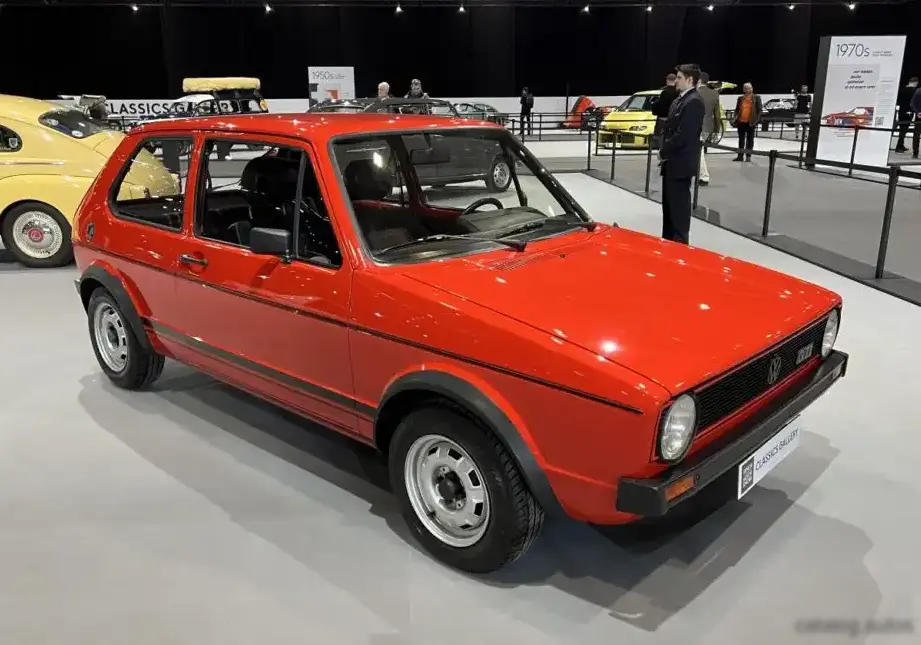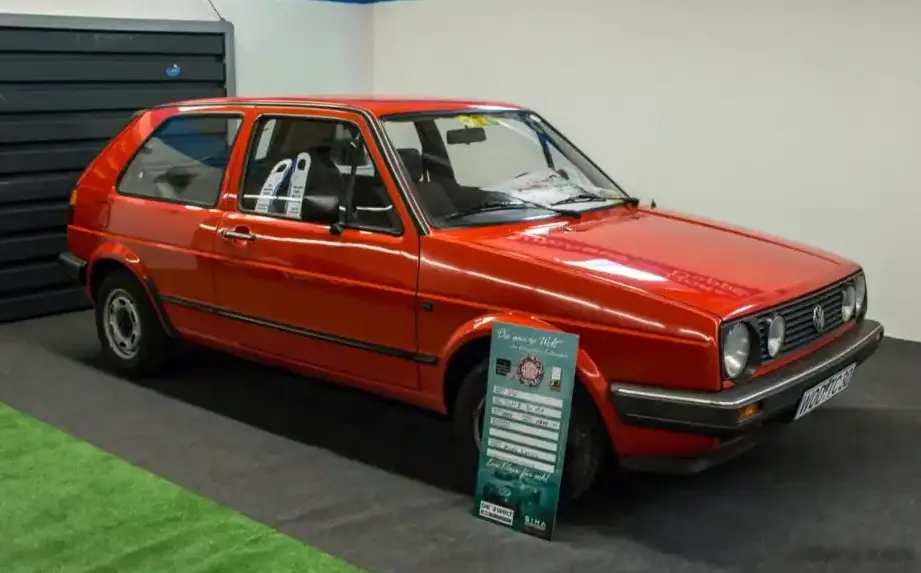
The Volkswagen Golf II, produced from 1983 to 1987, represented a significant evolution of Volkswagen’s popular hatchback. Among the various engine and transmission combinations offered, the 1.6 D (54 hp) Automatic variant occupied a unique position, aimed at buyers prioritizing fuel economy and ease of use over outright performance. This three-door model, designated internally as the 19E series, was a common sight on European roads, offering a practical and affordable transportation solution. It served as an entry point into the Golf II range, appealing to a broader demographic than the sportier GTI or more powerful diesel options.
Technical Specifications
| Brand | Volkswagen |
| Model | Golf |
| Generation | Golf II (3-door) |
| Type (Engine) | 1.6 D (54 Hp) Automatic |
| Start of production | 1983 |
| End of production | 1987 |
| Powertrain Architecture | Internal Combustion engine |
| Body type | Hatchback |
| Seats | 5 |
| Doors | 3 |
| Fuel consumption (urban) | 6.9 l/100 km (34.1 US mpg, 40.9 UK mpg, 14.5 km/l) |
| Fuel consumption (extra urban) | 5.3 l/100 km (44.4 US mpg, 53.3 UK mpg, 18.9 km/l) |
| Fuel Type | Diesel |
| Acceleration 0 – 100 km/h | 22.9 sec |
| Acceleration 0 – 62 mph | 22.9 sec |
| Acceleration 0 – 60 mph | 21.8 sec |
| Maximum speed | 143 km/h (88.86 mph) |
| Weight-to-power ratio | 16.7 kg/Hp, 60 Hp/tonne |
| Weight-to-torque ratio | 9 kg/Nm, 111.1 Nm/tonne |
| Power | 54 Hp @ 4800 rpm |
| Power per litre | 34 Hp/l |
| Torque | 100 Nm @ 2300 rpm (73.76 lb.-ft. @ 2300 rpm) |
| Engine layout | Front, Transverse |
| Engine Model/Code | JP |
| Engine displacement | 1588 cm3 (96.91 cu. in.) |
| Number of cylinders | 4 |
| Engine configuration | Inline |
| Cylinder Bore | 76.5 mm (3.01 in.) |
| Piston Stroke | 86.4 mm (3.4 in.) |
| Compression ratio | 23:1 |
| Number of valves per cylinder | 2 |
| Fuel injection system | Precombustion chamber injection |
| Engine aspiration | Naturally aspirated engine |
| Valvetrain | SOHC |
| Engine oil capacity | 3 l (3.17 US qt | 2.64 UK qt) |
| Coolant | 6.5 l (6.87 US qt | 5.72 UK qt) |
| Kerb Weight | 900 kg (1984.16 lbs.) |
| Max. weight | 1430 kg (3152.61 lbs.) |
| Max load | 530 kg (1168.45 lbs.) |
| Trunk (boot) space – minimum | 345 l (12.18 cu. ft.) |
| Trunk (boot) space – maximum | 1145 l (40.44 cu. ft.) |
| Fuel tank capacity | 55 l (14.53 US gal | 12.1 UK gal) |
| Permitted trailer load with brakes (12%) | 850 kg (1873.93 lbs.) |
| Permitted trailer load without brakes | 480 kg (1058.22 lbs.) |
| Length | 3985 mm (156.89 in.) |
| Width | 1665 mm (65.55 in.) |
| Height | 1415 mm (55.71 in.) |
| Wheelbase | 2475 mm (97.44 in.) |
| Front track | 1413 mm (55.63 in.) |
| Rear (Back) track | 1408 mm (55.43 in.) |
| Front overhang | 810 mm (31.89 in.) |
| Rear overhang | 700 mm (27.56 in.) |
| Drag coefficient (Cd) | 0.34 |
| Minimum turning circle (turning diameter) | 10.5 m (34.45 ft.) |
| Drivetrain Architecture | The Internal combustion engine (ICE) drives the front wheels of the vehicle. |
| Drive wheel | Front wheel drive |
| Number of gears and type of gearbox | 3 gears, automatic transmission |
| Front suspension | Independent type McPherson |
| Rear suspension | Elastic beam |
| Front brakes | Disc |
| Rear brakes | Drum |
| Steering type | Steering rack and pinion |
| Tires size | 155/65 R13 |
| Wheel rims size | 5J x 13 |
INTRODUCTION
The Volkswagen Golf II 1.6 D Automatic, produced between 1983 and 1987, was a key variant within the second-generation Golf lineup. Building upon the success of the original Golf, the MkII offered improved refinement, space, and build quality. The 1.6-liter diesel engine, identified by the JP engine code, was a popular choice in Europe due to its fuel efficiency and durability. Pairing this engine with a three-speed automatic transmission broadened the Golf II’s appeal to drivers seeking a comfortable and convenient driving experience. This configuration positioned itself as a practical, everyday vehicle, contrasting with the performance-oriented GTI and the more economical, but less refined, base-model diesels.
Powertrain & Engine Architecture
The heart of this Golf II variant is the 1.6-liter, inline-four cylinder diesel engine (JP code). This engine utilized a precombustion chamber injection system, a common technology for diesel engines of the era. This system involved injecting fuel into a small precombustion chamber connected to the main cylinder, promoting more complete combustion and reducing engine noise. The engine featured a single overhead camshaft (SOHC) valvetrain operating two valves per cylinder. The three-speed automatic transmission was a relatively simple hydraulic unit, designed for smooth, if not particularly rapid, gear changes. It lacked the sophistication of modern automatic transmissions, but proved reliable and well-suited to the engine’s torque characteristics. The engine produced 54 horsepower at 4800 rpm and 100 Nm (73.76 lb-ft) of torque at 2300 rpm.
Driving Characteristics
The Golf II 1.6 D Automatic offered a distinctly relaxed driving experience. Acceleration was modest, with a 0-60 mph time of around 21.8 seconds. The three-speed automatic transmission, while providing convenience, resulted in noticeable gear changes and a lack of the responsiveness found in manual transmission models. The gear ratios were optimized for fuel economy rather than performance. Compared to the 1.8-liter gasoline versions or even the more powerful diesel options, the 1.6 D Automatic felt noticeably slower, particularly when overtaking or climbing hills. However, the engine’s torque delivery was adequate for everyday driving, and the automatic transmission made it easy to navigate city traffic. The focus was on usability and minimizing driver effort.
Equipment & Trim Levels
The 1.6 D Automatic typically came with a fairly basic level of equipment, reflecting its position as an entry-level model. Standard features generally included cloth upholstery, a basic instrument cluster, and manual windows and door locks. Optional extras, such as a sunroof, upgraded stereo, and central locking, were available, allowing buyers to customize their vehicle. Interior trim was typically functional and durable, prioritizing practicality over luxury. The dashboard layout was straightforward and easy to use, with clearly labeled controls.
Chassis & Braking
The Golf II 1.6 D Automatic utilized a McPherson strut front suspension and an elastic beam rear suspension. This setup provided a comfortable ride, although it wasn’t particularly sporty. The front brakes were disc brakes, while the rear brakes were drum brakes – a common configuration for this class of vehicle at the time. The steering was a rack and pinion system, offering reasonable precision. The suspension was tuned to prioritize ride comfort and stability, rather than handling prowess. Stabilizer bars were often omitted on the base models to keep costs down.
Market Reception & Comparison
The Golf II 1.6 D Automatic was generally well-received as a practical and economical family car. Critics praised its fuel efficiency and reliability, but noted its lack of performance. Compared to the more powerful diesel variants, such as the 1.9 TDI (introduced later in the Golf II’s lifecycle), the 1.6 D Automatic offered significantly less power and acceleration. However, it was also more affordable and simpler to maintain. Against gasoline-powered Golf II models, the 1.6 D Automatic offered superior fuel economy, but at the expense of performance and refinement. It appealed to buyers who prioritized running costs over driving excitement.
Legacy
The Volkswagen Golf II 1.6 D Automatic has proven to be a remarkably durable vehicle. Many examples are still on the road today, testament to the robust engineering of the engine and transmission. While not highly sought after by collectors, it remains a popular choice for those seeking a classic, affordable, and reliable car. The JP engine code is known for its longevity, although regular maintenance is essential to prevent issues such as injector clogging and wear on the precombustion chambers. In the used car market, these Golfs are typically valued for their simplicity and low running costs, making them an attractive option for first-time car owners or those seeking a dependable daily driver.