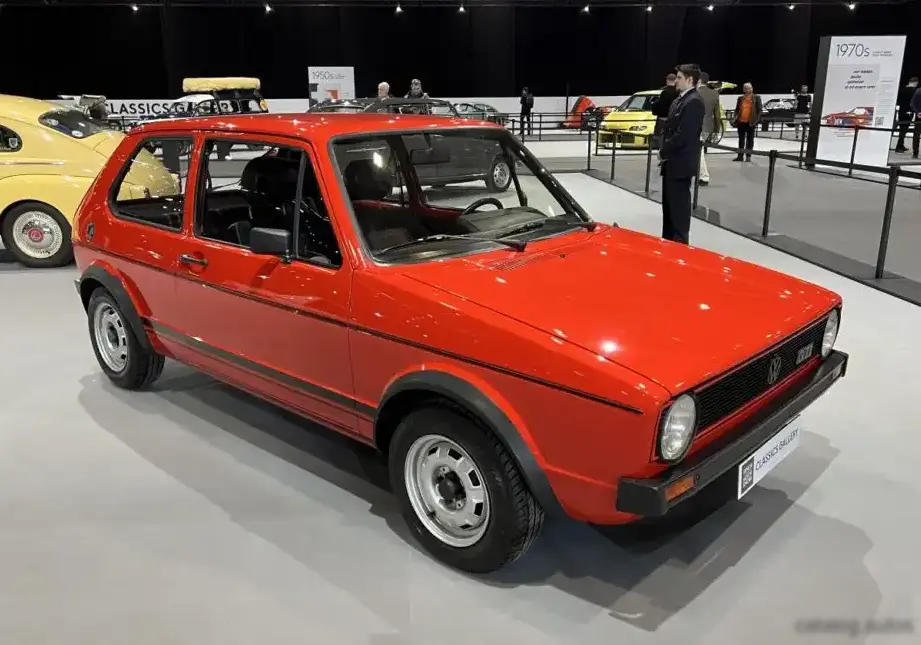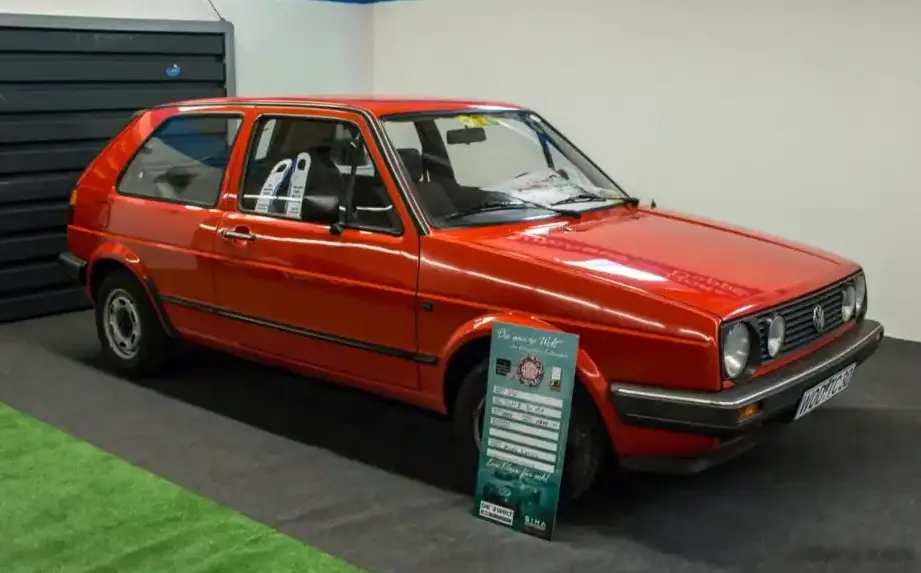
The Volkswagen Golf II, specifically the 3-door 1.6 D variant with a 5-speed manual transmission, represents a significant entry point into the second generation of Volkswagen’s iconic hatchback. Produced between 1983 and 1987, this model served as a fuel-efficient and practical option within the Golf II range, appealing to buyers prioritizing economy over outright performance. It was positioned as the base diesel model, offering a more affordable alternative to the gasoline-powered versions and the later, more powerful diesel iterations. The Golf II, built on the A1 platform (though often referred to as the 19E/1G platform), continued the Golf’s success story, building upon the original’s reputation for practicality and build quality.
Technical Specifications
| Brand | Volkswagen |
| Model | Golf |
| Generation | Golf II (3-door) |
| Type (Engine) | 1.6 D (54 Hp) Manual 5-speed |
| Start of production | 1983 |
| End of production | 1987 |
| Powertrain Architecture | Internal Combustion engine |
| Body type | Hatchback |
| Seats | 5 |
| Doors | 3 |
| Fuel consumption (urban) | 6.3 l/100 km (37.3 US mpg, 44.8 UK mpg, 15.9 km/l) |
| Fuel consumption (extra urban) | 4.4 l/100 km (53.5 US mpg, 64.2 UK mpg, 22.7 km/l) |
| Fuel Type | Diesel |
| Acceleration 0 – 100 km/h | 18.7 sec |
| Acceleration 0 – 62 mph | 18.7 sec |
| Acceleration 0 – 60 mph | 17.8 sec |
| Maximum speed | 148 km/h (91.96 mph) |
| Weight-to-power ratio | 16.7 kg/Hp, 60 Hp/tonne |
| Weight-to-torque ratio | 9 kg/Nm, 111.1 Nm/tonne |
| Power | 54 Hp @ 4800 rpm |
| Power per litre | 34 Hp/l |
| Torque | 100 Nm @ 2300 rpm (73.76 lb.-ft. @ 2300 rpm) |
| Engine layout | Front, Transverse |
| Engine Model/Code | JP |
| Engine displacement | 1588 cm3 (96.91 cu. in.) |
| Number of cylinders | 4 |
| Engine configuration | Inline |
| Cylinder Bore | 76.5 mm (3.01 in.) |
| Piston Stroke | 86.4 mm (3.4 in.) |
| Compression ratio | 23:1 |
| Number of valves per cylinder | 2 |
| Fuel injection system | Precombustion chamber injection |
| Engine aspiration | Naturally aspirated engine |
| Valvetrain | SOHC |
| Engine oil capacity | 3 l (3.17 US qt | 2.64 UK qt) |
| Coolant | 6.5 l (6.87 US qt | 5.72 UK qt) |
| Kerb Weight | 900 kg (1984.16 lbs.) |
| Max. weight | 1430 kg (3152.61 lbs.) |
| Max load | 530 kg (1168.45 lbs.) |
| Trunk (boot) space – minimum | 345 l (12.18 cu. ft.) |
| Trunk (boot) space – maximum | 1145 l (40.44 cu. ft.) |
| Fuel tank capacity | 55 l (14.53 US gal | 12.1 UK gal) |
| Permitted trailer load with brakes (12%) | 850 kg (1873.93 lbs.) |
| Permitted trailer load without brakes | 480 kg (1058.22 lbs.) |
| Length | 3985 mm (156.89 in.) |
| Width | 1665 mm (65.55 in.) |
| Height | 1415 mm (55.71 in.) |
| Wheelbase | 2475 mm (97.44 in.) |
| Front track | 1413 mm (55.63 in.) |
| Rear (Back) track | 1408 mm (55.43 in.) |
| Front overhang | 810 mm (31.89 in.) |
| Rear overhang | 700 mm (27.56 in.) |
| Drag coefficient (Cd) | 0.34 |
| Minimum turning circle (turning diameter) | 10.5 m (34.45 ft.) |
| Drivetrain Architecture | The Internal combustion engine (ICE) drives the front wheels of the vehicle. |
| Drive wheel | Front wheel drive |
| Number of gears and type of gearbox | 5 gears, manual transmission |
| Front suspension | Independent type McPherson |
| Rear suspension | Elastic beam |
| Front brakes | Disc |
| Rear brakes | Drum |
| Steering type | Steering rack and pinion |
| Tires size | 155/65 R13 |
| Wheel rims size | 5J x 13 |
Powertrain & Engine Architecture
The heart of this Golf II variant is the 1.6-liter, inline-four cylinder diesel engine, designated with the code JP. This engine utilizes a precombustion chamber injection system, a common technology for diesel engines of the era. This system involves injecting fuel into a small precombustion chamber connected to the main cylinder, where it ignites and then ignites the main fuel charge. This design aids in smoother combustion and reduced engine noise compared to direct injection systems of the time. The engine features a single overhead camshaft (SOHC) operating two valves per cylinder. The 5-speed manual transmission was a standard offering, providing a relatively wide range of gears for optimizing fuel economy and managing the engine’s limited power output. The transmission’s gear ratios were geared towards maximizing efficiency rather than providing rapid acceleration.
Driving Characteristics
The 1.6 D with the 5-speed manual offered a distinctly utilitarian driving experience. With only 54 horsepower, acceleration was slow, taking approximately 18.7 seconds to reach 62 mph. However, the engine’s 100 Nm (73.76 lb-ft) of torque, available at a relatively low 2300 rpm, provided adequate pulling power for everyday driving. The 5-speed gearbox allowed drivers to keep the engine within its optimal operating range, improving fuel economy. Compared to the gasoline-powered Golf II models, the 1.6 D prioritized fuel efficiency over performance. It also differed significantly from the later 1.8 and 1.9 liter diesel variants, which offered considerably more power and torque. The manual transmission provided a more engaging driving experience than the optional 3-speed automatic, which further reduced performance.
Equipment & Trim Levels
The 3-door 1.6 D typically represented the base trim level for the Golf II. Standard equipment was relatively sparse, focusing on essential features. This included cloth upholstery, basic instrumentation, and steel wheels. Options were available, such as upgraded upholstery, a sunroof, and power windows, but these were typically reserved for higher trim levels. The interior was functional and durable, reflecting the car’s practical nature. The dashboard layout was simple and straightforward, prioritizing ease of use.
Chassis & Braking
The Golf II’s chassis featured an independent McPherson strut suspension at the front and an elastic beam suspension at the rear. This setup provided a reasonable balance between ride comfort and handling. The front brakes were discs, while the rear brakes were drums, a common configuration for economy-focused vehicles of the time. Steering was via a rack and pinion system, offering precise control. The relatively lightweight construction of the vehicle (900 kg / 1984 lbs) helped to mitigate the effects of the engine’s limited power.
Market Reception & Comparison
The Golf II 1.6 D was well-received in European markets, where fuel economy and practicality were highly valued. Critics praised its efficiency and durability, but noted its lack of performance. Compared to the gasoline-powered Golf II models, the 1.6 D offered significantly better fuel economy, making it an attractive option for drivers covering long distances. It was also more affordable to purchase and maintain than the higher-performance variants. However, the 1.8 and 1.9 liter diesel models offered a more refined driving experience and greater power, appealing to buyers willing to pay a premium.
Legacy
The Volkswagen Golf II 1.6 D, while not the most exciting variant in the lineup, proved to be a reliable and durable vehicle. The JP engine, while simple in design, is known for its longevity when properly maintained. Today, these cars are increasingly sought after by classic car enthusiasts and collectors, particularly those looking for a well-preserved example of a 1980s hatchback. Parts availability remains relatively good, making them a viable option for restoration projects. The Golf II 1.6 D stands as a testament to Volkswagen’s commitment to building practical, fuel-efficient, and long-lasting vehicles.