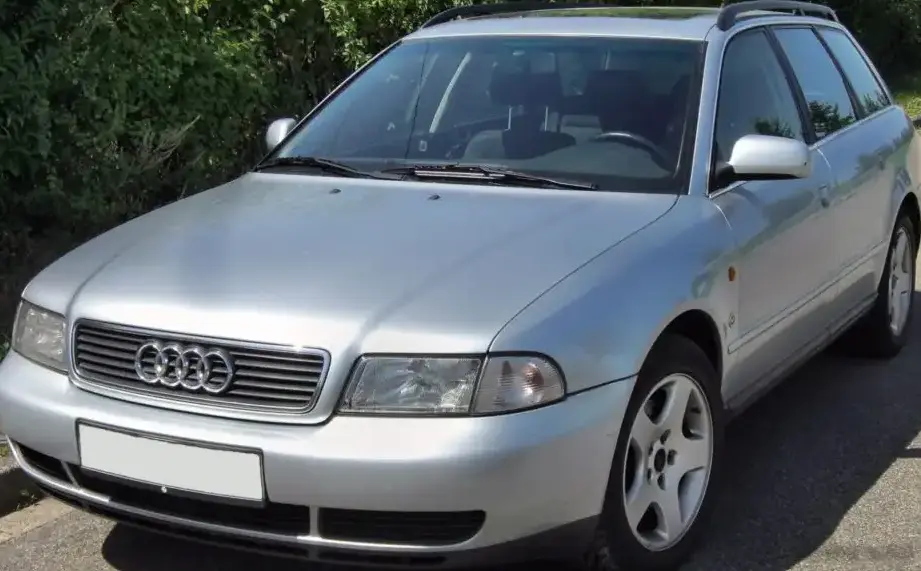
The Audi A4 Avant (B5, Typ 8D) 1.9 TDI, produced between 1996 and 1999, represented a significant offering in the European market as a practical and fuel-efficient premium wagon. Positioned as a mid-range trim within the B5 A4 Avant lineup, it catered to buyers seeking a balance between performance, economy, and the versatility of a station wagon. This variant utilized Volkswagen Group’s advanced direct-injection diesel technology, offering a compelling alternative to gasoline-powered A4 Avants and other competitors in the compact executive class. The B5 generation A4 was a pivotal model for Audi, establishing a new design language and solidifying the brand’s reputation for build quality and sophisticated engineering.
Technical Specifications
| Brand | Audi |
| Model | A4 |
| Generation | A4 Avant (B5, Typ 8D) |
| Type (Engine) | 1.9 TDI (110 Hp) |
| Start of production | 1996 |
| End of production | 1999 |
| Powertrain Architecture | Internal Combustion engine |
| Body type | Station wagon (estate) |
| Seats | 5 |
| Doors | 5 |
| Fuel consumption (urban) | 6.9 l/100 km (34.1 US mpg, 40.9 UK mpg, 14.5 km/l) |
| Fuel consumption (extra urban) | 4.3 l/100 km (54.7 US mpg, 65.7 UK mpg, 23.3 km/l) |
| Fuel consumption (combined) | 4.9 l/100 km (48 US mpg, 57.6 UK mpg, 20.4 km/l) |
| Fuel Type | Diesel |
| Acceleration 0 – 100 km/h | 11.5 sec |
| Acceleration 0 – 62 mph | 11.5 sec |
| Acceleration 0 – 60 mph | 10.9 sec |
| Maximum speed | 192 km/h (119.3 mph) |
| Weight-to-power ratio | 11.7 kg/Hp, 85.6 Hp/tonne |
| Weight-to-torque ratio | 5.5 kg/Nm, 182.9 Nm/tonne |
| Power | 110 Hp @ 4150 rpm |
| Power per litre | 58 Hp/l |
| Torque | 235 Nm @ 1900 rpm (173.33 lb.-ft. @ 1900 rpm) |
| Engine layout | Front, Longitudinal |
| Engine Model/Code | AFN, AVG |
| Engine displacement | 1896 cm3 (115.7 cu. in.) |
| Number of cylinders | 4 |
| Engine configuration | Inline |
| Cylinder Bore | 79.5 mm (3.13 in.) |
| Piston Stroke | 95.5 mm (3.76 in.) |
| Compression ratio | 19.5:1 |
| Number of valves per cylinder | 2 |
| Fuel injection system | Direct injection |
| Engine aspiration | Turbocharger |
| Valvetrain | OHC |
| Engine oil capacity | 3.8 l (4.02 US qt | 3.34 UK qt) |
| Coolant | 6.5 l (6.87 US qt | 5.72 UK qt) |
| Kerb Weight | 1285 kg (2832.94 lbs.) |
| Max. weight | 1835 kg (4045.48 lbs.) |
| Max load | 550 kg (1212.54 lbs.) |
| Trunk (boot) space – minimum | 390 l (13.77 cu. ft.) |
| Trunk (boot) space – maximum | 1250 l (44.14 cu. ft.) |
| Fuel tank capacity | 62 l (16.38 US gal | 13.64 UK gal) |
| Length | 4479 mm (176.34 in.) |
| Width | 1733 mm (68.23 in.) |
| Height | 1417 mm (55.79 in.) |
| Wheelbase | 2622 mm (103.23 in.) |
| Front track | 1498 mm (58.98 in.) |
| Rear (Back) track | 1479 mm (58.23 in.) |
| Drag coefficient (Cd) | 0.31 |
| Minimum turning circle | 11.1 m (36.42 ft.) |
| Drivetrain Architecture | ICE, Front wheel drive |
| Drive wheel | Front wheel drive |
| Number of gears | 5 |
| Gearbox type | Manual transmission |
| Front suspension | Several levers and rods |
| Rear suspension | Rigid axle suspension |
| Front brakes | Disc |
| Rear brakes | Disc |
| Assisting systems | ABS (Anti-lock braking system) |
| Steering type | Steering rack and pinion |
| Power steering | Hydraulic Steering |
| Tires size | 195/65 R15 |
| Wheel rims size | 15 |
Powertrain & Engine Architecture
The heart of the A4 Avant 1.9 TDI was the 1.9-liter inline-four cylinder diesel engine, available with either the AFN or AVG engine code depending on the specific market and year. This engine was a key component of Volkswagen Group’s strategy to offer fuel-efficient and torquey diesel options. The engine featured direct fuel injection, a technology that significantly improved combustion efficiency and reduced emissions compared to older indirect injection systems. A turbocharger, typically a Garrett unit, was employed to boost power output. The valvetrain utilized a single overhead camshaft (OHC) design, keeping the engine relatively simple and reliable. The 110 horsepower and 235 Nm (173 lb-ft) of torque were delivered at a relatively low 1900 rpm, providing strong pulling power for everyday driving and hauling loads. The engine was longitudinally mounted in the front of the vehicle, driving the front wheels through a five-speed manual transmission.
Driving Characteristics
The 1.9 TDI 110 hp variant of the A4 Avant offered a distinctly different driving experience compared to its gasoline-powered siblings or the more powerful TDI models. While not a performance-oriented trim, it provided ample power for comfortable cruising and everyday commuting. Acceleration to 60 mph took around 10.9 seconds, and top speed was approximately 119 mph. The strength of this engine lay in its mid-range torque, making it easy to overtake and maintain speed on highways. The five-speed manual transmission was well-matched to the engine’s characteristics, offering smooth shifts and allowing the driver to keep the engine in its optimal power band. Compared to the 1.8L gasoline engine, the TDI offered significantly better fuel economy and more torque, but lacked the higher-revving character and outright speed of the petrol engine. Compared to the 1.9 TDI 130 hp version, the 110 hp model felt less responsive, but was generally considered more economical and potentially more durable due to the lower stress on the engine components.
Equipment & Trim Levels
The 1.9 TDI 110 hp A4 Avant typically came with a respectable level of standard equipment. This included power windows, central locking, power steering, and an anti-lock braking system (ABS). Interior upholstery was usually cloth, with a relatively simple dashboard layout. Optional extras included alloy wheels, a sunroof, climate control, and a premium audio system. The trim level often fell in the middle range of the A4 Avant lineup, offering a good balance of features and affordability. It was positioned above the base models but below the more luxurious trims with leather interiors and advanced options.
Chassis & Braking
The B5 A4 Avant featured a MacPherson strut front suspension and a semi-independent torsion beam rear suspension. This setup provided a good compromise between ride comfort and handling. The 1.9 TDI models typically had slightly softer suspension settings compared to the more powerful gasoline variants to prioritize comfort. Braking duties were handled by disc brakes on all four wheels, providing adequate stopping power for the vehicle’s weight and performance. The ABS system helped to maintain steering control during hard braking.
Market Reception & Comparison
The Audi A4 Avant 1.9 TDI 110 hp was well-received in the European market as a practical and economical wagon. Critics praised its fuel efficiency, strong torque, and comfortable ride. However, some noted that the engine could be somewhat noisy compared to gasoline engines. Compared to competitors like the BMW 3 Series Touring and Mercedes-Benz C-Class Estate, the A4 Avant offered a compelling combination of value, features, and driving dynamics. Its fuel economy was a significant advantage, particularly in countries with high fuel taxes.
Legacy
The 1.9 TDI engine, in its various iterations, became renowned for its durability and reliability. The AFN and AVG engine codes are still considered robust and capable, even with high mileage. Today, well-maintained examples of the A4 Avant 1.9 TDI are sought after by enthusiasts and those looking for a practical and economical classic car. While finding parts may become more challenging over time, the engine’s simplicity and widespread use within the Volkswagen Group mean that many components are still available. The A4 Avant 1.9 TDI remains a testament to Audi’s engineering prowess and its commitment to providing drivers with a refined and versatile driving experience.