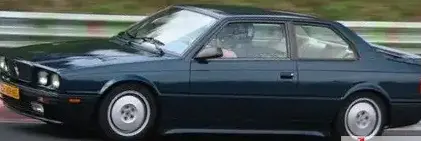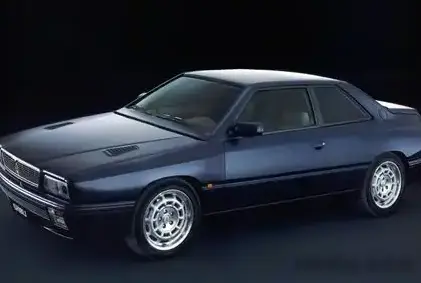
The Maserati Biturbo Coupe S 2.0, produced between 1981 and 1987, represents a pivotal moment in the Italian manufacturer’s history. It was Maserati’s first mass-produced car, intended to bring the brand’s luxury and performance within reach of a wider audience. The “S” designation denoted a higher performance variant within the Biturbo Coupe range, and the 2.0-liter engine offered a significant step up in power compared to the base models. This model played a crucial role in revitalizing Maserati, though it also presented new challenges in terms of build quality and reliability, issues that would become associated with the early Biturbo years. The Biturbo Coupe S 2.0 was built on a shortened version of the Maserati Khamsin chassis, marking a departure from the coachbuilt traditions of the past.
Technical Specifications
| Brand | Maserati |
| Model | Biturbo |
| Generation | Biturbo Coupe |
| Type (Engine) | S 2.0 (205 Hp) |
| Start of Production | 1981 |
| End of Production | 1987 |
| Powertrain Architecture | Internal Combustion Engine |
| Body Type | Coupe |
| Fuel Type | Petrol (Gasoline) |
| Power | 205 Hp |
| Engine Model/Code | AM331 |
| Engine Aspiration | Naturally Aspirated |
Powertrain & Engine Architecture
The heart of the Biturbo Coupe S 2.0 is the AM331 engine, a 1996cc, 90-degree V6. This engine was a significant achievement for Maserati, being relatively compact and lightweight for a V6. It featured a single overhead camshaft per cylinder bank, operating two valves per cylinder. The engine utilized Bosch mechanical fuel injection, a system chosen for its reliability and relatively simple maintenance compared to early electronic fuel injection systems. While not as sophisticated as later systems, it provided adequate fuel delivery for the engine’s output. The V6 configuration contributed to a smooth power delivery and a distinctive exhaust note. The engine block was constructed from cast iron, while the cylinder heads were made of aluminum alloy. The AM331 engine produced 205 horsepower at 6250 rpm and 188 lb-ft of torque at 4500 rpm. The transmission was a five-speed manual, although a three-speed automatic was also available, though less common in the “S” variant. The automatic transmission, a ZF unit, was known for its smoothness but also for its tendency to reduce the car’s performance potential.
Driving Characteristics
The Biturbo Coupe S 2.0 offered a distinctly Italian driving experience. The 205 hp engine provided brisk acceleration, capable of propelling the car from 0 to 60 mph in around 6.5 seconds. The five-speed manual transmission allowed drivers to fully exploit the engine’s powerband, while the automatic, though comfortable, dulled the responsiveness. Handling was generally good, thanks to the well-balanced chassis and independent suspension. However, the car’s weight (around 3,200 lbs) could be felt in corners, and the steering, while precise, lacked feedback. The suspension setup aimed for a balance between comfort and handling, providing a reasonably compliant ride on most road surfaces. The brakes were initially disc brakes all around, but later models sometimes featured rear drum brakes to reduce costs. The overall driving experience was characterized by a blend of performance, comfort, and a touch of Italian flair.
Equipment & Trim Levels
The Biturbo Coupe S 2.0 was relatively well-equipped for its time, though not lavishly so. Standard features included power windows, central locking, and air conditioning. The interior was typically upholstered in leather, although the quality of the leather varied. The dashboard featured a traditional layout with analog gauges, including a speedometer, tachometer, and oil pressure gauge. Optional extras included a sunroof, upgraded audio system, and metallic paint. The “S” designation also included some minor cosmetic enhancements, such as a rear spoiler and upgraded wheels. The interior trim was generally functional and stylish, but the build quality was often criticized for being inconsistent. The car aimed for a sporty yet luxurious ambiance, but fell short of the standards set by its German rivals.
Chassis & Braking
The Biturbo Coupe S 2.0 utilized a steel unibody construction. The suspension consisted of independent double wishbones at the front and a De Dion axle with a Watts linkage at the rear. This setup provided a good balance of handling and ride comfort. The braking system initially featured ventilated disc brakes on all four wheels, providing adequate stopping power. However, later models sometimes featured rear drum brakes to reduce production costs, which compromised braking performance. The steering was a rack-and-pinion system, offering precise control but lacking in road feel. The car’s wheelbase was relatively short, contributing to its nimble handling characteristics. Stabilizer bars were fitted to both the front and rear axles to reduce body roll during cornering.
Market Reception & Comparison
The Biturbo Coupe S 2.0 received mixed reviews upon its release. Critics praised its performance, styling, and relatively affordable price compared to other luxury coupes. However, the car was also criticized for its inconsistent build quality, electrical gremlins, and questionable reliability. Compared to its rivals, such as the BMW 6 Series and Mercedes-Benz coupes, the Biturbo offered a more sporting driving experience but lacked the refinement and long-term reliability of the German cars. The 1.8-liter Biturbo models were considered more reliable, but lacked the performance of the 2.0-liter “S” variant. The 2.0-liter engine offered a significant performance boost, but also increased the risk of mechanical issues. Fuel economy was reasonable for a sports coupe of its era, averaging around 18 mpg in city driving and 24 mpg on the highway.
Legacy
The Maserati Biturbo Coupe S 2.0, despite its flaws, remains a significant car in Maserati’s history. It was the first step in the company’s attempt to become a volume manufacturer, and it paved the way for future models. While the early Biturbos are known for their reliability issues, they have gained a following among enthusiasts who appreciate their unique character and Italian flair. Today, well-maintained examples of the Biturbo Coupe S 2.0 are becoming increasingly collectible. The AM331 engine, while not without its quirks, is considered a robust and tunable powerplant. The car’s legacy is one of ambition, innovation, and a reminder of Maserati’s rich heritage. Finding parts can be challenging, and maintenance requires a specialist with experience working on classic Italian cars, but the reward is owning a piece of automotive history.