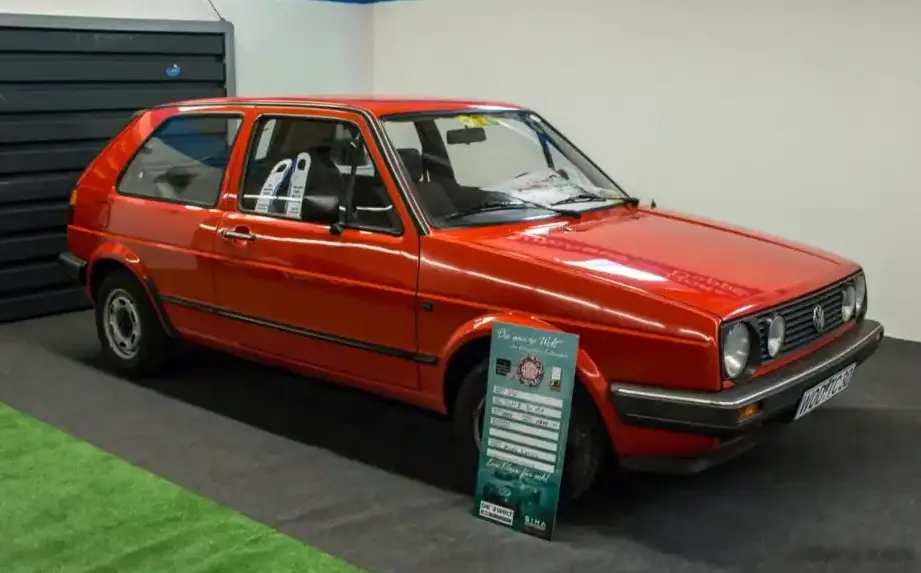
The Volkswagen Golf MkII 1.8 (84 hp) represents an important entry point into the second generation Golf lineup, produced between 1986 and 1987. This 3-door hatchback, powered by a naturally aspirated 1.8-liter gasoline engine, served as a core model within the Golf II range (internally designated 19E/1G), offering a balance of affordability, practicality, and Volkswagen’s renowned build quality. Positioned as the base engine option in many markets, it catered to buyers prioritizing fuel economy and everyday usability over outright performance. The Golf MkII itself was a significant evolution of the original Golf, boasting improved aerodynamics, a more spacious interior, and a wider range of available features.
Technical Specifications
| Brand | Volkswagen |
| Model | Golf |
| Generation | Golf II (3-door) |
| Engine Type | 1.8 (84 Hp) |
| Production Years | 1986 – 1987 |
| Powertrain Architecture | Internal Combustion Engine |
| Body Type | Hatchback |
| Fuel Type | Petrol (Gasoline) |
| Power Output | 84 Hp |
| Engine Model/Code | GU, EX, RP |
| Engine Aspiration | Naturally Aspirated |
| Engine Oil Capacity | 3 l (3.17 US qt | 2.64 UK qt) |
| Coolant Capacity | 6.3 l (6.66 US qt | 5.54 UK qt) |
| Drag Coefficient (Cd) | 0.34 |
Powertrain & Engine Architecture
The Golf MkII 1.8 utilized several engine codes during its production run, most commonly GU, EX, and RP. These engines were all variations of Volkswagen’s 1.8-liter inline-four cylinder gasoline engine. The engine featured a cast iron block and an aluminum cylinder head, a common configuration for the era. Fuel delivery was managed by Bosch mechanical fuel injection – a system that offered a step up from carburetors in terms of precision and efficiency, but predated the widespread adoption of electronic fuel injection. The engine employed a single overhead camshaft (SOHC) valvetrain, operating two valves per cylinder. This configuration prioritized simplicity and reliability over high-revving performance.
The 1.8-liter engine produced 84 horsepower at approximately 5,200 rpm and 109 lb-ft of torque at 3,200 rpm. The automatic transmission offered with this variant was typically a three-speed unit, designed for smooth, comfortable operation rather than sporty acceleration. While the exact transmission code varied depending on the market, it was generally a robust and reliable unit, though not known for its efficiency compared to later designs. The automatic transmission was a key differentiator, as the 1.8L engine was also available with a five-speed manual transmission, which offered slightly improved performance and fuel economy.
Driving Characteristics
The Golf MkII 1.8 with the three-speed automatic transmission delivered a comfortable, if not particularly exhilarating, driving experience. Acceleration from 0 to 60 mph was typically in the 12-14 second range, making it competitive with other similarly sized and powered vehicles of the time. The automatic transmission’s gear ratios were optimized for fuel economy and ease of driving in urban environments. However, this came at the expense of responsiveness; overtaking maneuvers required careful planning, and the engine could feel strained when climbing hills or carrying a full load. Compared to the manual transmission version, the automatic noticeably reduced the car’s agility and responsiveness. Higher-spec Golfs, such as those equipped with the 1.8L 16-valve engine or the VR6, offered significantly more power and a more engaging driving experience, but at a higher price point.
Equipment & Trim Levels
The 1.8-liter automatic Golf MkII typically represented the entry-level trim. Standard equipment generally included cloth upholstery, basic instrumentation (speedometer, fuel gauge, temperature gauge), and a simple two-speaker audio system. Power steering was often an optional extra, as was air conditioning. The interior plastics were durable but utilitarian, reflecting the car’s focus on affordability. Exterior features typically included steel wheels with hubcaps, black plastic trim, and relatively basic lighting. Optional extras included upgraded upholstery, a sunroof, and alloy wheels. The trim level was often simply designated as “base” or “L” depending on the market.
Chassis & Braking
The Golf MkII featured an independent front suspension with MacPherson struts and a torsion beam rear suspension. This setup provided a good balance of ride comfort and handling. The 1.8-liter models typically used smaller diameter tires and steel wheels, which contributed to a softer ride but reduced grip compared to higher-spec models with larger wheels and tires. Braking systems varied depending on the market and year of production. Earlier models often featured drum brakes on the rear wheels, while later models and some higher-spec versions were equipped with disc brakes all around. Front brakes were typically ventilated discs. Anti-lock braking system (ABS) was not standard on the 1.8-liter models and was usually only available as an optional extra.
Market Reception & Comparison
The Golf MkII 1.8 automatic was generally well-received as a practical and affordable family car. Critics praised its build quality, comfortable ride, and spacious interior. However, the engine’s modest power output and the automatic transmission’s lack of responsiveness were often cited as drawbacks. Compared to other cars in its class, such as the Ford Escort or Opel Kadett, the Golf offered a more refined driving experience and a higher perceived quality. Fuel economy was a strong point, averaging around 30-35 mpg in mixed driving conditions. The 1.8-liter engine proved to be relatively reliable, although regular maintenance was essential to prevent oil leaks and ensure optimal performance. Compared to the more powerful Golf variants, the 1.8 automatic was significantly cheaper to purchase and insure, making it an attractive option for budget-conscious buyers.
Legacy
The Golf MkII 1.8 automatic has become a popular choice among classic car enthusiasts, particularly those seeking an affordable and easy-to-maintain vintage vehicle. The engine’s simplicity and robustness contribute to its long-term reliability, and parts availability remains relatively good. While not a performance icon, the 1.8 automatic represents a significant piece of automotive history, embodying the spirit of the 1980s European hatchback. Today, well-maintained examples command reasonable prices in the used car market, making them an accessible entry point into the world of classic Volkswagens. The three-speed automatic, while not the most modern transmission, is generally considered durable and relatively straightforward to repair, adding to the car’s appeal for those comfortable with basic mechanical work.