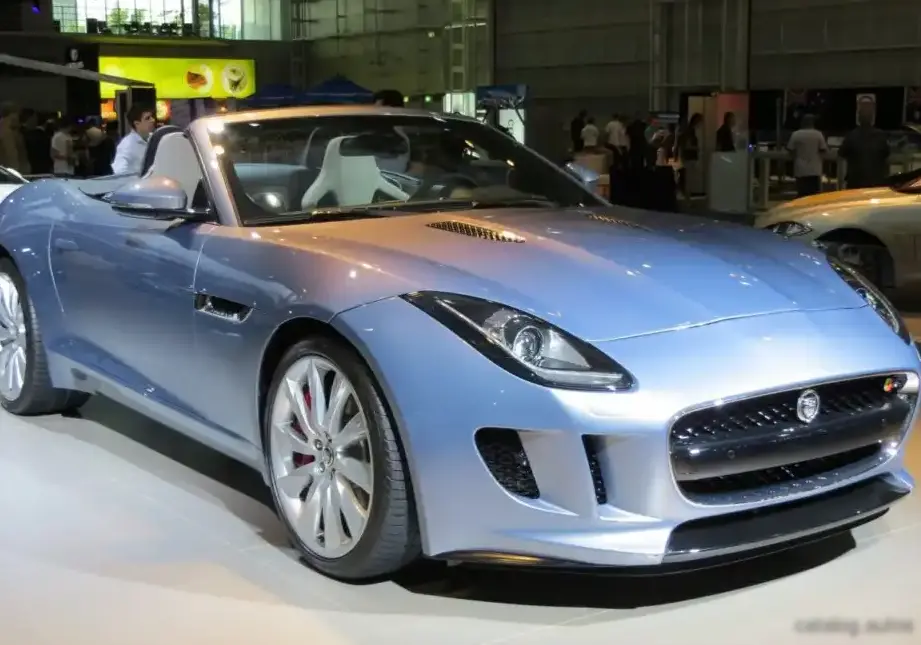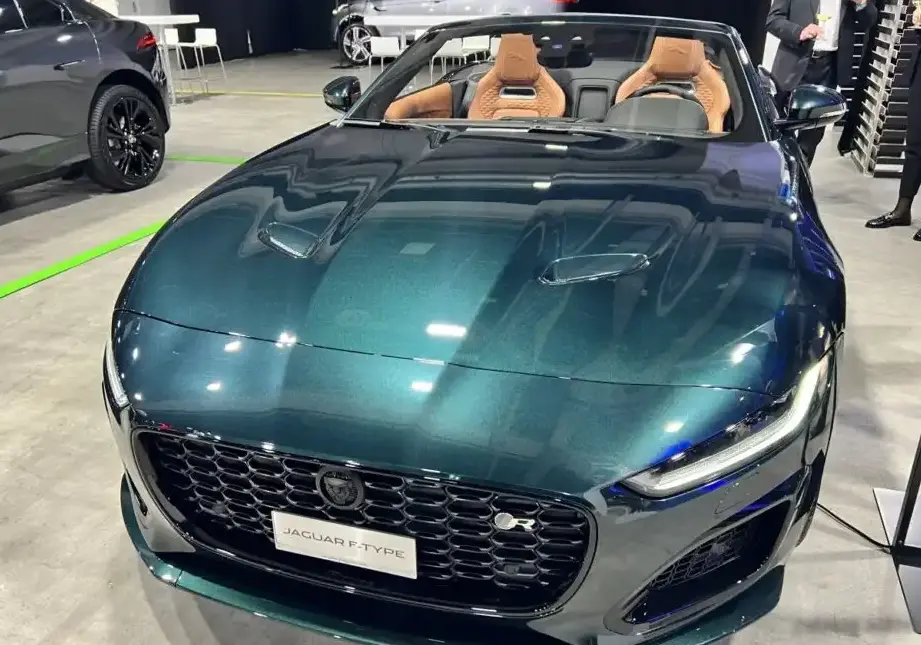
The Jaguar F-Type Convertible (facelift 2020) 2.0 (300 Hp) Quickshift represents a significant entry point into the F-Type range, offering a blend of performance and relative affordability within the luxury sports car segment. Introduced in December 2019 as part of a broader refresh of the F-Type line, this variant aimed to broaden the car’s appeal by providing a more accessible powertrain option. It slots into the lineup below the more potent supercharged V6 and V8 models, targeting buyers who prioritize style and a sporting driving experience over outright speed. The 2.0L model is built on Jaguar’s aluminum-intensive architecture, and is a two-door, two-seat convertible, embodying the brand’s commitment to lightweight construction and dynamic handling.
Technical Specifications
| Brand | Jaguar |
| Model | F-type |
| Generation | F-type Convertible (facelift 2020) |
| Type (Engine) | 2.0 (300 Hp) Quickshift |
| Start of production | December, 2019 |
| Powertrain Architecture | Internal Combustion engine |
| Body type | Cabriolet |
| Seats | 2 |
| Doors | 2 |
| Fuel consumption (combined) | 8.1 l/100 km (29 US mpg, 34.9 UK mpg, 12.3 km/l) |
| CO2 emissions | 184 g/km |
| Fuel Type | Petrol (Gasoline) |
| Acceleration 0 – 100 km/h | 5.7 sec |
| Acceleration 0 – 62 mph | 5.7 sec |
| Acceleration 0 – 60 mph | 5.4 sec |
| Maximum speed | 250 km/h (155.34 mph) |
| Weight-to-power ratio | 5.1 kg/Hp, 194.8 Hp/tonne |
| Weight-to-torque ratio | 3.9 kg/Nm, 259.7 Nm/tonne |
| Power | 300 Hp @ 5500 rpm |
| Power per litre | 150.2 Hp/l |
| Torque | 400 Nm @ 1500-4500 rpm (295.02 lb.-ft. @ 1500-4500 rpm) |
| Engine Model/Code | Ingenium / PT204 |
| Engine displacement | 1997 cm3 (121.86 cu. in.) |
| Number of cylinders | 4 |
| Engine configuration | Inline |
| Cylinder Bore | 83 mm (3.27 in.) |
| Piston Stroke | 92.3 mm (3.63 in.) |
| Compression ratio | 9.5:1 |
| Number of valves per cylinder | 4 |
| Fuel injection system | Direct injection |
| Engine aspiration | Turbocharger, Intercooler |
| Valvetrain | DOHC |
| Engine oil capacity | 6.5 l (6.87 US qt | 5.72 UK qt) |
| Kerb Weight | 1540 kg (3395.12 lbs.) |
| Trunk (boot) space – minimum | 233 l (8.23 cu. ft.) |
| Fuel tank capacity | 63 l (16.64 US gal | 13.86 UK gal) |
| Length | 4470 mm (175.98 in.) |
| Width | 1923 mm (75.71 in.) |
| Width including mirrors | 2042 mm (80.39 in.) |
| Height | 1307 mm (51.46 in.) |
| Wheelbase | 2622 mm (103.23 in.) |
| Front track | 1596 mm (62.83 in.) |
| Rear (Back) track | 1647 mm (64.84 in.) |
| Drivetrain Architecture | Rear wheel drive |
| Number of gears and type of gearbox | 8 gears, automatic transmission Quickshift |
| Front suspension | Double wishbone |
| Rear suspension | Double wishbone |
| Front brakes | Ventilated discs, 355 mm |
| Rear brakes | Ventilated discs, 325 mm |
| Assisting systems | ABS (Anti-lock braking system) |
| Steering type | Steering rack and pinion |
| Power steering | Electric Steering |
Powertrain & Engine Architecture
At the heart of the F-Type 2.0 Convertible is Jaguar Land Rover’s Ingenium engine family, specifically the PT204 2.0-liter turbocharged inline-four. This engine, a cornerstone of JLR’s modern powertrain strategy, utilizes direct injection and a single twin-scroll turbocharger to deliver 300 horsepower at 5500 rpm and 400 Nm (295 lb-ft) of torque between 1500 and 4500 rpm. The engine features a relatively high 9.5:1 compression ratio and a double overhead camshaft (DOHC) valvetrain with four valves per cylinder. The ‘Quickshift’ transmission is an 8-speed automatic gearbox developed in-house by Jaguar. It’s designed for rapid, smooth shifts and features steering wheel-mounted paddle shifters for manual control. This transmission is crucial to the car’s performance, optimizing gear selection for both acceleration and fuel efficiency.
Driving Characteristics
The 2.0L F-Type Convertible offers a noticeably different driving experience compared to its V6 and V8 siblings. While lacking the raw power and thunderous exhaust note of the larger engines, it provides a surprisingly engaging and balanced drive. The turbocharger provides strong low-end torque, making it responsive in everyday driving situations. The 0-60 mph sprint takes approximately 5.4 seconds, which is respectable for a sports car, but falls short of the quicker times achieved by the higher-spec models. The Quickshift transmission contributes to a smooth and efficient power delivery, although some drivers may find it less engaging than a traditional manual gearbox. The car’s relatively lighter weight (1540 kg) compared to the V6 and V8 models helps to improve handling and agility.
Equipment & Trim Levels
The 2.0L F-Type Convertible typically came well-equipped as standard, reflecting its position as a premium sports car. Standard features generally included leather upholstery, a touchscreen infotainment system with navigation, climate control, and a suite of driver-assistance technologies such as lane departure warning and autonomous emergency braking. Optional extras included a panoramic sunroof, upgraded sound system, and various cosmetic enhancements. Interior trim options allowed for some personalization, with a range of leather colors and finishes available. The dashboard layout is driver-focused, with a sporty three-spoke steering wheel and clear, easy-to-read instrumentation.
Chassis & Braking
The F-Type Convertible utilizes an aluminum-intensive chassis, contributing to its relatively low weight. The suspension system consists of double wishbones at both the front and rear, providing a good balance between ride comfort and handling precision. The 2.0L model typically features ventilated disc brakes on all four wheels, with 355mm discs at the front and 325mm discs at the rear. Anti-lock braking system (ABS) is standard. While the suspension setup is similar across the F-Type range, the 2.0L model may have slightly softer spring rates and stabilizer bars to prioritize ride comfort over ultimate track performance.
Market Reception & Comparison
The introduction of the 2.0L F-Type Convertible was generally well-received by automotive critics. It was praised for its stylish design, engaging driving experience, and relatively affordable price point. However, some reviewers noted that the four-cylinder engine lacked the character and excitement of the V6 and V8 options. Compared to the V6 models, the 2.0L offers better fuel economy (around 29 US mpg combined) but significantly less power. Against competitors like the Porsche 718 Boxster, the F-Type 2.0L offered a more luxurious interior and a more distinctive design, but the Porsche generally provided sharper handling and a more focused driving experience.
Legacy
The Jaguar F-Type 2.0 Convertible (facelift 2020) represents an important step in Jaguar’s efforts to broaden the appeal of the F-Type range. While the Ingenium engine has proven to be generally reliable, potential used car buyers should be aware of potential issues related to the turbocharger and fuel injection system. Regular maintenance, including oil changes and inspections, is crucial to ensure the long-term health of the powertrain. As of today, the F-Type 2.0L remains a desirable option in the used sports car market, offering a compelling combination of style, performance, and value. Its relative affordability makes it an accessible entry point into the world of Jaguar sports cars.