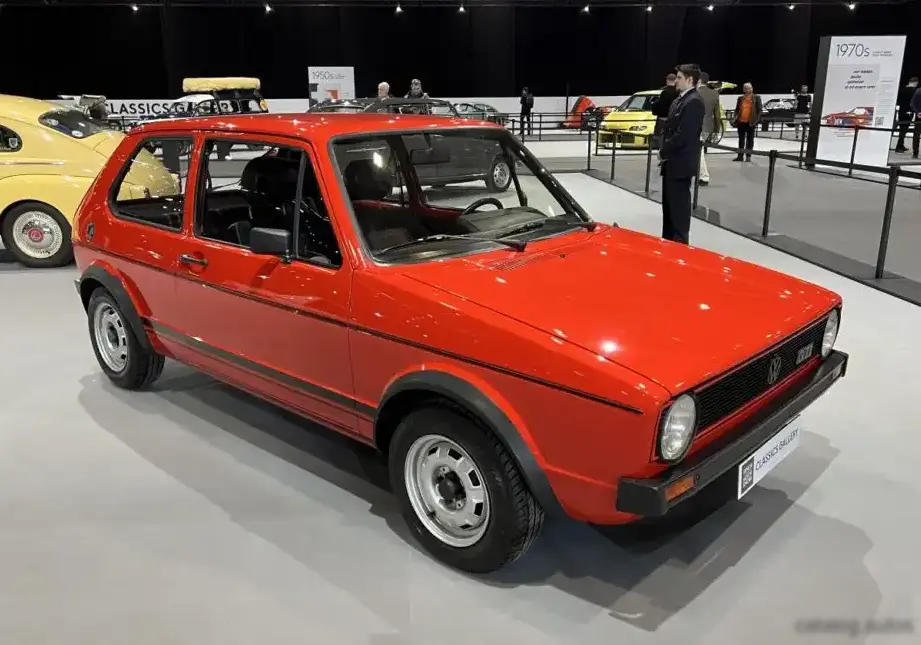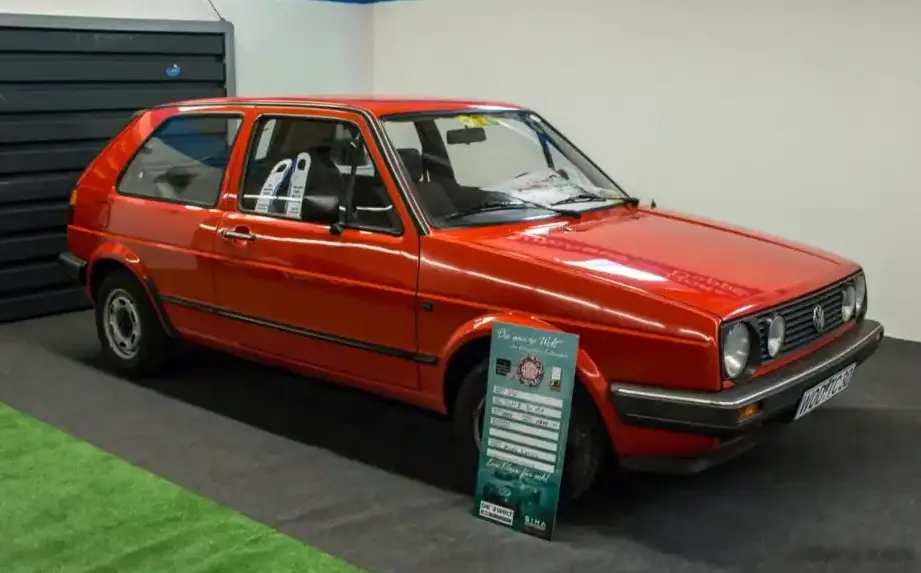
The Volkswagen Golf II 1.8 GTI 8V (often simply referred to as the Golf GTI Mk2) was a pivotal model in establishing the hot hatch segment. Produced from 1984 to 1987, this 3-door hatchback represented a significant evolution over the original Golf GTI, offering increased performance, refinement, and a more mature driving experience. It sat within the broader Golf Mk2 range (the 19X series internally), which was a hugely successful platform for Volkswagen, selling millions of units worldwide. This particular 1.8-liter, 8-valve GTI variant occupied a middle ground in the GTI lineup, offering a balance between affordability and performance, positioned below the more potent 16-valve versions.
Technical Specifications
| Brand | Volkswagen |
| Model | Golf |
| Generation | Golf II (3-door) |
| Type (Engine) | 1.8 GTI 8V (112 Hp) |
| Start of production | 1984 |
| End of production | 1987 |
| Powertrain Architecture | Internal Combustion engine |
| Body type | Hatchback |
| Seats | 5 |
| Doors | 3 |
| Fuel consumption (urban) | 10.9 l/100 km (21.6 US mpg) |
| Fuel consumption (extra urban) | 5.7 l/100 km (41.3 US mpg) |
| Fuel Type | Petrol (Gasoline) |
| Acceleration 0 – 100 km/h | 9.7 sec |
| Acceleration 0 – 62 mph | 9.7 sec |
| Acceleration 0 – 60 mph | 9.2 sec |
| Maximum speed | 191 km/h (118.68 mph) |
| Weight-to-power ratio | 8.2 kg/Hp |
| Weight-to-torque ratio | 5.9 kg/Nm |
| Power | 112 Hp @ 5500 rpm |
| Power per litre | 62.9 Hp/l |
| Torque | 155 Nm @ 3100 rpm (114.32 lb.-ft. @ 3100 rpm) |
| Engine layout | Front, Transverse |
| Engine Model/Code | EV |
| Engine displacement | 1781 cm3 (108.68 cu. in.) |
| Number of cylinders | 4 |
| Engine configuration | Inline |
| Cylinder Bore | 81 mm (3.19 in.) |
| Piston Stroke | 86.4 mm (3.4 in.) |
| Compression ratio | 10:1 |
| Number of valves per cylinder | 2 |
| Fuel injection system | Multi-port manifold injection |
| Engine aspiration | Naturally aspirated engine |
| Valvetrain | SOHC |
| Engine oil capacity | 3 l (3.17 US qt | 2.64 UK qt) |
| Coolant | 6.5 l (6.87 US qt | 5.72 UK qt) |
| Kerb Weight | 920 kg (2028.25 lbs.) |
| Max. weight | 1400 kg (3086.47 lbs.) |
| Max load | 480 kg (1058.22 lbs.) |
| Trunk (boot) space – minimum | 345 l (12.18 cu. ft.) |
| Trunk (boot) space – maximum | 1145 l (40.44 cu. ft.) |
| Fuel tank capacity | 55 l (14.53 US gal | 12.1 UK gal) |
| Permitted trailer load with brakes (12%) | 1200 kg (2645.55 lbs.) |
| Permitted trailer load without brakes | 490 kg (1080.27 lbs.) |
| Length | 3985 mm (156.89 in.) |
| Width | 1680 mm (66.14 in.) |
| Height | 1415 mm (55.71 in.) |
| Wheelbase | 2475 mm (97.44 in.) |
| Front track | 1427 mm (56.18 in.) |
| Rear (Back) track | 1422 mm (55.98 in.) |
| Front overhang | 810 mm (31.89 in.) |
| Rear overhang | 700 mm (27.56 in.) |
| Ride height (ground clearance) | 120 mm (4.72 in.) |
| Drag coefficient (Cd) | 0.34 |
| Minimum turning circle (turning diameter) | 10.5 m (34.45 ft.) |
| Drivetrain Architecture | The Internal combustion engine (ICE) drives the front wheels of the vehicle. |
| Drive wheel | Front wheel drive |
| Number of gears and type of gearbox | 5 gears, manual transmission |
| Front suspension | Independent type McPherson, Transverse stabilizer |
| Rear suspension | Transverse stabilizer, Elastic beam |
| Front brakes | Ventilated discs |
| Rear brakes | Disc |
| Steering type | Steering rack and pinion |
| Tires size | 175/70 R13 |
| Wheel rims size | 5.5J x 13 |
Powertrain & Engine Architecture
The heart of the Golf GTI Mk2 1.8 8V was the Volkswagen EV engine. This 1781cc inline-four cylinder engine featured a single overhead camshaft (SOHC) operating two valves per cylinder. The ‘EV’ code designated this specific iteration, and it utilized Bosch mechanical fuel injection – a system known for its reliability, though less sophisticated than later electronic systems. The engine produced 112 horsepower at 5500 rpm and 155 Nm (114 lb-ft) of torque at 3100 rpm. The engine’s transverse mounting and front-wheel drive configuration were standard for the Golf Mk2. The transmission was typically a five-speed manual, though a three-speed automatic was also offered, significantly impacting performance. The automatic transmission was a common choice for buyers prioritizing comfort and ease of use over outright speed.
Driving Characteristics
The 1.8 8V GTI offered a noticeable step up in performance compared to the base Golf models. Acceleration from 0 to 60 mph took around 9.2 seconds, and it could reach a top speed of approximately 118 mph. While not as quick as the later 16-valve GTI, the 8-valve version provided a more accessible powerband, making it enjoyable for everyday driving. The automatic transmission, while convenient, did diminish acceleration times and responsiveness. Gear ratios were optimized for a balance of fuel economy and usable power, but the automatic lacked the direct engagement and control offered by the manual gearbox. The suspension, featuring McPherson struts at the front and a torsion beam rear axle, provided a comfortable yet reasonably controlled ride.
Equipment & Trim Levels
The Golf GTI Mk2 1.8 8V came reasonably well-equipped for its time. Standard features typically included a sports steering wheel, upgraded seats with patterned fabric, a rev counter, and a more comprehensive instrument cluster than the base Golf. Optional extras included a sunroof, central locking, electric windows, and upgraded audio systems. The interior trim was generally functional and durable, reflecting the car’s focus on practicality. The GTI badge was prominently displayed on the grille, rear, and interior, signifying its performance-oriented nature.
Chassis & Braking
The Golf GTI Mk2 featured a robust chassis designed to handle the increased power output. The front suspension utilized McPherson struts with a transverse stabilizer bar, while the rear employed a torsion beam axle. Braking was handled by ventilated discs at the front and discs at the rear, providing adequate stopping power for most driving situations. The steering was a rack-and-pinion system, offering precise and responsive handling. Tire size was typically 175/70 R13, providing a good balance of grip and ride comfort.
Market Reception & Comparison
The Golf GTI Mk2 1.8 8V was generally well-received by automotive critics. It was praised for its blend of performance, practicality, and affordability. Compared to the more expensive 16-valve GTI, the 8-valve version offered a more accessible entry point into the GTI experience. The automatic transmission variant was often criticized for its impact on performance, but it appealed to buyers who prioritized convenience. Fuel economy was reasonable for a performance car of the era, averaging around 22-25 mpg in mixed driving. Reliability was generally good, although regular maintenance was essential to ensure longevity.
Legacy
The Golf GTI Mk2 1.8 8V remains a highly sought-after classic car today. Its combination of iconic styling, engaging driving dynamics, and relative affordability has made it a favorite among enthusiasts. The EV engine, while not the most powerful, is known for its durability and relatively simple maintenance requirements. Well-maintained examples command strong prices in the used car market. The GTI Mk2 cemented the Golf’s reputation as a benchmark for hot hatches and continues to influence automotive design and engineering to this day. The automatic transmission versions, while less desirable to purists, offer a unique and often overlooked entry point into the world of classic GTI ownership.