
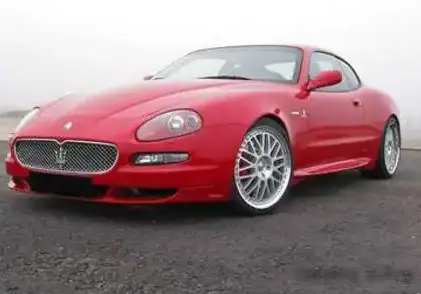
The Maserati Coupe 4200 GT 4.2i, produced between 2002 and 2007, represented a significant return to form for the Italian manufacturer. Positioned as a grand tourer, it aimed to blend Italian style and performance with modern engineering. This variant, equipped with the 4.2-liter V8 engine producing 390 horsepower, was a core model within the Coupe range, sitting at the top of the performance hierarchy. It was a direct successor to the earlier 3200 GT, addressing some of its predecessor’s shortcomings while building upon its strengths. The 4200 GT was built on a shortened version of the Maserati 3200 GT platform, and shared many components with the contemporary Ferrari 360, a result of Ferrari’s ownership of Maserati at the time.
Technical Specifications
| Brand | Maserati |
| Model | Coupe |
| Generation | Coupe |
| Type (Engine) | 4200 GT 4.2i V8 32V (390 Hp) |
| Start of production | 2002 |
| End of production | 2007 |
| Powertrain Architecture | Internal Combustion engine |
| Body type | Coupe |
| Seats | 4 |
| Doors | 2 |
| Fuel consumption (economy) – urban | 25 l/100 km (9.4 US mpg, 11.3 UK mpg, 4 km/l) |
| Fuel consumption (economy) – extra urban | 11 l/100 km (21.4 US mpg, 25.7 UK mpg, 9.1 km/l) |
| Fuel consumption (economy) – combined | 15.9 l/100 km (14.8 US mpg, 17.8 UK mpg, 6.3 km/l) |
| Fuel Type | Petrol (Gasoline) |
| Acceleration 0 – 100 km/h | 4.9 sec |
| Acceleration 0 – 62 mph | 4.9 sec |
| Acceleration 0 – 60 mph | 4.7 sec |
| Maximum speed | 285 km/h (177.09 mph) |
| Weight-to-power ratio | 4.3 kg/Hp, 233.5 Hp/tonne |
| Weight-to-torque ratio | 3.7 kg/Nm, 270.1 Nm/tonne |
| Power | 390 Hp @ 7000 rpm |
| Power per litre | 91.9 Hp/l |
| Torque | 451 Nm @ 4500 rpm (332.64 lb.-ft. @ 4500 rpm) |
| Engine layout | Front, Longitudinal |
| Engine Model/Code | M138 |
| Engine displacement | 4244 cm3 (258.98 cu. in.) |
| Number of cylinders | 8 |
| Engine configuration | V-engine |
| Cylinder Bore | 92 mm (3.62 in.) |
| Piston Stroke | 80 mm (3.15 in.) |
| Compression ratio | 11.1:1 |
| Number of valves per cylinder | 4 |
| Fuel injection system | Multi-port manifold injection |
| Engine aspiration | Naturally aspirated engine |
| Engine oil capacity | 7.8 l (8.24 US qt | 6.86 UK qt) |
| Coolant | 11.5 l (12.15 US qt | 10.12 UK qt) |
| Kerb Weight | 1670 kg (3681.72 lbs.) |
| Max. weight | 2060 kg (4541.52 lbs.) |
| Max load | 390 kg (859.8 lbs.) |
| Trunk (boot) space – minimum | 315 l (11.12 cu. ft.) |
| Fuel tank capacity | 88 l (23.25 US gal | 19.36 UK gal) |
| Length | 4523 mm (178.07 in.) |
| Width | 1822 mm (71.73 in.) |
| Height | 1305 mm (51.38 in.) |
| Wheelbase | 2660 mm (104.72 in.) |
| Front track | 1525 mm (60.04 in.) |
| Rear (Back) track | 1538 mm (60.55 in.) |
| Drivetrain Architecture | The Internal combustion engine (ICE) drives the rear wheels of the vehicle. |
| Drive wheel | Rear wheel drive |
| Number of gears and type of gearbox | 6 gears, manual transmission |
| Front suspension | Coil spring |
| Rear suspension | Coil spring |
| Front brakes | Ventilated discs |
| Rear brakes | Ventilated discs |
| Assisting systems | ABS (Anti-lock braking system) |
| Steering type | Steering rack and pinion |
| Power steering | Hydraulic Steering |
| Tires size | 235/40 R18; 265/35 R18 |
Powertrain & Engine Architecture
The heart of the 4200 GT is the M138 engine, a 4.2-liter naturally aspirated V8. This engine, developed in collaboration with Ferrari, featured a 90-degree V-angle, four valves per cylinder, and a double overhead camshaft design. The engine utilized a multi-port fuel injection system, delivering fuel directly into the intake ports. The 4.2-liter displacement provided a substantial increase in power and torque compared to the previous 3200 GT’s V8. The engine’s architecture was designed for smooth power delivery and a characteristic Italian V8 sound. The standard transmission for this model was a 6-speed manual, although a DuoSelect automated manual transmission was also available. The DuoSelect, while offering quicker shifts, was often criticized for its reliability and somewhat jerky operation.
Driving Characteristics
The 4200 GT 4.2i with the manual transmission offered a compelling grand touring experience. Acceleration from 0-60 mph was achieved in around 4.7 seconds, and the car could reach a top speed of 177 mph. The engine delivered strong torque throughout the rev range, making it easy to drive both on winding roads and during highway cruising. The 6-speed manual gearbox provided precise shifts, enhancing driver engagement. Compared to the DuoSelect version, the manual offered a more direct and predictable driving experience. While not as overtly sporty as some of its rivals, the 4200 GT prioritized comfort and refinement, making it an excellent choice for long-distance travel. The suspension, while firm enough to provide good body control, was tuned to absorb bumps and imperfections in the road surface.
Equipment & Trim Levels
The 4200 GT came well-equipped as standard. Interior features included leather upholstery, power-adjustable seats, automatic climate control, and a premium audio system. Exterior features included alloy wheels, xenon headlights, and a rear spoiler. Optional extras included a navigation system, upgraded leather trim, and a sunroof. The interior design was elegant and understated, reflecting Maserati’s commitment to luxury. The dashboard layout was driver-focused, with all essential controls within easy reach. The overall ambiance was one of sophisticated comfort.
Chassis & Braking
The 4200 GT utilized a steel monocoque chassis, providing a solid and rigid platform. The suspension consisted of independent coil springs and dampers all around. The braking system featured ventilated discs on all four wheels, providing ample stopping power. ABS (Anti-lock Braking System) was standard. The car’s weight distribution was carefully balanced to enhance handling and stability. The steering was a hydraulic rack and pinion system, offering precise and responsive control.
Market Reception & Comparison
The Maserati 4200 GT was generally well-received by automotive critics. It was praised for its stylish design, powerful engine, and comfortable ride. However, some critics noted the relatively high price and occasional reliability issues with the DuoSelect transmission. Compared to rivals such as the Porsche 911 and BMW 6 Series, the 4200 GT offered a more luxurious and refined experience, but lacked the same level of outright performance. Fuel economy, at around 14.8 US mpg combined, was typical for a V8-powered grand tourer of this era. The manual transmission version was generally preferred by enthusiasts due to its greater reliability and more engaging driving experience.
Legacy
The Maserati 4200 GT represented a turning point for the brand, signaling a renewed focus on quality and performance. While not without its flaws, the car remains a desirable classic today. The M138 V8 engine proved to be relatively robust, although regular maintenance is essential. The 4200 GT’s elegant design and grand touring capabilities continue to appeal to enthusiasts. On the used car market, well-maintained examples command a premium, particularly those equipped with the 6-speed manual transmission. The 4200 GT laid the foundation for future Maserati models, helping to restore the brand’s reputation for Italian style and performance.
