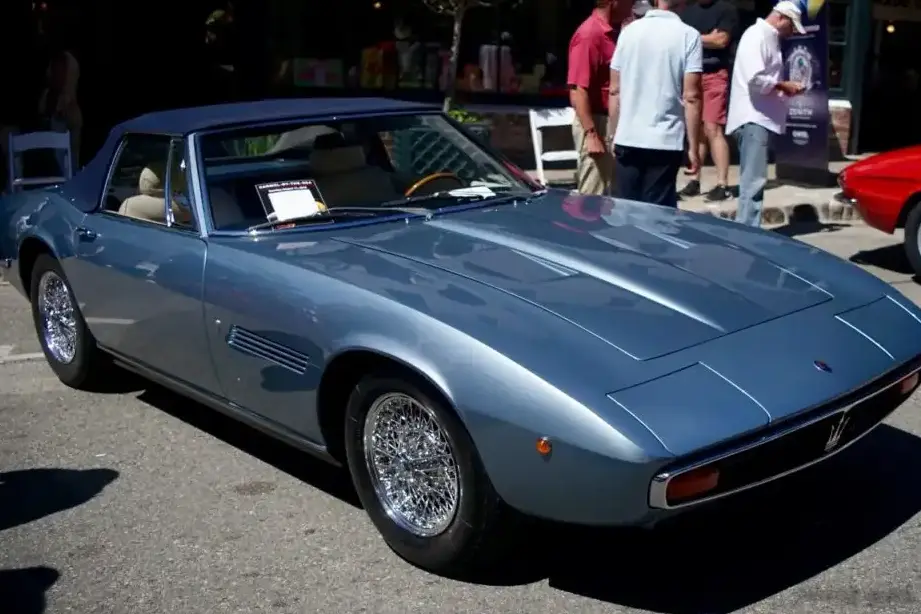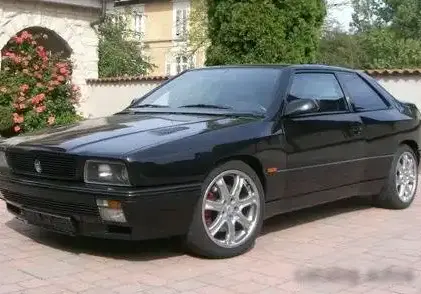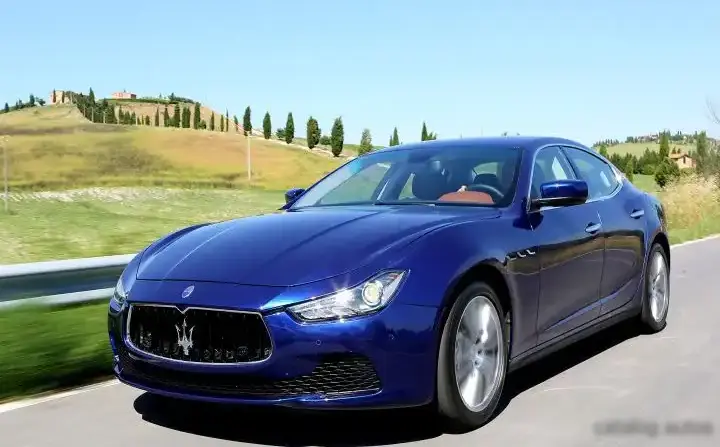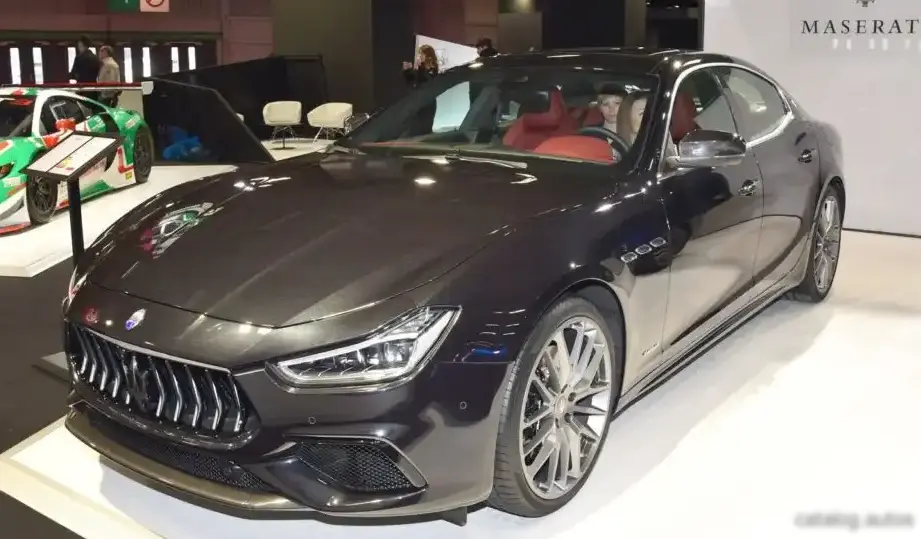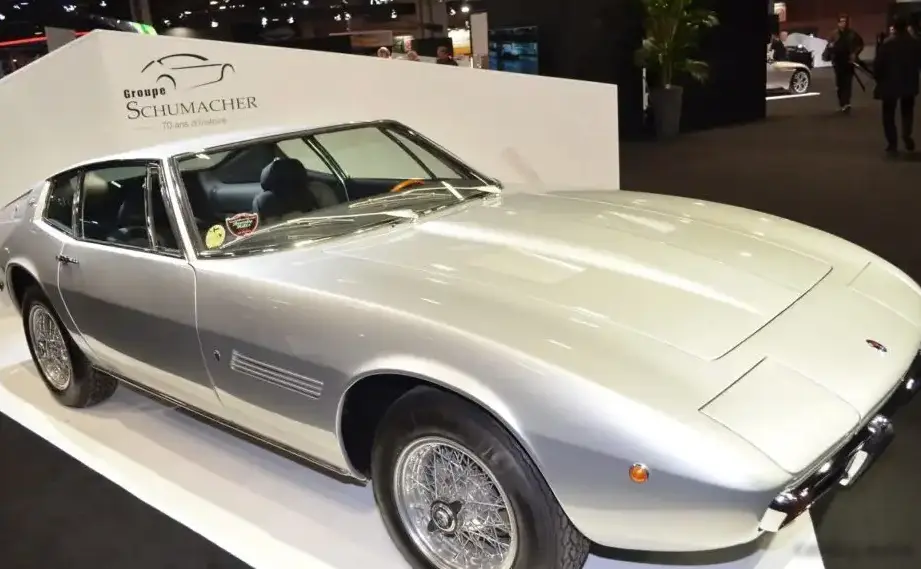
The Maserati Ghibli I (AM115), powered by a 4.7-liter V8 engine producing 310 horsepower, represents a pivotal moment in the Italian manufacturer’s history. Produced between 1967 and 1973, this first-generation Ghibli aimed to blend high performance with luxurious grand touring capabilities. It was designed to compete with established GT cars from Ferrari and Porsche, offering a distinctive Italian flair and a powerful V8 soundtrack. The AM115 chassis underpinned a coupe and fastback body style, both penned by the renowned design house of Ghia under the direction of Giorgetto Giugiaro. This model established the Ghibli nameplate as a symbol of Maserati’s commitment to performance and elegance.
Technical Specifications
| Brand | Maserati |
| Model | Ghibli |
| Generation | Ghibli I (AM115) |
| Type (Engine) | 4.7 V8 (310 Hp) |
| Start of production | 1967 |
| End of production | 1973 |
| Powertrain Architecture | Internal Combustion engine |
| Body type | Coupe, Fastback |
| Seats | 4 |
| Doors | 2 |
| Fuel Type | Petrol (Gasoline) |
| Maximum speed | 252 km/h (156.59 mph) |
| Weight-to-power ratio | 5 kg/Hp, 200 Hp/tonne |
| Weight-to-torque ratio | 3.4 kg/Nm, 297.4 Nm/tonne |
| Power | 310 Hp @ 6000 rpm |
| Power per litre | 65.8 Hp/l |
| Torque | 461 Nm @ 3500 rpm (340.02 lb.-ft. @ 3500 rpm) |
| Engine layout | Front, Longitudinal |
| Engine displacement | 4709 cm3 (287.36 cu. in.) |
| Number of cylinders | 8 |
| Engine configuration | V-engine |
| Cylinder Bore | 93.9 mm (3.7 in.) |
| Piston Stroke | 85 mm (3.35 in.) |
| Compression ratio | 8.75:1 |
| Number of valves per cylinder | 2 |
| Fuel injection system | Carburettor |
| Engine aspiration | Naturally aspirated engine |
| Valvetrain | DOHC |
| Engine oil capacity | 13 l (13.74 US qt | 11.44 UK qt) |
| Coolant | 14 l (14.79 US qt | 12.32 UK qt) |
| Kerb Weight | 1550 kg (3417.17 lbs.) |
| Max. weight | 2500 kg (5511.56 lbs.) |
| Max load | 950 kg (2094.39 lbs.) |
| Fuel tank capacity | 100 l (26.42 US gal | 22 UK gal) |
| Length | 4700 mm (185.04 in.) |
| Width | 1790 mm (70.47 in.) |
| Height | 1160 mm (45.67 in.) |
| Wheelbase | 2550 mm (100.39 in.) |
| Front track | 1440 mm (56.69 in.) |
| Rear (Back) track | 1420 mm (55.91 in.) |
| Front overhang | 920 mm (36.22 in.) |
| Rear overhang | 1230 mm (48.43 in.) |
| Minimum turning circle (turning diameter) | 12 m (39.37 ft.) |
| Drivetrain Architecture | The Internal combustion engine (ICE) drives the rear wheels of the vehicle. |
| Drive wheel | Rear wheel drive |
| Number of gears and type of gearbox | 5 gears, manual transmission |
| Front suspension | Independent multi-link suspension, Transverse stabilizer |
| Rear suspension | Leaf spring |
| Front brakes | Ventilated discs, 294 mm |
| Rear brakes | Ventilated discs, 272 mm |
| Steering type | Cone worm with recirculation balls |
| Power steering | Hydraulic Steering |
| Wheel rims size | Front wheel rims: 15Rear wheel rims: 15 |
Powertrain & Engine Architecture
The heart of the Ghibli I was Maserati’s 4.7-liter V8 engine, designated as the AM115. This engine was a significant departure from the six-cylinder engines previously favored by Maserati. It featured a 90-degree V-angle, offering inherent smoothness and balance. The engine utilized a cast iron block and aluminum cylinder heads, employing a dual overhead camshaft (DOHC) valvetrain with two valves per cylinder. Fuel delivery was managed by four Weber 38 DCOE carburetors, a common setup for high-performance engines of the era. The engine produced 310 horsepower at 6000 rpm and 461 Nm (340 lb-ft) of torque at 3500 rpm. The engine was mounted longitudinally in the front of the chassis, driving the rear wheels. The standard transmission was a five-speed manual gearbox, providing precise control over the engine’s power.
Driving Characteristics
The Ghibli I with the 4.7 V8 and manual transmission offered a thrilling driving experience. The engine’s torque output provided strong acceleration throughout the rev range, making it a capable performer on both winding roads and open highways. The five-speed gearbox allowed drivers to fully exploit the engine’s power, while the rear-wheel drive configuration contributed to a balanced and engaging handling characteristic. While not as nimble as some contemporary sports cars, the Ghibli I offered a comfortable and refined ride, making it suitable for long-distance touring. The car’s weight of approximately 1550 kg (3417 lbs) meant that the 310 horsepower engine had to work, but the resulting performance was still impressive for the time.
Equipment & Trim Levels
The Ghibli I was positioned as a luxury grand tourer, and its equipment levels reflected this. Standard features included leather upholstery, power windows, and a wood-rimmed steering wheel. Air conditioning was often included, though it was sometimes an optional extra. The interior was designed with a focus on comfort and elegance, featuring high-quality materials and a refined aesthetic. Optional extras included a sunroof, a radio, and various trim options. The dashboard layout was typically Italian in style, with a combination of analog gauges and elegant switchgear.
Chassis & Braking
The Ghibli I utilized a steel monocoque chassis, providing a strong and rigid platform for the car’s components. The suspension system consisted of independent multi-link suspension at the front, with a transverse stabilizer to reduce body roll. The rear suspension employed a leaf spring setup, a more traditional design that offered a comfortable ride. Braking duties were handled by ventilated disc brakes on all four wheels, providing ample stopping power. The steering system was a cone worm with recirculation balls, offering a direct and responsive feel.
Market Reception & Comparison
The Maserati Ghibli I was generally well-received by automotive critics. It was praised for its stylish design, powerful engine, and luxurious interior. However, some critics noted that the car’s weight and relatively unsophisticated suspension limited its handling capabilities compared to some of its rivals. Compared to other Maserati models of the time, such as the Quattroporte, the Ghibli I was more focused on performance and driver engagement. It offered a sportier driving experience than the more luxurious Quattroporte, appealing to a different type of customer.
Legacy
The Maserati Ghibli I remains a highly sought-after classic car today. Its striking design, powerful engine, and limited production numbers have made it a collector’s item. The 4.7-liter V8 engine is known for its reliability when properly maintained, although parts availability can be a challenge. The Ghibli I helped to establish the Ghibli nameplate as a symbol of Maserati’s commitment to performance and luxury, and it continues to be celebrated as a landmark achievement in Italian automotive history. The AM115 laid the groundwork for future Ghibli models, solidifying its place in the brand’s lineage.