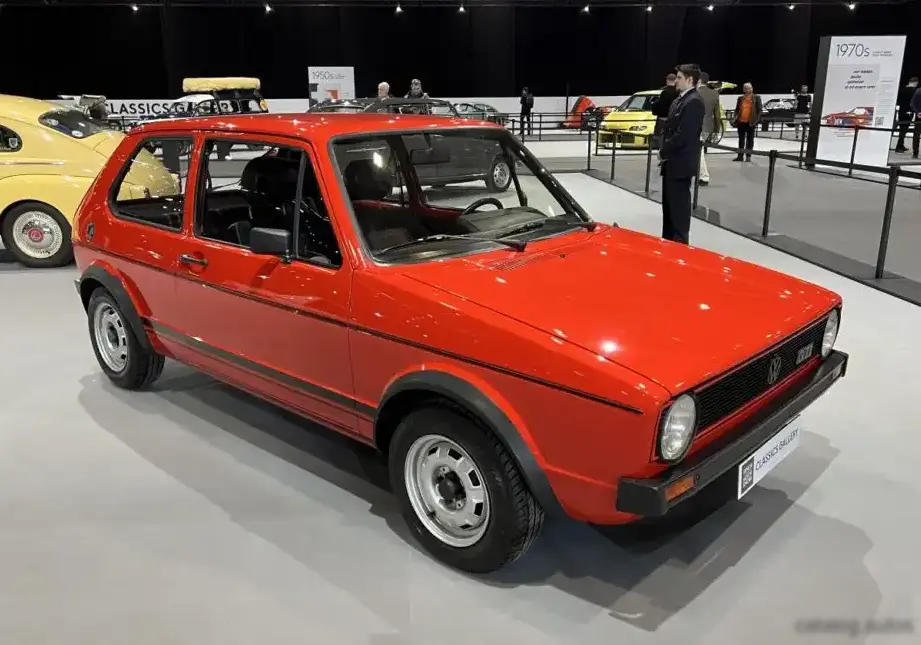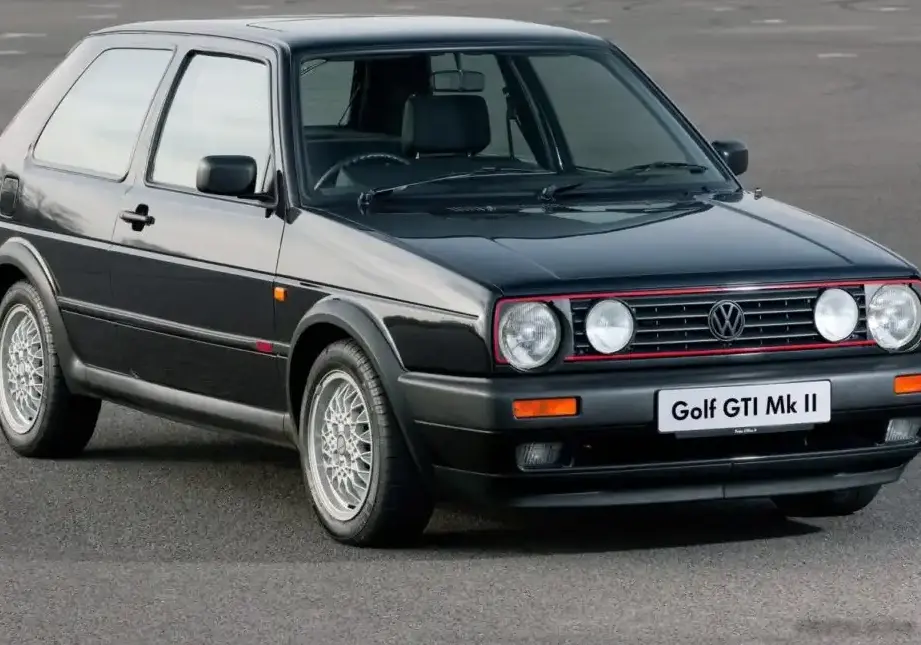
The Volkswagen Golf Mk2, produced from 1983 to 1992, represented a significant evolution of the original Golf, offering improved aerodynamics, a more refined interior, and a wider range of engine options. The 3-door facelift model introduced in 1987 brought subtle styling updates and continued the Golf’s success as a practical and affordable family car. Within the Mk2 lineup, the 1.3-liter (55 hp) variant with a 5-speed manual transmission, produced from 1988 to 1991, served as the entry point to the Golf range, appealing to budget-conscious buyers and those prioritizing fuel efficiency. This model occupied a crucial position in the market, offering reliable transportation without the expense of larger engines or higher trim levels.
Technical Specifications
| Brand | Volkswagen |
| Model | Golf |
| Generation | Golf II (3-door, facelift 1987) |
| Type (Engine) | 1.3 (55 Hp) Manual 5-speed |
| Start of production | 1988 |
| End of production | 1991 |
| Powertrain Architecture | Internal Combustion engine |
| Body type | Hatchback |
| Seats | 5 |
| Doors | 3 |
| Fuel consumption (urban) | 8.9 l/100 km (26.4 US mpg, 31.7 UK mpg, 11.2 km/l) |
| Fuel consumption (extra urban) | 5.6 l/100 km (42 US mpg, 50.4 UK mpg, 17.9 km/l) |
| Fuel Type | Petrol (Gasoline) |
| Acceleration 0 – 100 km/h | 16.5 sec |
| Acceleration 0 – 62 mph | 16.5 sec |
| Acceleration 0 – 60 mph | 15.7 sec |
| Maximum speed | 151 km/h (93.83 mph) |
| Weight-to-power ratio | 16.1 kg/Hp, 62.1 Hp/tonne |
| Weight-to-torque ratio | 9.1 kg/Nm, 109.6 Nm/tonne |
| Power | 55 Hp @ 5200 rpm |
| Power per litre | 43.2 Hp/l |
| Torque | 97 Nm @ 3000 rpm (71.54 lb.-ft. @ 3000 rpm) |
| Engine layout | Front, Transverse |
| Engine Model/Code | NZ |
| Engine displacement | 1272 cm3 (77.62 cu. in.) |
| Number of cylinders | 4 |
| Engine configuration | Inline |
| Cylinder Bore | 75 mm (2.95 in.) |
| Piston Stroke | 72 mm (2.83 in.) |
| Compression ratio | 9.5:1 |
| Number of valves per cylinder | 2 |
| Fuel injection system | Multi-port manifold injection |
| Engine aspiration | Naturally aspirated engine |
| Valvetrain | SOHC |
| Engine oil capacity | 3.5 l (3.7 US qt | 3.08 UK qt) |
| Coolant capacity | 6.3 l (6.66 US qt | 5.54 UK qt) |
| Kerb Weight | 885 kg (1951.09 lbs.) |
| Max. weight | 1370 kg (3020.33 lbs.) |
| Max load | 485 kg (1069.24 lbs.) |
| Trunk (boot) space – minimum | 330 l (11.65 cu. ft.) |
| Trunk (boot) space – maximum | 1145 l (40.44 cu. ft.) |
| Fuel tank capacity | 55 l (14.53 US gal | 12.1 UK gal) |
| Permitted trailer load with brakes (12%) | 800 kg (1763.7 lbs.) |
| Permitted trailer load without brakes | 460 kg (1014.13 lbs.) |
| Length | 3985-4040 mm (156.89 – 159.06 in.) |
| Width | 1665 mm (65.55 in.) |
| Height | 1415 mm (55.71 in.) |
| Wheelbase | 2475 mm (97.44 in.) |
| Front track | 1427 mm (56.18 in.) |
| Rear track | 1422 mm (55.98 in.) |
| Drag coefficient (Cd) | 0.34 |
| Minimum turning circle | 10.5 m (34.45 ft.) |
| Drivetrain Architecture | ICE, Front wheel drive |
| Drive wheel | Front wheel drive |
| Number of gears | 5 |
| Gearbox type | Manual transmission |
| Front suspension | Independent type McPherson |
| Rear suspension | Elastic beam |
| Front brakes | Disc |
| Rear brakes | Drum |
| Steering type | Steering rack and pinion |
| Tires size | 155/65 R13 |
| Wheel rims size | 5J x 13 |
Powertrain & Engine Architecture
The heart of this Golf variant was the 1.3-liter inline four-cylinder engine, designated the NZ engine code. This engine was a relatively simple design, featuring a single overhead camshaft (SOHC) operating two valves per cylinder. Fuel delivery was handled by a multi-port fuel injection system, a significant improvement over the carbureted engines found in earlier Golfs, contributing to better fuel economy and smoother operation. The NZ engine produced 55 horsepower at 5200 rpm and 97 Nm (71.54 lb-ft) of torque at 3000 rpm. The engine’s modest output was paired with a robust 5-speed manual transmission, offering a reasonable balance between performance and fuel efficiency. This transmission was chosen for its durability and affordability, making it a common sight in entry-level Golf models.
Driving Characteristics
The 1.3-liter Golf was not designed for outright speed. Acceleration from 0 to 60 mph took around 15.7 seconds, and its top speed was approximately 94 mph. However, the car’s light weight (around 1951 lbs) and well-tuned suspension made it surprisingly nimble and enjoyable to drive around town. The 5-speed manual transmission allowed drivers to keep the engine in its optimal power band, providing adequate performance for everyday driving. Compared to the more powerful 1.6 and 1.8-liter versions, the 1.3 felt noticeably slower, especially when fully loaded or tackling steep hills. However, the trade-off was significantly improved fuel economy, making it a popular choice for commuters.
Equipment & Trim Levels
The 1.3-liter Golf typically came with a basic level of equipment. Standard features included cloth upholstery, a simple dashboard layout, and manual windows and door locks. Power steering and central locking were often optional extras. The interior was functional and durable, prioritizing practicality over luxury. The base trim level focused on providing essential transportation at an affordable price. Options like a sunroof, upgraded stereo, and alloy wheels were available, allowing buyers to personalize their vehicles to some extent.
Chassis & Braking
The Golf Mk2 utilized a McPherson strut front suspension and an elastic beam rear suspension. This setup provided a good balance of ride comfort and handling. The front brakes were discs, while the rear brakes were drums, a cost-saving measure common in entry-level models. The steering was a rack and pinion system, offering precise and responsive control. The relatively light weight of the 1.3-liter model contributed to its agile handling characteristics.
Market Reception & Comparison
The 1.3-liter Golf was well-received as an affordable and reliable family car. Critics praised its fuel efficiency and practicality, but noted its lack of outright performance. Compared to the more powerful Golf variants, the 1.3 offered a lower purchase price and reduced running costs. The 1.6-liter version provided a noticeable performance upgrade, while the 1.8-liter models offered even more power. However, these higher-output versions came at a premium. The 1.3-liter Golf appealed to buyers who prioritized economy and reliability over performance.
Legacy
The 1.3-liter NZ engine proved to be a durable and reliable powerplant. Many examples are still on the road today, testament to its robust design and build quality. While not a particularly exciting engine, it provided years of dependable service. In the used car market, the 1.3-liter Golf is often sought after by enthusiasts looking for a simple, affordable, and easy-to-maintain classic car. Its lower price point and relatively simple mechanics make it an attractive option for those new to classic car ownership. The Golf Mk2, in all its variants, remains a popular and iconic vehicle, representing a golden age of affordable and practical motoring.