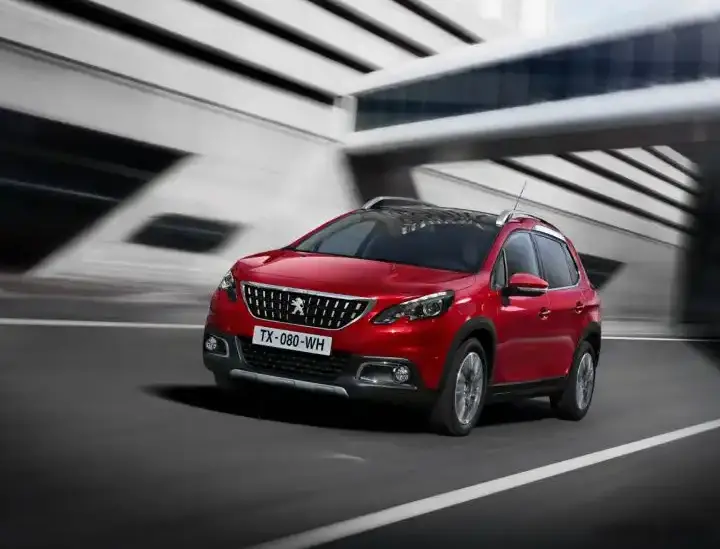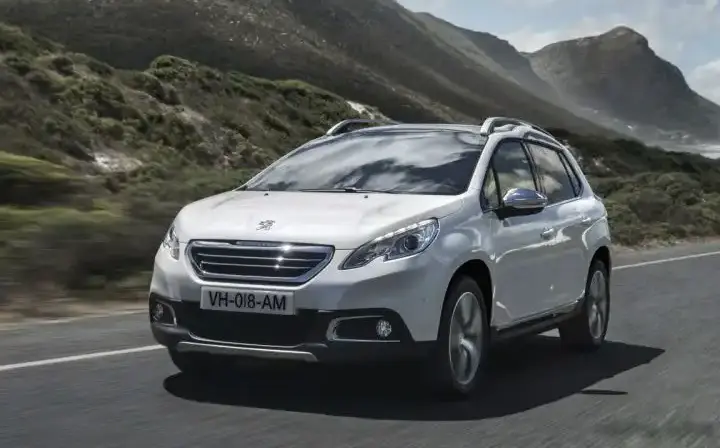
The Peugeot 2008 1.4 HDi 68 hp variant, produced between 2013 and 2015, represents the entry-level offering in the first generation (T8) of Peugeot’s popular subcompact crossover SUV. Positioned as an economical and practical choice within the 2008 range, it aimed to attract buyers prioritizing fuel efficiency and affordability. This model played a significant role in establishing the 2008 as a key player in the burgeoning European B-segment crossover market, competing with vehicles like the Renault Captur, Nissan Juke, and Opel/Vauxhall Mokka. The 2008 series, built on the PF1 platform (shared with the Peugeot 208 and Citroën C3), sought to blend the practicality of a small hatchback with the elevated driving position and styling of an SUV.
Technical Specifications
| Brand | Peugeot |
| Model | 2008 |
| Generation | 2008 I |
| Type (Engine) | 1.4 HDi (68 Hp) FAP |
| Start of production | 2013 |
| End of production | 2015 |
| Powertrain Architecture | Internal Combustion engine |
| Body type | SUV, Crossover |
| Seats | 5 |
| Doors | 5 |
| Fuel consumption (urban) | 4.6 l/100 km (51.1 US mpg, 61.4 UK mpg, 21.7 km/l) |
| Fuel consumption (extra urban) | 3.6 l/100 km (65.3 US mpg, 78.5 UK mpg, 27.8 km/l) |
| Fuel consumption (combined) | 4 l/100 km (58.8 US mpg, 70.6 UK mpg, 25 km/l) |
| CO2 emissions | 104 g/km |
| Fuel Type | Diesel |
| Acceleration 0 – 100 km/h | 14.9 sec |
| Acceleration 0 – 62 mph | 14.9 sec |
| Acceleration 0 – 60 mph | 14.2 sec |
| Maximum speed | 159 km/h (98.8 mph) |
| Emission standard | Euro 5 |
| Weight-to-power ratio | 16 kg/Hp, 62.4 Hp/tonne |
| Weight-to-torque ratio | 6.8 kg/Nm, 146.8 Nm/tonne |
| Power | 68 Hp @ 4000 rpm |
| Power per litre | 48.6 Hp/l |
| Torque | 160 Nm @ 1750 rpm (118.01 lb.-ft. @ 1750 rpm) |
| Engine layout | Front, Transverse |
| Engine Model/Code | 8HR DV4C |
| Engine displacement | 1398 cm3 (85.31 cu. in.) |
| Number of cylinders | 4 |
| Engine configuration | Inline |
| Cylinder Bore | 73.7 mm (2.9 in.) |
| Piston Stroke | 82 mm (3.23 in.) |
| Compression ratio | 18:1 |
| Number of valves per cylinder | 2 |
| Fuel injection system | Diesel Commonrail |
| Engine aspiration | Turbocharger, Intercooler |
| Valvetrain | SOHC |
| Engine oil capacity | 3.75 l (3.96 US qt | 3.3 UK qt) |
| Coolant | 5.6 l (5.92 US qt | 4.93 UK qt) |
| Kerb Weight | 1090 kg (2403.04 lbs.) |
| Max. weight | 1622 kg (3575.9 lbs.) |
| Max load | 532 kg (1172.86 lbs.) |
| Trunk (boot) space – minimum | 360 l (12.71 cu. ft.) |
| Trunk (boot) space – maximum | 1194 l (42.17 cu. ft.) |
| Fuel tank capacity | 50 l (13.21 US gal | 11 UK gal) |
| Permitted trailer load with brakes (12%) | 670 kg (1477.1 lbs.) |
| Permitted towbar download | 51 kg (112.44 lbs.) |
| Length | 4159 mm (163.74 in.) |
| Width | 1739 mm (68.46 in.) |
| Width with mirrors folded | 1829 mm (72.01 in.) |
| Width including mirrors | 2004 mm (78.9 in.) |
| Height | 1556 mm (61.26 in.) |
| Wheelbase | 2538 mm (99.92 in.) |
| Front track | 1482 mm (58.35 in.) |
| Rear (Back) track | 1492 mm (58.74 in.) |
| Front overhang | 820 mm (32.28 in.) |
| Rear overhang | 801 mm (31.54 in.) |
| Ride height (ground clearance) | 165 mm (6.5 in.) |
| Minimum turning circle (turning diameter) | 10.4 m (34.12 ft.) |
| Drivetrain Architecture | The Internal combustion engine (ICE) drives the front wheels of the vehicle. |
| Drive wheel | Front wheel drive |
| Number of gears and type of gearbox | 5 gears, manual transmission |
| Front suspension | Independent type McPherson |
| Rear suspension | Elastic beam |
| Front brakes | Ventilated discs |
| Rear brakes | Disc |
| Assisting systems | ABS (Anti-lock braking system) |
| Steering type | Steering rack and pinion |
| Power steering | Electric Steering |
| Tires size | 195/65 R15; 195/60 R16 |
| Wheel rims size | 6.5J x 15; 6.5J x 16 |
Powertrain & Engine Architecture
The 2008 1.4 HDi 68 hp is powered by the PSA Group’s 8HR (DV4C) engine, a 1.4-liter inline-four cylinder diesel engine. This engine is a member of the DV family, known for its compact size and fuel efficiency. It utilizes a turbocharger with an intercooler to boost power output, and employs a Diesel Commonrail direct injection system for precise fuel delivery. The engine features a Single Overhead Camshaft (SOHC) valvetrain with two valves per cylinder. The high compression ratio of 18:1 is typical for diesel engines, contributing to their thermal efficiency. The engine’s relatively small displacement and turbocharging contribute to its low CO2 emissions, a key selling point in Europe. The engine is transversely mounted at the front of the vehicle. The 5-speed manual transmission was the only gearbox option available with this engine.
Driving Characteristics
With only 68 horsepower and 160 Nm (118 lb-ft) of torque, the 2008 1.4 HDi offers modest performance. Acceleration from 0-100 km/h (0-62 mph) takes approximately 14.9 seconds, and top speed is limited to 159 km/h (98.8 mph). The engine feels strained when accelerating hard, particularly when fully loaded. The 5-speed manual gearbox is well-matched to the engine’s characteristics, with relatively short gear ratios designed to keep the engine in its optimal torque band. However, highway cruising requires frequent downshifts for overtaking. Compared to the more powerful 1.6 BlueHDi variants, this engine prioritizes fuel economy over outright performance. The steering is light and easy, making it suitable for urban driving, but lacks the feel and precision of more performance-oriented models.
Equipment & Trim Levels
The 1.4 HDi 68 hp version of the 2008 typically came with a basic level of equipment. Standard features generally included air conditioning, power steering, electric front windows, a basic audio system with USB connectivity, and ABS brakes. Safety features such as ESP (Electronic Stability Program) were often optional or available on higher trim levels. Interior upholstery was typically cloth, and the dashboard featured a functional but somewhat basic design. Optional extras included alloy wheels, rear parking sensors, a touchscreen infotainment system, and cruise control. The trim levels varied slightly depending on the market, but generally followed a progressive structure with increasing levels of equipment and comfort.
Chassis & Braking
The 2008’s chassis features an independent McPherson strut suspension at the front and a torsion beam (elastic beam) suspension at the rear. This setup provides a reasonable balance between ride comfort and handling. The front brakes are ventilated discs, while the rear brakes are solid discs. The steering is a rack and pinion system with electric power assistance. The relatively lightweight nature of the 1.4 HDi variant contributes to its agility, but the suspension is tuned more for comfort than sporty handling. Tire sizes typically ranged from 195/65 R15 to 195/60 R16, depending on the trim level.
Market Reception & Comparison
The Peugeot 2008 1.4 HDi 68 hp was generally well-received by critics as an affordable and fuel-efficient option in the crossover segment. However, its limited power output was often criticized. Compared to the more powerful engine options (such as the 1.6 BlueHDi variants), it offered significantly less performance. However, it excelled in fuel economy, achieving combined figures of around 4.0 l/100 km (58.8 US mpg). This made it an attractive choice for buyers prioritizing running costs. Its main competitors, like the Renault Captur and Nissan Juke, offered similar levels of fuel efficiency and affordability, but the 2008 distinguished itself with its stylish design and comfortable interior.
Legacy
The 8HR (DV4C) engine has proven to be a relatively reliable unit, although it is not without its potential issues. Common problems include turbocharger failure, injector issues, and diesel particulate filter (DPF) clogging, particularly on vehicles used primarily for short journeys. The 2008 1.4 HDi remains a popular choice on the used car market due to its affordability and fuel efficiency. However, potential buyers should be aware of the potential maintenance costs associated with diesel engines, particularly the DPF. Overall, the 2008 1.4 HDi 68 hp represents a practical and economical entry point into the world of crossover SUVs.