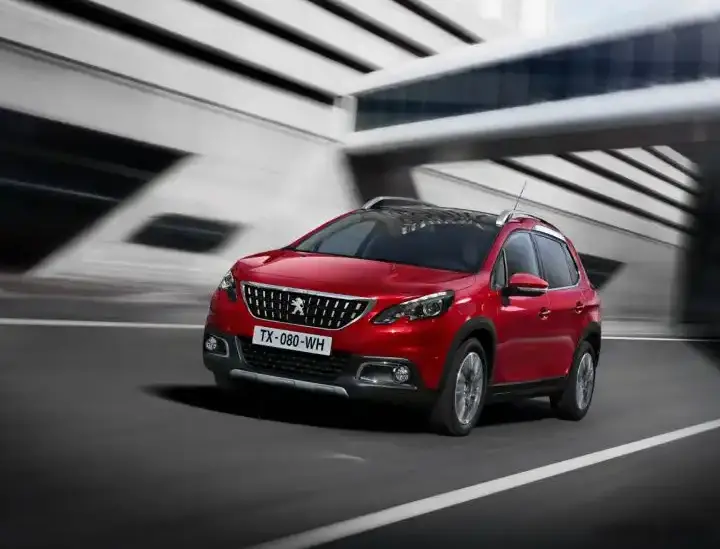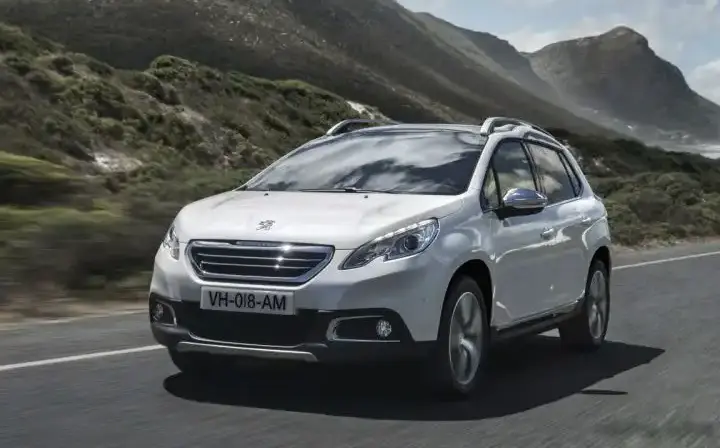
The Peugeot 2008 1.6 e-HDi (115 hp) FAP STT was a front-wheel-drive subcompact crossover SUV produced by the French manufacturer Peugeot between 2013 and 2015. It represented a key entry point into the first generation (T8) 2008 lineup, positioned as an economical and practical option within the burgeoning B-segment crossover market. This variant utilized Peugeot’s e-HDi diesel technology, aiming to balance fuel efficiency with reasonable performance. The 2008, launched as Peugeot’s answer to popular models like the Nissan Juke and Opel/Vauxhall Mokka, was designed to appeal to buyers seeking a more versatile and stylish alternative to traditional hatchbacks.
Technical Specifications
| Brand | Peugeot |
| Model | 2008 |
| Generation | 2008 I |
| Type (Engine) | 1.6 e-HDi (115 Hp) FAP STT |
| Start of production | 2013 |
| End of production | 2015 |
| Powertrain Architecture | Internal Combustion engine |
| Body type | SUV, Crossover |
| Seats | 5 |
| Doors | 5 |
| Fuel consumption (urban) | 4.7 l/100 km (50 US mpg, 60.1 UK mpg, 21.3 km/l) |
| Fuel consumption (extra urban) | 3.6 l/100 km (65.3 US mpg, 78.5 UK mpg, 27.8 km/l) |
| Fuel consumption (combined) | 4 l/100 km (58.8 US mpg, 70.6 UK mpg, 25 km/l) |
| Fuel Type | Diesel |
| Acceleration 0 – 100 km/h | 10.4 sec |
| Acceleration 0 – 62 mph | 10.4 sec |
| Acceleration 0 – 60 mph | 9.9 sec |
| Maximum speed | 188 km/h (116.82 mph) |
| Emission standard | Euro 5 |
| Weight-to-power ratio | 10.3 kg/Hp |
| Weight-to-torque ratio | 4.4 kg/Nm |
| Power | 115 Hp @ 3600 rpm |
| Torque | 270 Nm @ 1750 rpm (199.14 lb.-ft. @ 1750 rpm) |
| Engine layout | Front, Transverse |
| Engine Model/Code | 9HD DV6CTED |
| Engine displacement | 1560 cm3 (95.2 cu. in.) |
| Number of cylinders | 4 |
| Engine configuration | Inline |
| Number of valves per cylinder | 2 |
| Fuel injection system | Diesel Commonrail |
| Engine aspiration | Turbocharger, Intercooler |
| Engine oil capacity | 3.75 l (3.96 US qt, 3.3 UK qt) |
| Coolant capacity | 6 l (6.34 US qt, 5.28 UK qt) |
| Kerb Weight | 1180 kg (2601.45 lbs) |
| Max. weight | 1708 kg (3765.5 lbs) |
| Max load | 528 kg (1164.04 lbs) |
| Trunk (boot) space – minimum | 350 l (12.36 cu. ft.) |
| Trunk (boot) space – maximum | 1194 l (42.17 cu. ft.) |
| Fuel tank capacity | 50 l (13.21 US gal, 11 UK gal) |
| Length | 4159 mm (163.74 in) |
| Width | 1739 mm (68.46 in) |
| Height | 1556 mm (61.26 in) |
| Wheelbase | 2537 mm (99.88 in) |
| Minimum turning circle | 10.4 m (34.12 ft) |
| Drivetrain Architecture | Front wheel drive |
| Number of gears | 6 |
| Gearbox type | Manual transmission |
| Front suspension | Independent type McPherson |
| Rear suspension | Elastic beam |
| Front brakes | Ventilated discs |
| Rear brakes | Ventilated discs |
| Assisting systems | ABS (Anti-lock braking system) |
| Steering type | Steering rack and pinion |
Powertrain & Engine Architecture
The heart of the 2008 1.6 e-HDi was the PSA Group’s DV6 engine family, specifically the 9HD (DV6CTED) variant. This 1.6-liter, four-cylinder diesel engine featured common-rail direct injection and a variable geometry turbocharger. The ‘e-HDi’ designation signified the inclusion of Stop & Start (STT) technology, designed to improve fuel economy by automatically shutting off the engine when the vehicle was stationary. The engine produced 115 horsepower at 3600 rpm and a respectable 270 Nm (199 lb-ft) of torque at 1750 rpm. The engine utilized a two-valve per cylinder configuration, a relatively simple design contributing to its durability and cost-effectiveness. The FAP (Filtre à Particules) or Diesel Particulate Filter was standard, helping to reduce harmful emissions and meet Euro 5 standards. This engine was paired with a six-speed manual transmission, chosen for its efficiency and affordability. While an automatic transmission was offered on other 2008 variants, it wasn’t available with this specific engine/power output combination.
Driving Characteristics
The 1.6 e-HDi 115 hp version of the 2008 offered a practical and economical driving experience. Acceleration from 0-60 mph took around 9.9 seconds, making it adequate for everyday driving but not particularly sporty. The engine’s torque peak at 1750 rpm provided good low-end responsiveness, making it easy to navigate city streets and handle moderate inclines. The six-speed manual transmission allowed drivers to keep the engine in its optimal power band. Compared to the more powerful 1.6 THP gasoline variants or the 2.0 BlueHDi diesel, the 1.6 e-HDi felt less refined and had a more noticeable diesel engine sound. However, its fuel economy was significantly better, making it a popular choice for drivers prioritizing efficiency. The gear ratios were tuned for economy, meaning highway cruising required slightly higher engine speeds compared to higher-output versions.
Equipment & Trim Levels
The 1.6 e-HDi 115 hp trim typically served as the entry-level or mid-range offering in the 2008 lineup. Standard equipment generally included air conditioning, power windows, central locking, a basic audio system with USB connectivity, and ABS brakes. Safety features such as ESP (Electronic Stability Program) and multiple airbags were also standard. Interior upholstery was typically cloth, with a functional but not luxurious design. Optional extras included alloy wheels, a touchscreen infotainment system, rear parking sensors, and a panoramic sunroof. Trim levels varied slightly depending on the specific market, but the core focus remained on providing a well-equipped and affordable crossover.
Chassis & Braking
The 2008 utilized a front McPherson strut suspension and a rear elastic beam suspension. This setup provided a reasonable balance between ride comfort and handling. The elastic beam rear suspension was a cost-effective solution, but it didn’t offer the same level of sophistication as a fully independent rear suspension found on some higher-spec models. Braking was handled by ventilated discs on all four wheels, providing adequate stopping power for the vehicle’s weight and performance. ABS (Anti-lock Braking System) was standard, enhancing safety during emergency braking situations. The steering employed a rack and pinion system, offering precise and responsive control.
Market Reception & Comparison
The Peugeot 2008 1.6 e-HDi was generally well-received by automotive critics as a practical and fuel-efficient crossover. Its strengths lay in its affordability, low running costs, and comfortable ride. However, some reviewers noted that the engine could be noisy and lacked the refinement of some competitors. Compared to the 1.6 THP gasoline version, the e-HDi offered significantly better fuel economy but less overall performance. Against other diesel-powered crossovers like the Opel/Vauxhall Mokka 1.7 CDTi, the 2008 offered a more stylish design and a slightly more engaging driving experience. Its fuel economy figures of around 4.0 l/100km (58.8 US mpg) were competitive within its segment.
Legacy
The 1.6 e-HDi engine, while superseded by newer diesel technologies, proved to be a relatively reliable powertrain. Common issues were generally limited to diesel particulate filter (DPF) clogging, particularly with frequent short journeys. Regular maintenance, including oil changes and DPF regeneration, was crucial for ensuring long-term reliability. On the used car market, the 2008 1.6 e-HDi remains a popular choice for buyers seeking an affordable and economical crossover. Its reputation for fuel efficiency and practicality continues to make it a viable option, although potential buyers should be aware of the potential for DPF-related issues and ensure a thorough inspection before purchase. The 2008 helped establish Peugeot as a key player in the growing subcompact crossover segment, paving the way for future generations of the model.