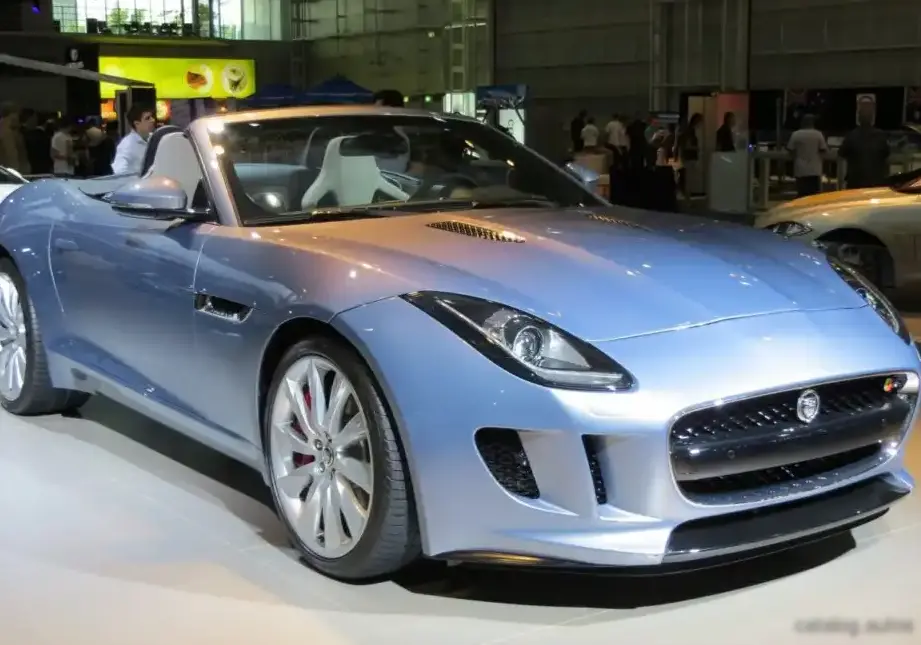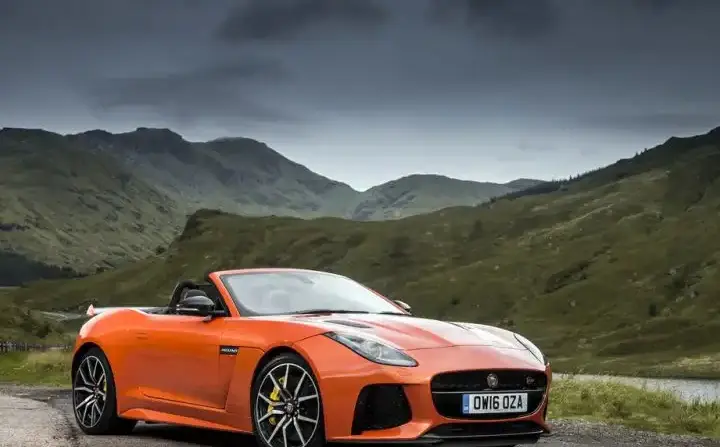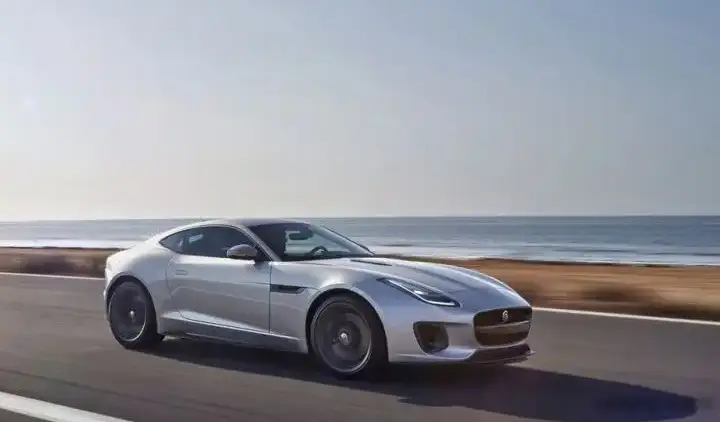
The Jaguar F-Type Coupe, specifically the 2.0-liter (300 hp) automatic variant introduced with the 2017 facelift, represents a significant entry point into the F-Type range. Produced from 2017 through 2018, this model aimed to broaden the appeal of the F-Type by offering a more accessible price point and improved fuel efficiency without entirely sacrificing the model’s core sporting character. It slots into the lineup below the supercharged V6 and V8 models, targeting buyers who prioritized style and a refined driving experience over outright performance. This variant is built on the Jaguar’s aluminum-intensive architecture, a key element in maintaining a relatively low curb weight despite the addition of automatic transmission components.
Technical Specifications
| Brand | Jaguar |
| Model | F-type |
| Generation | F-type Coupe (facelift 2017) |
| Type (Engine) | 2.0 (300 Hp) Automatic |
| Start of production | 2017 |
| End of production | 2018 |
| Powertrain Architecture | Internal Combustion engine |
| Body type | Coupe |
| Seats | 2 |
| Doors | 2 |
| Fuel consumption (combined) | 7.2 l/100 km |
| Fuel consumption (US mpg) | 32.7 US mpg |
| Fuel consumption (UK mpg) | 39.2 UK mpg |
| Fuel consumption (km/l) | 13.9 km/l |
| CO2 emissions | 163 g/km |
| Fuel Type | Petrol (Gasoline) |
| Acceleration 0 – 100 km/h | 5.7 sec |
| Acceleration 0 – 62 mph | 5.7 sec |
| Acceleration 0 – 60 mph | 5.4 sec |
| Maximum speed | 250 km/h (155.34 mph) |
| Emission standard | Euro 6 |
| Weight-to-power ratio | 5.1 kg/Hp |
| Power | 300 Hp @ 5500 rpm |
| Power per litre | 150.2 Hp/l |
| Torque | 400 Nm @ 1500-4500 rpm (295.02 lb.-ft. @ 1500-4500 rpm) |
| Engine layout | Front, Longitudinal |
| Engine Model/Code | Ingenium / PT204 |
| Engine displacement | 1997 cm3 (121.86 cu. in.) |
| Number of cylinders | 4 |
| Engine configuration | Inline |
| Cylinder Bore | 83 mm (3.27 in.) |
| Piston Stroke | 92.3 mm (3.63 in.) |
| Compression ratio | 9.5:1 |
| Number of valves per cylinder | 4 |
| Fuel injection system | Direct injection |
| Engine aspiration | Turbocharger, Intercooler |
| Valvetrain | DOHC |
| Engine oil capacity | 6.5 l (6.87 US qt | 5.72 UK qt) |
| Kerb Weight | 1525 kg (3362.05 lbs.) |
| Trunk (boot) space – minimum | 310 l (10.95 cu. ft.) |
| Trunk (boot) space – maximum | 408 l (14.41 cu. ft.) |
| Fuel tank capacity | 63 l (16.64 US gal | 13.86 UK gal) |
| Length | 4482 mm (176.46 in.) |
| Width | 1923 mm (75.71 in.) |
| Width with mirrors folded | 2042 mm (80.39 in.) |
| Height | 1310 mm (51.57 in.) |
| Wheelbase | 2622 mm (103.23 in.) |
| Front track | 1597 mm (62.87 in.) |
| Rear (Back) track | 1649 mm (64.92 in.) |
| Drivetrain Architecture | Rear wheel drive |
| Number of gears | 8 |
| Gearbox type | Automatic transmission |
| Front suspension | Double wishbone |
| Rear suspension | Double wishbone |
| Front brakes | Ventilated discs |
| Rear brakes | Ventilated discs |
| Steering type | Steering rack and pinion |
| Power steering | Electric |
Powertrain & Engine Architecture
At the heart of the 2017-2018 F-Type Coupe 2.0 Automatic lies Jaguar’s Ingenium engine family, specifically the PT204 2.0-liter turbocharged inline-four. This engine, designed for modularity and efficiency, utilizes direct injection and a twin-scroll turbocharger to deliver 300 horsepower at 5500 rpm and 400 Nm (295 lb-ft) of torque between 1500 and 4500 rpm. The Ingenium engine is characterized by its low-friction design and sophisticated thermal management system, contributing to its relatively good fuel economy for a performance coupe. The engine is longitudinally mounted in the front of the vehicle, driving the rear wheels. The eight-speed automatic transmission, sourced from ZF, is a crucial component of this powertrain. It’s known for its smooth and quick shifts, and is programmed with a focus on both performance and fuel efficiency. The transmission features steering wheel-mounted paddle shifters for manual control, allowing drivers to engage more directly with the gear selection.
Driving Characteristics
The 2.0-liter F-Type Coupe Automatic offers a distinct driving experience compared to its more powerful siblings. While it doesn’t possess the raw acceleration of the V6 or V8 models, it provides a surprisingly engaging and enjoyable drive. The turbocharger provides a noticeable boost in power, and the eight-speed transmission keeps the engine in its optimal power band. Acceleration from 0-60 mph takes approximately 5.4 seconds, making it a competitive performer in its class. The automatic transmission is well-tuned, offering smooth gear changes in normal driving and responsive shifts when in Sport mode. Compared to the six-speed manual transmission available on some F-Type models, the automatic prioritizes ease of use and refinement. The lower weight of the four-cylinder engine, compared to the V6 and V8, contributes to a more balanced feel in corners, although it doesn’t quite match the agility of the lighter manual versions.
Equipment & Trim Levels
The 2.0-liter F-Type Coupe typically came well-equipped as standard. Key features included leather upholstery, a touchscreen infotainment system with navigation, automatic climate control, and a suite of driver-assistance technologies such as emergency braking and lane departure warning. Optional extras included a panoramic sunroof, upgraded sound system, and various cosmetic enhancements. Interior trim options ranged from standard leather to more premium leather packages with contrast stitching. The dashboard layout was consistent with other F-Type models, featuring a driver-focused design with analog gauges complemented by digital displays. The standard seats provided good support and comfort for long journeys.
Chassis & Braking
The F-Type Coupe’s chassis is constructed primarily from aluminum, contributing to its relatively low weight. The suspension utilizes double wishbones at both the front and rear, providing a good balance between ride comfort and handling precision. The 2.0-liter model typically featured slightly softer spring rates and stabilizer bars compared to the higher-performance variants, prioritizing ride comfort. Braking duties are handled by ventilated discs at all four corners. While some higher-spec F-Types received larger brake rotors and more powerful calipers, the 2.0-liter model’s braking system was adequate for its performance level. Anti-lock braking system (ABS) and electronic stability control (ESC) were standard features.
Market Reception & Comparison
The introduction of the 2.0-liter F-Type Coupe was generally well-received by automotive critics. It was praised for its stylish design, refined driving experience, and improved fuel efficiency. However, some critics noted that it lacked the visceral excitement of the V6 and V8 models. Compared to the V6 F-Type, the 2.0-liter offered a lower price point and better fuel economy, but sacrificed some performance. Against competitors like the Porsche 718 Cayman, the F-Type 2.0 offered a more luxurious interior and a more distinctive design, but the Cayman generally provided sharper handling. Reliability reports for the Ingenium engine have been generally positive, with few major issues reported.
Legacy
The 2.0-liter F-Type Coupe served as an important stepping stone in Jaguar’s strategy to broaden the appeal of the F-Type range. While it was discontinued after the 2018 model year, it remains a desirable option in the used car market. The Ingenium engine has proven to be a reliable and efficient powerplant, and the eight-speed automatic transmission is known for its durability. Today, these models offer a compelling combination of style, performance, and value, making them an attractive option for buyers seeking a sporty and luxurious coupe.