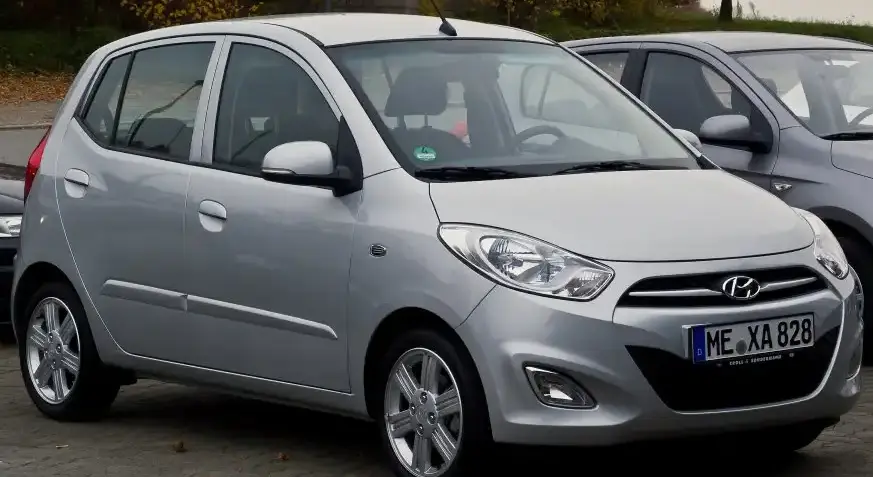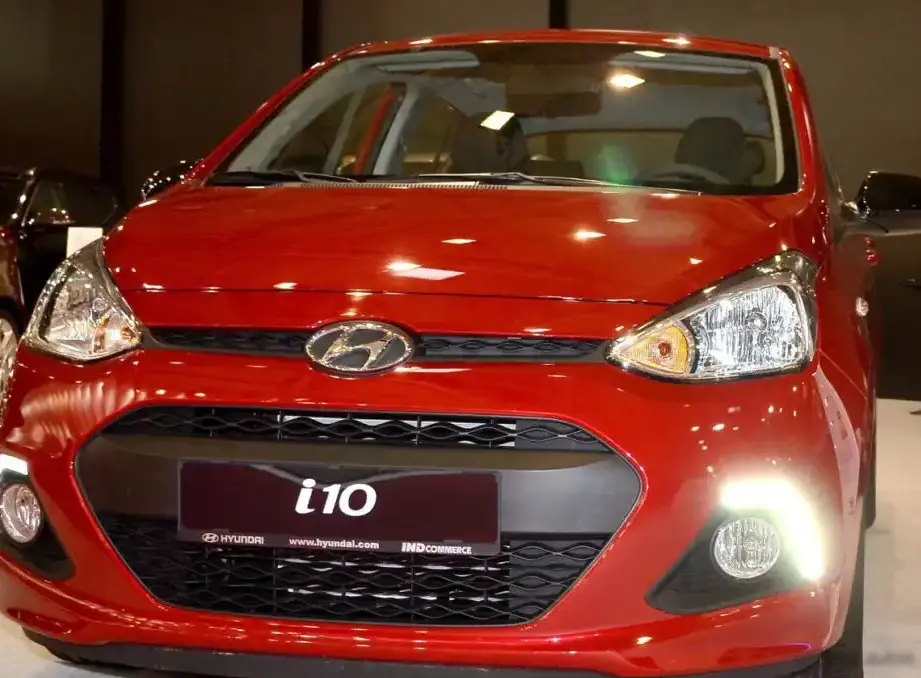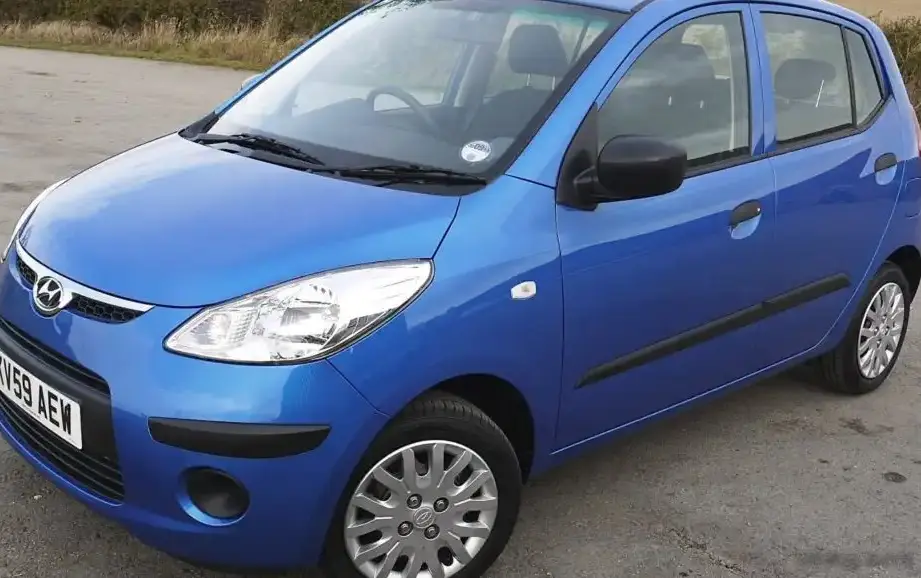
The Hyundai i10 first generation (internally known as the PA) was a city car produced by the South Korean manufacturer Hyundai from 2007 to 2013. Introduced as a replacement for the Hyundai Getz in the European market, the i10 aimed to provide an affordable and practical entry point into Hyundai’s lineup. Production of the 1.1 CRDi variant, powered by the D3FA engine, spanned from 2008 to 2010. This model represented Hyundai’s attempt to capture a segment increasingly focused on fuel efficiency and low running costs, particularly in Europe where diesel engines held significant market share. The i10, in general, was designed to compete with established city cars like the Fiat Panda, Volkswagen Fox, and Toyota Aygo.
Technical Specifications
| Brand | Hyundai |
| Model | i10 |
| Generation | i10 I |
| Type (Engine) | 1.1 CRDi (75 Hp) |
| Start of production | 2008 |
| End of production | 2010 |
| Powertrain Architecture | Internal Combustion engine |
| Body type | Hatchback |
| Seats | 5 |
| Doors | 5 |
| Fuel consumption (urban) | 5.3 l/100 km (44.4 US mpg, 53.3 UK mpg, 18.9 km/l) |
| Fuel consumption (extra urban) | 3.8 l/100 km (61.9 US mpg, 74.3 UK mpg, 26.3 km/l) |
| Fuel consumption (combined) | 4.3 l/100 km (54.7 US mpg, 65.7 UK mpg, 23.3 km/l) |
| CO2 emissions | 114 g/km |
| Fuel Type | Diesel |
| Acceleration 0 – 100 km/h | 15.8 sec |
| Acceleration 0 – 62 mph | 15.8 sec |
| Acceleration 0 – 60 mph | 15 sec |
| Maximum speed | 163 km/h (101.28 mph) |
| Emission standard | Euro 4 |
| Weight-to-power ratio | 13.9 kg/Hp, 72.1 Hp/tonne |
| Weight-to-torque ratio | 6.8 kg/Nm, 147.1 Nm/tonne |
| Power | 75 Hp @ 4000 rpm |
| Power per litre | 67 Hp/l |
| Torque | 153 Nm @ 1900-2750 rpm (112.85 lb.-ft. @ 1900-2750 rpm) |
| Engine layout | Front, Transverse |
| Engine Model/Code | D3FA |
| Engine displacement | 1120 cm3 (68.35 cu. in.) |
| Number of cylinders | 3 |
| Engine configuration | Inline |
| Cylinder Bore | 75 mm (2.95 in.) |
| Piston Stroke | 84.5 mm (3.33 in.) |
| Compression ratio | 17.8:1 |
| Number of valves per cylinder | 4 |
| Fuel injection system | Diesel Commonrail |
| Engine aspiration | Turbocharger, Intercooler |
| Valvetrain | DOHC |
| Engine oil capacity | 5.3 l (5.6 US qt | 4.66 UK qt) |
| Coolant | 5.3 l (5.6 US qt | 4.66 UK qt) |
| Kerb Weight | 1040 kg (2292.81 lbs.) |
| Max. weight | 1520 kg (3351.03 lbs.) |
| Max load | 480 kg (1058.22 lbs.) |
| Trunk (boot) space – minimum | 225 l (7.95 cu. ft.) |
| Trunk (boot) space – maximum | 910 l (32.14 cu. ft.) |
| Fuel tank capacity | 35 l (9.25 US gal | 7.7 UK gal) |
| Permitted trailer load with brakes (12%) | 700 kg (1543.24 lbs.) |
| Permitted trailer load without brakes | 400 kg (881.85 lbs.) |
| Permitted towbar download | 28 kg (61.73 lbs.) |
| Length | 3565 mm (140.35 in.) |
| Width | 1595 mm (62.8 in.) |
| Height | 1540 mm (60.63 in.) |
| Wheelbase | 2380 mm (93.7 in.) |
| Front track | 1400 mm (55.12 in.) |
| Rear (Back) track | 1385 mm (54.53 in.) |
| Drag coefficient (Cd) | 0.32 |
| Minimum turning circle (turning diameter) | 9.5 m (31.17 ft.) |
| Drivetrain Architecture | The Internal combustion engine (ICE) drives the front wheels of the vehicle. |
| Drive wheel | Front wheel drive |
| Number of gears and type of gearbox | 5 gears, manual transmission |
| Front suspension | Independent, type McPherson with coil spring and anti-roll bar |
| Rear suspension | Semi-dependent beam with stabilizer lateral stability |
| Front brakes | Ventilated discs |
| Rear brakes | Disc |
| Assisting systems | ABS (Anti-lock braking system) |
| Steering type | Steering rack and pinion |
| Power steering | Electric Steering |
| Tires size | 175/60 R14 |
| Wheel rims size | 5J x 14 |
Powertrain & Engine Architecture
The heart of the i10 1.1 CRDi is the Hyundai D3FA engine, a 1.1-liter inline three-cylinder diesel engine. This engine utilizes a second-generation common rail direct injection system, allowing for precise fuel delivery and improved combustion efficiency. The D3FA features a turbocharger with an intercooler, which helps to boost power output and reduce turbo lag. The engine also incorporates a double overhead camshaft (DOHC) valvetrain with four valves per cylinder, optimizing airflow for enhanced performance. The compression ratio is relatively high at 17.8:1, typical for diesel engines, contributing to its fuel efficiency. The engine was paired with a five-speed manual transmission, designed to maximize fuel economy and provide adequate acceleration for city driving.
Driving Characteristics
The 1.1 CRDi i10 offered a distinctly different driving experience compared to the gasoline-powered versions. While the 75 horsepower output wasn’t substantial, the 153 Nm (113 lb-ft) of torque available from 1900-2750 rpm provided a noticeable improvement in low-end responsiveness. This made it easier to navigate urban traffic and execute overtaking maneuvers. However, the engine could feel strained at higher speeds, and acceleration beyond 80 mph was slow. The five-speed manual transmission was well-matched to the engine’s characteristics, with gear ratios optimized for fuel efficiency. The i10 1.1 CRDi wasn’t designed for spirited driving; its focus was on practicality and economy.
Equipment & Trim Levels
The i10 1.1 CRDi typically came with a fairly basic level of equipment, reflecting its position as an entry-level model. Standard features generally included power steering, central locking, electric front windows, and an adjustable steering column. Safety features included ABS brakes and a driver’s airbag. Higher trim levels, such as the ‘Comfort’ or ‘Style’ variants, added features like air conditioning, alloy wheels, and a radio/CD player. Interior upholstery was typically cloth, with a simple and functional dashboard layout. Optional extras included a passenger airbag and metallic paint.
Chassis & Braking
The i10’s chassis was designed for nimble handling and comfortable ride quality within the constraints of its budget-oriented positioning. It featured an independent McPherson strut suspension at the front and a semi-dependent torsion beam suspension at the rear. The front suspension incorporated a stabilizer bar to reduce body roll during cornering. Braking duties were handled by ventilated discs at the front and solid discs at the rear, providing adequate stopping power for its weight class. The electric power steering offered light and precise steering feel, making it easy to maneuver in tight spaces.
Market Reception & Comparison
The Hyundai i10 1.1 CRDi was generally well-received by automotive critics for its fuel efficiency and low running costs. It offered a compelling alternative to other city cars, particularly for drivers who covered high mileage. However, some reviewers criticized its lack of refinement and relatively slow acceleration. Compared to the gasoline-powered i10 variants, the 1.1 CRDi offered significantly better fuel economy but came with a higher purchase price. It also required more frequent maintenance, such as diesel particulate filter (DPF) servicing. Against competitors like the Fiat Panda and Toyota Aygo, the i10 offered a good balance of price, economy, and practicality.
Legacy
The Hyundai i10 1.1 CRDi, while not a performance icon, proved to be a reliable and economical city car. The D3FA engine, despite its small displacement, demonstrated reasonable durability when properly maintained. In the used car market, these models are often sought after by buyers looking for a cheap and fuel-efficient runabout. However, potential buyers should be aware of the potential for DPF issues and the importance of regular servicing. The first-generation i10 laid the foundation for Hyundai’s success in the European city car segment, paving the way for subsequent generations that offered improved refinement and features.